How Robin Vos Transformed Wisconsin
Longest serving Assembly Speaker in history had a controversial tenure.
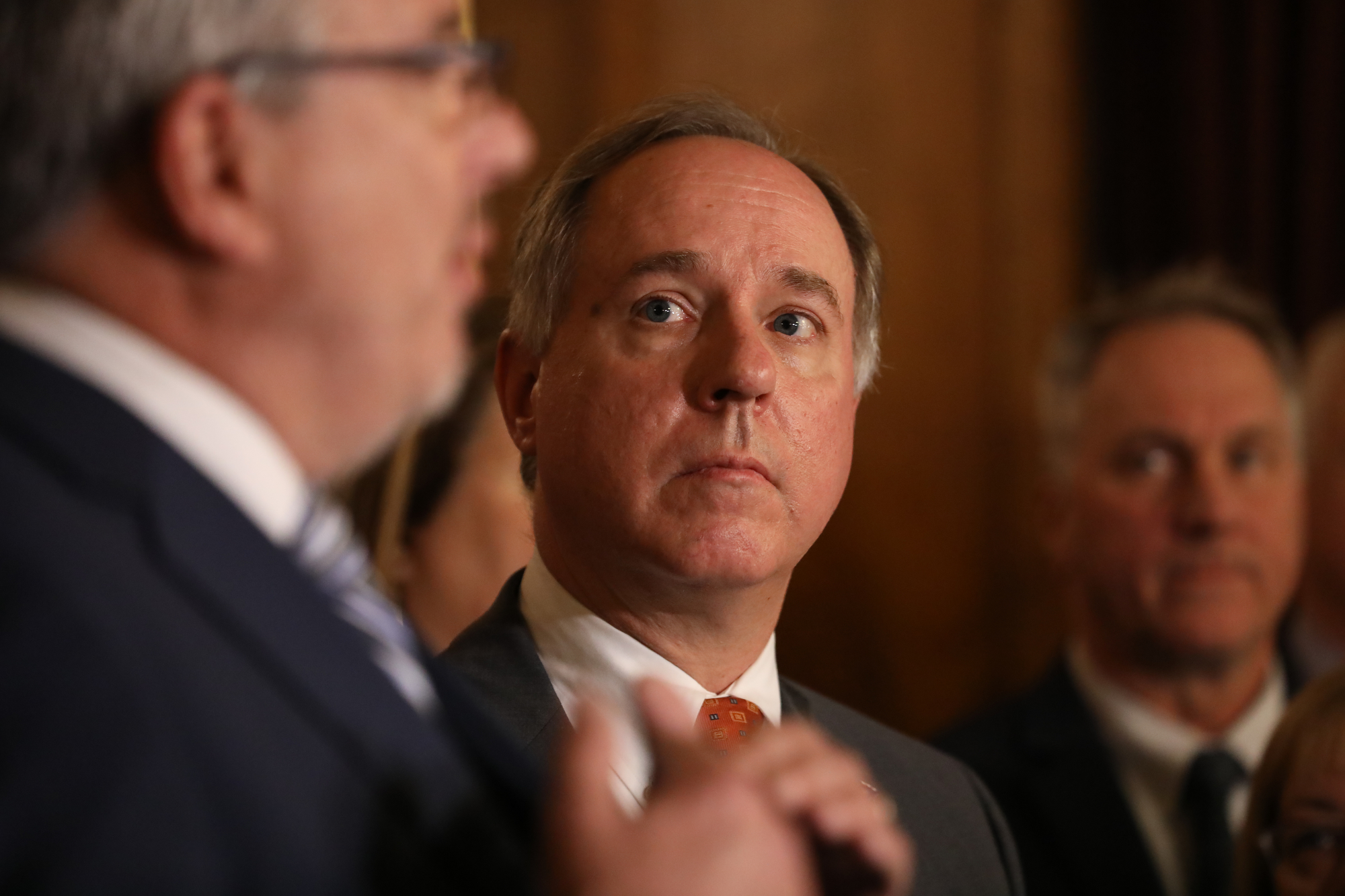
Assembly Speaker Robin Vos. File photo by Coburn Dukehart/Wisconsin Center for Investigative Journalism
The controversial 14-year run of Assembly Speaker Robin Vos as the Capitol’s top Republican strategist is ending.
Speaker Vos played many roles: pilot and air traffic controller for his party’s legislative priorities through sunshine and storm; chess grandmaster, staying steps ahead of the opposition; disciplinarian; hardball fundraiser; negotiator with lobbyists and state and local elected officials; explainer-in-chief of why the Assembly is doing its best for the state’s 5.9 million residents; partner of the party’s Senate leaders; and recruiter of the next generation of candidates.
Assembly speakers play offense and defense. They shoot arrows, dodge some and get wounded by others. Scars and enemies build up over the years, which can include presidents of their own party — Donald Trump denounced Vos after his 2020 election loss — and opponents who want them defeated or recalled.
He was the boss of the Republican majority, which swelled to 64 in the 2023-24 session, then shrank to 54 this session. After every election, Vos had to get reelected by his fellow Republicans.
Vos announced last week that, after a record seven terms as speaker and 22 years in the Assembly, he will retire in January. The 57-year-old called a November heart attack a “sign from God that I needed to choose another path.”
Vos, a Racine County native, said Republicans made history under his watch.
“We helped families and job creators by returning billions in historic tax relief, along with $35 billion in savings from Act 10,” which ended collective bargaining by most public employees and made them pay more for health care and pensions, Vos said. He was not speaker but was an Assembly leader when Republicans in the Legislature passed Act 10, the top priority of Republican Gov. Scott Walker, in 2011.
Through the Private School Choice program, Vos said, “We expanded educational opportunities by giving parents the ability to choose what is best for their children.”
Participation in Choice, which provides a state stipend to parents whose children attend private schools, increased by 80% — from 25,945 students in Vos’ first term as speaker to 45,329 students in the last school year. Over Democrats’ opposition, Vos got the program expanded from Milwaukee to Racine and then statewide.
“Most of all, we held the line to make Wisconsin a better place to live,” Vos said.
Democratic Gov. Tony Evers, whose powers Vos continues to try to reduce, said the Republican was a worthy adversary.
“Although we’ve disagreed more often than we didn’t, I respect his candor, his ability to navigate complex policies and conversations, and his unrivaled passion for politics,” Evers, who will also leave office in January, said in a statement.
Despite their fights, Evers said, “We passed the first bipartisan budget in decades last year that made historic investments in our kids and public education. We…provide[d] the first increase in state support for our local communities in over a decade. We kept the Brewers in Milwaukee for generations of new Wisconsinites, provided billions in tax relief for middle-class families, made one of the largest investments in affordable housing in state history, and increased key investments for the first time in a generation, from special education to funding to fix our roads and bridges.”
But the 67% increase in state general-fund spending on Vos’ watch — from $68 billion in the 2013-15 budget to $114 billion in the current two-year budget — is condemned by Republican fiscal conservatives.
His hiring of former Supreme Court Justice Michael Gableman to investigate any 2020 election irregularities became a huge and costly embarrassment when Gableman went rogue.
The “Boss Vos” push to eliminate diversity, equity and inclusion programs in state government and the UW system enraged minorities and progressives.
Vos passed up all chances to run for higher office — U.S. House, U.S. Senate, governor — to stay in the “people’s house.” He said he loved the Assembly’s deliberative process.
Vos’ party also suffered a major setback in 2024, when the new liberal state Supreme Court majority overturned legislative district boundaries Republicans had drawn. Another major loss may be coming if that same Supreme Court rules Act 10 unconstitutional.
Still, former Republican Assembly Speaker Scott Jensen, another veteran political tactician, said in a statement, “There is a reason Robin Vos has served as Speaker longer than anyone else — he was the best to ever hold the position.”
The next Assembly speaker will be chosen by the party with control after the Nov. 4 elections. In January, the Assembly circus will have a new ringmaster.
Steven Walters started covering the Capitol in 1988. Contact him at stevenscotwalters@gmail.com.
If you think stories like this are important, become a member of Urban Milwaukee and help support real, independent journalism. Plus you get some cool added benefits.


The State of Politics
-
Why the Rise in Property Tax Anger?
 Mar 16th, 2026 by Steven Walters
-
WI Supreme Court Could Order More School Aid
 Mar 9th, 2026 by Steven Walters
-
GOP’s Rebate Checks Won’t Be in the Mail
 Mar 2nd, 2026 by Steven Walters