Frank Lloyd Wright Designed House To Be Renovated, Converted To Museum
Burnham Block will gain a marquee bookend. Thousands take tour annually.
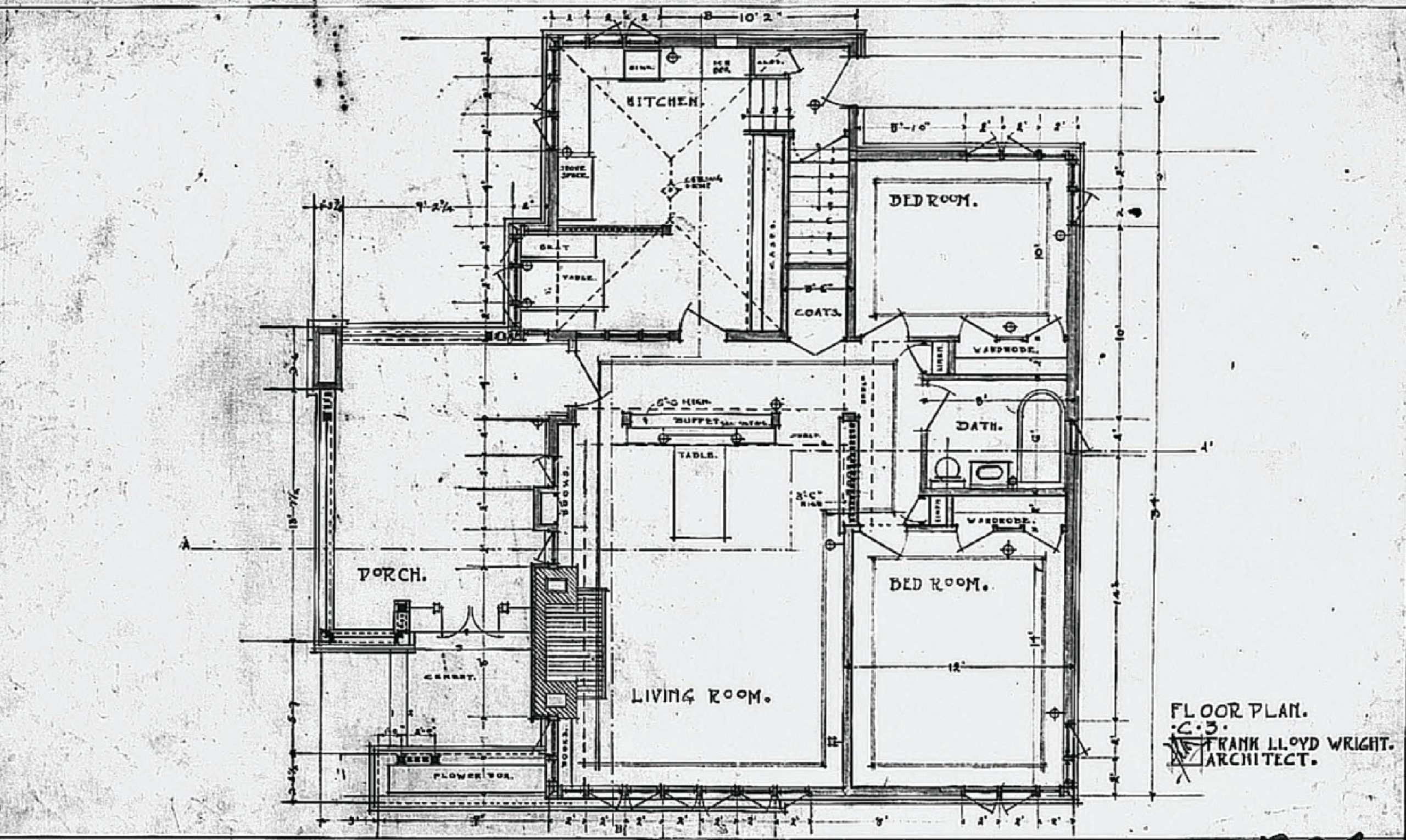
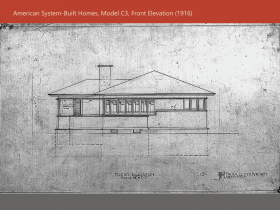
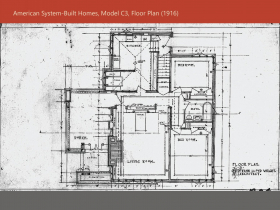
Frank Lloyd Wright C3 Drawing. Image courtesy of Frank Lloyd Wright’s Burnham Block.
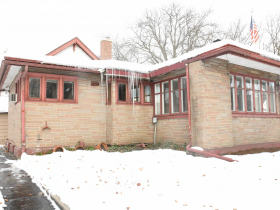
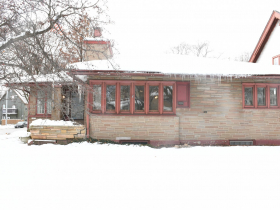
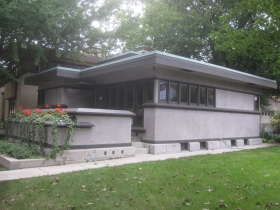
More than $800,000 will be spent renovating a 960-square-foot home to look as close as possible to the way it appeared when it was completed in 1916.
It’s a project that might seem farcical if not for two key elements: The property was designed by famed architect Frank Lloyd Wright and sits in a row of six Wright-designed homes.
When the renovation is completed, the nonprofit that owns the property at 1835 S. Layton Blvd. will operate it as a house museum.
The house is known as “Model C3,” a reference to its product number in a catalog of Wright-designed affordable homes. It is one of only three known to be in existence and would be the only one open to the public.
Known as American System-Built Homes, the program aimed to build quality, modern homes across the country using a series of design efficiencies, economies of scale, partial off-site construction and repeatable plans.
Milwaukee developer Arthur L. Richards constructed six demonstration homes on the 2700 block of W. Burnham Street. But only about two dozen system-built homes were constructed across four states before World War I effectively canceled the project.
Frank Lloyd Wright’s Burnham Block, a nonprofit organization, has now acquired five of the Milwaukee homes.
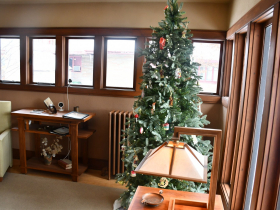
“He had a grand vision of creating homes like this in every city, village and town across the country,” said board president and block curator Mike Lilek in an interview Monday. He highlighted Wright’s strategies, like smaller windows with structural members inbetween, to maximize natural light while minimizing construction cost. “This is a grand vision to shelter everybody in a beautiful space.”
The organization, a Milwaukee offshoot of an older statewide Wright-focused nonprofit, bought its first home in 2004 and opened for tours in 2009.
The house to the west of C3, an 805-square-foot B1 design, welcomes thousands of visitors every year. The three other homes the organization owns are used for various purposes: one is a gift shop and welcome center, another is rented and the third is in poor condition, awaiting renovation.
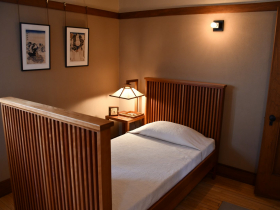
“Our goal is for you to come here and experience the Burnham Block inside homes that look as they would have looked in 1916,” said Lilek.
The organization welcomes everyone from fourth graders studying Wisconsin history to architectural historians. It hosts more than five thousand visitors annually.
The latest expansion is intended not only to preserve Wright’s legacy, but also to grow the Burnham Block as a destination.
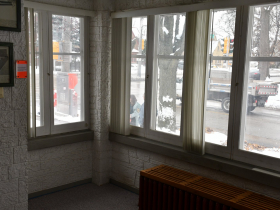
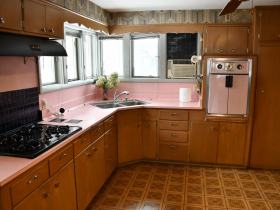
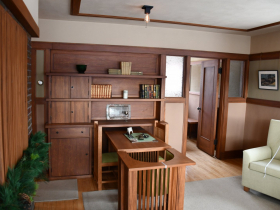
However, getting to that point will require a lot of work. Every window in the house will need to be rehabilitated, stucco siding reinstalled, several 1950s interior alterations removed, an addition converted back to a covered porch, the asphalt-shingled roof replaced with wood and multiple long-gone built-in fixtures recreated.
In some cases, like the roof or the siding, the original materials are still buried under layers of alterations. The materials will serve as a guide for finding suitable replacements.
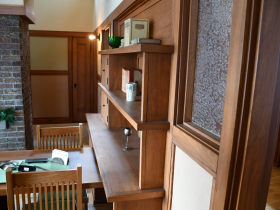
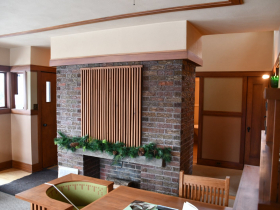
In other cases, like the built-in fixtures, the neighboring D1 house or other Wright-designed homes will provide guidance alongside remaining blueprints.
The National Park Service awarded a $407,000 Save America’s Treasures grant to cover half of the project’s estimated cost. Lilek said the grant program is highly competitive and only about 10% of applications are approved.
The Barbara Elsner Meyer Foundation and Herzfeld Foundation each provided $75,000 grants. More than 100 donors have also contributed to the project.
Ramlow/Stein Architecture + Interiors is leading the design.
The nonprofit hopes to complete the work by next September.
Prior to renovation, the nonprofit had leased the home to private tenants. It acquired the property in 2012.
Exterior Photos
Interior Photos
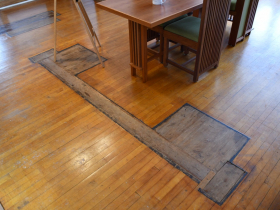
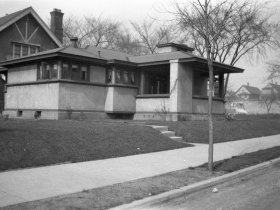
Drawings and Historic Photo
D1 Photos (Post-Renovation)
Existing members must be signed in to see the interactive map. Sign in.
If you think stories like this are important, become a member of Urban Milwaukee and help support real, independent journalism. Plus you get some cool added benefits.