Due in large part to a reduction in state aid starting in 2012, the Milwaukee County Transit System had planned for a massive reduction in service. Thanks to some last minute creative planning by those at MCTS, the vast majority of those cuts are on track to be avoided thanks to the use of CMAQ funds. The CMAQ funds, allocated out of a competitive bidding process, will provide funding to institute “express service” for two years along a number of key corridors which will replace segments of a number of routes. A public meeting, hosted by Supervisors Marina Dimitrijevic, Jason Haas, and Patricia Jursik, on the proposed Bayshore – Airport Express service was recently held to present the service to the community and answer any questions on the upcoming questions.
MCTS services changes as a result of proposed Bayshore - Airport Express
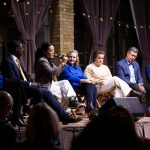
The meeting, held at the Bay View Library, was focused primarily on the changes that would occur to existing south side service (Routes 11 and 15) as a result of the new service. The meeting was led primarily by Thomas Winter, Director of Schedule and Planning at MCTS, who guided the audience through the key points of the proposed Bayshore – Airport Express route, as well as changes to existing routes within the corridor. Winter did not focus on the other proposed express service routes, but they will include a Fondy – National Express and a Capitol Drive Express (a 27th Street Express was applied for, but not awarded).
MCTS will be utilizing CMAQ funds from two different sources, the cancelled Kenosha-Racine-Milwaukee (KRM) commuter rail service (which died when the latest state budget pulled the plug on the Southeastern Wisconsin Regional Transit Authority) and the never implemented bus rapid transit service along Fond du Lac, Greenfield, and National Avenues.
The short explanation, the Bayshore – Airport Express will connect Bayshore, UWM, Downtown, and Bay View with stops roughly every 1/4 of a mile, seven days a week, with headways of 10-15 minutes during the rush hours, and 15-20 minutes during off-peak times. The fare for the express service will be the same as standard service. It is intended to achieve between 20-25% time savings running the same route as traditional MCTS service.
Details – South Side
Route 11 will be eliminated, but vast majority of service area will continue to have service via the express and other new or adjusted services. Some areas will actually see an increase as a result of the change.
In some cases, riders will need to about one block further to get to a stop. Current MCTS service spaces stops at 1/8 mile, but express plans call for 1/4 mile spaced spots.
Route 52 will be introduced to service one branch of the former 15 route on Clement, Pennsylvania, and 15th (pictured in map). It will terminate at Lincoln and Kinnickinnic.
Route 56 will be introduced to service Greenfield Avenue from 2nd Street to 124th Street. This will replace an area formerly serviced by Routes 11 (to Miller Park Way) and 18 (70th to 124th). Service along Miller Park Way, previously provided by Route 11, will be eliminated.
New Route 15 will still run unmodified on 1st Street, Kinnickinnic Avenue, Chicago Avenue, and Packard Avenue to Columbia Avenue.
New Route 15 will run down Pittsburgh Avenue to Milwaukee Street through downtown. This will replace the service lost from the elimination of Route 11. The Bayshore – Airport Express will service Water Street.
The Bayshore – Airport Express will divert from the current Route 15 at Lincoln and proceed south towards the airport on Howell. This will replace Route 11 service on Howell and Chase. Route 11 service on Boliver, Pine, and Layton will be discontinued. This new service supports the Aerotropolis concept.
Details – North Side
Route 11 is being eliminated, but the stops on the north side of its route, Milwaukee Street, Ogden Avenue, Van Buren Street and Holton Street, will be serviced by new route 15.
The new route 15, replacing the northern portion of Route 11, will continue north to Bayshore Mall instead of terminating at Capitol Drive. It will use Port Washington Road to get to Bayshore.
The Bayshore – Airport Express will replace Route 15 service from Bayshore to downtown, running the same route to downtown as the 15 currently runs. Because of the express service, this will result in the elimination of some stops (from 1/8 mile spacing to 1/4 mile spacing), but stops will still be placed at all major destinations and transfer points.
Route 68 is being eliminated. Limited 68 service on Green Tree, Lake Drive, and Brown Deer Road will be eliminated entirely. Route 68 service on Port Washington Road north of Bayshore will be replaced with Route 63, which currently terminates at Bayshore. Route 68 service south of Bayshore will be replaced by the new Route 15 to Capitol Drive. South of Capitol Drive to Keefe Avenue will no longer have service.
Following the introduction of the service changes by Thomas Winter, and brief comments in support by the Milwaukee County Supervisors in attendance, Supervisor Dimitrijevic led the question and answer session.
Questions from Audience
This is by no means a complete digest of the questions asked, but an attempt by myself to identify the most important and/or interesting questions and statements.
When would the proposed changes go into effect? MCTS Manager Director, in attendance for the meeting, jumped in to note that the proposed changes would go into effect January 29th.
One Howell Avenue resident noted that he liked the connection to the airport.
Will the Bayshore – Airport Express run as late as other service? Yes
Wifi in buses? Lloyd Grant – we are working with a local firm on in-bus advertising, this could happen. (My perspective – I don’t see it as likely, and I don’t believe that the new version of Transit TV proposed by Troy Shaw will produce the millions in revenue that has been projected, but I hope to be proven wrong.)
Same commenter as wifi comment – Bus tickets should be handed out with tax receipts
Same commenter as wifi comment – There should be park and ride areas on south side.
Supervisor Jursik requested that Grant speak about the potential new farebox system. Grant mentioned that three years ago they received federal funding to help implement a new farebox system, and that he expected RFP responses this week. Supervisor Dimitrijevic noted that she hoped that a new system would utilize “smart cards” similar to those seen in other cities, which drew applause from the audience. Grant discussed a number of potential outcomes of the process, but noted that 40% of current fares are paid in cash.
One commenter noted that park and rides should be installed across the south side to alleviate congestion at UWM and listed a number of potential locations including the airport. Supervisor Jursik noted that she didn’t think the airport would be likely, given its potential for abuse.
How is service impacted from Brady and Farwell to downtown? Lloyd Grant noted that service would actually improve because of the switch from the 15 bus to express service.
Will bike racks be on express route? Yes (drew applause from audience)
MCTS driver – 1. Freeway Flyers being favored over local routes, not good. 2. The farebox is a trouble spot with the union, specifically the transfers. 3. How does it connect with streetcar? – Kris Martinsek, of Martinsek & Associates who is involved in the creation of the Milwaukee Streetcar, noted that streetcar project is in preliminary engineering and is being designed to have seamless connections with existing transit service.
One life-long non-driver asked about smaller buses or vans to preserve service. Lloyd Grant responded that MCTS has retired their smaller vehicles over time as they aren’t as cost efficient given that they can’t be used on many routes.
Express part of existing fare structure (following a comment thanking MCTS for their hard)? Lloyd Grant noted that this is the first time he has been asked, and that yes it would cost the same as a standard fare.
Will Freeway Flyers stay the same? Yes.
Multiple people noted the challenges in getting home from the airport to Bay View, that taxis frequently refused to give rides because of the airport fee structure. Where will the stop be at the airport? Where the Route 80 currently stops, at the south end of the Baggage Claim.
Any change to Route 51? No changes at this time. This question was offered apparently in response to a neighborhood issue with bus noise, with people in attendance on both sides of the issue. Supervisor Haas remarked he was happy they have now met and could sit down to talk about it, which drew a laugh from the audience.
What is the possibility that the CMAQ funds are not approved? Lloyd Grant said that rejection is not expected for any reason, and that it is up to Secretary of Transportation Gottleib to approve now.
Samuel Jensen, representing the Milwaukee Transit Riders Union offered perhaps the most amusing remarks of the evening. He remarked that he was happy about the new service, but not happy to learn about it so late and that it was done in secret. He remarked that “we are not living in the Soviet Union or a third-world dictatorship.” During his comments he repeatedly said “this is absurd,” asking what other cuts were hidden (claiming the audience first learned of the Route 68 cuts today). He noted the lack of a real long-term funding solution for transit in Milwaukee, and asked when the Milwaukee County Board is going to do something about this? Supervisor Jursik downplayed his remarks, noting that he was attacking local politicians for an issue created by the state. She noted that she wasn’t pleased with being in the dark on the proposals before they were submitted. Her response ended with applause from the audience. Lloyd Grant noted that there were no unpublished cuts. Jensen responded by noting that Jacqueline Janz, MCTS Marketing Director, would do the USSR (Soviet Union) a service with her PR skills.
After a few more questions, the meeting ended at 8 promptly because the Bay View Library closed.
Conclusion
Milwaukee County and MCTS have clearly been dealt a tough hand with the funding cuts to transit coming from the state budget. Despite the fact that the CMAQ funds at this point are only a two-year solution, and will result in some areas losing service, the solution is a creative one to stave off major cuts including the elimination of all Freeway Flyers, special event service (Summerfest, State Fair, Miller Park, etc, etc), and service reductions on many routes. In an ideal world, existing service would be maintained and new express service would be added on top, but given the circumstances this is a great solution to a terrible problem.
MCTS services changes as a result of proposed Bayshore - Airport Express
The Big Roads, by Earl Swift, tells the story of America’s highways. The book begins by exploring the era when a highway was merely a dirt road, and ends with a look at the lasting impact of the Interstate Highway System. Of particular interest to urbanists is the recurring belief from the system’s designers that building limited-access highways in cities would make them more hospitable places to live. Arguably the most important idea explored is that President Eisenhower isn’t the most important person in the creation of the Interstate Highway System that bares his name, a number of figures had done the bulk of the legwork before his election, including President Franklin Delano Roosevelt.
Much of the book focuses on the behind-the-scenes bureaucrats that made our highways what they are. Figures including Thomas MacDonald (nicknamed The Chief) and Frank Turner are highlighted in detail, and a spotlight is shown on their pioneering work on the technical details of highway design. These men are the real fathers of the Interstate Highway System, having spent their professional lives lobbying and designing the highway system we have today. Ironically, Turner himself rarely drove to work a frequent rider of mass transit (calling to mind New York City road builder Robert Moses, who himself never obtained a driver’s license), despite his work to build thousands of miles of roads for private automobiles.
The Interstate Highway System was conceived in an era when cities were gridlocked, and suburbs were beginning to sprawl (yet another book dispelling the notion that the Interstate Highway System was the originator of sprawl, like Fogelson’s Downtown). Cities weren’t the most hospitable place when the system was conceived for a number of reasons, but despite the success and positive reception limited-access highways had in connecting cities they weren’t welcomed by everyone to urban cores. This gave way to the freeway revolts, particularly in Baltimore, which The Big Roads explores in detail. Swift also pays much attention to the work of Lewis Mumford, who originally advocated for superhighways, but ultimately became one of the leading national critics of them because of the damage they would do to urban communities. The book notes that even Eisenhower himself appeared to be shocked by the affects the system would have on cities, to which the President claimed to have envisioned a rural-only system that ended in beltways after getting stuck in a traffic jam on an interstate highway in Washington D.C. The takeaway that has stayed with me is the way the author and others in the book portray urban highways, that the highways from high above appear attractive and logical, but that their ground-level impact divides communities and leaves a lot to be desired.
I could have used more details on the various freeway revolts, but that might alone might require another book’s worth of pages. Swift doesn’t skimp on the revolts, and gives great detail on the Baltimore fight over the proposed I-70, but it would have been welcome to see how the issue played out in other cities in detail as well.
The Big Roads is definitely an interesting read. The notion of reading a book about career bureaucrats seems nauseating, but Earl Swift manages to weave their personal stories with the story of America’s love affair with the open road in a way that is both educational and engaging. The evolution of America’s highways is something that has significantly shaped our way of life, largely with unintended consequences both good and bad. Earl Swift does an excellent job of telling the story of how we went from empty dirt-roads to congested urban expressways.
Final Rating: 4 out of 5 stars, difficult topic, good execution, enjoyable read, informative
Urban Myth or Fact: You may have heard that every fifth mile of interstate was designed so that planes could land on it in an emergency. Turner did attempt to accomplish something like this in his designs after discussions with the military, but ultimately decided it was impossible to serve two masters and that the interstates were strictly for ground traffic. It’s a myth.
Quote of the Book: Lewis Mumford – “Part of the tragedy is that the cities themselves have rushed with a strange sense of urgency to cooperate in their own mutilation.”
Traditionally, in Wisconsin toll roads are opposed by the right, because freeways are free, from the left because tolls are an attack on the middle class, and often by new urbanists, because freeways promote sprawl.
This urbanist feels it is time for us to stop referring to our Interstates as “freeways” as they have never been, and never will be free, and begin collecting tolls on them. Now the new funds shouldn’t be used to build bigger and bigger roads, but to allow for users of the Interstate system to pay more of the direct and indirect costs associated with highways.
It is often claimed that the Interstates are 100% paid for by user fees and that these fees cover all of the costs, but this isn’t true. In 2007, Subsidyscope estimated that only 51% of the funds set aside for highway construction and maintenance came from user fees. One glaring example of this subsidy is the simple fact that the federal highway fund has been bailed out with general funds multiple times over the years. Additionally indirect costs and externalities are also not accounted for, such as air pollution (and the resulting health effects), blight, and the cost of congestion.
Tolling roads in Wisconsin might be possible today, because of two key changes to the landscape. First, the technology of open road tolling has enabled states across the US to reduce the congestion and environmental issues associated with toll roads by minimizing the need to stop, while allowing users to pay more of the full cost of the highway system. Secondly, the political opposition to toll roads in Wisconsin has weakened. During the 2010 gubernatorial campaign Governor Walker, who had previously opposed all toll roads, expressed an openness to the creation of HOT lanes, which are essentially toll lanes. Additionally, it was the right-wing leaning organization, the Wisconsin Policy Research Institute (WPRI), that recently put out a report supporting new toll roads in Wisconsin.
It isn’t likely that the Walker administration and WPRI are concerned with the indirect costs or externalities brought upon by highways. In fact it is far more likely they are interested in finding new funds for highway expansion, which is certainly a concern, but one that could be addressed in the long run. But regardless of everyone’s motives, properly implemented tolling with the goal of paying for some, if not all, of these costs could be a positive for Milwaukee and Southeast Wisconsin.
Although, the right-leaning Wisconsin Policy Research Institute recently issued a report supporting toll roads in Wisconsin,
Referee is a 9-foot tall laminated marble sculpture meant to depict a referee raising his arms. The public art piece, designed by Tom Queoff in 1978, sits outside of the US Cellular Arena.
The marble used to construct Referee was left over from the construction of the US Bank Center.
Great Seal of the State of Wisconsin
Stained glass outside of the Milwaukee Common Council Chambers.
Milwaukee City Hall Interior
A shot of city hall quite active on the weekend because of Doors Open Milwaukee.
Hyatt Regency Milwaukee
The Hyatt Regency in downtown Milwaukee. The space on the top used to be home to a spinning restaurant, Polaris, and is now available to be rented out on an event-by-event basis. Northwest side of the building clearly doesn’t create the most welcoming space ever with the skywalk, parking garage, and small surface parking lot.
Kilbourn Town
Looking over the Milwaukee Center and Pabst Theater at much of Kilbourn Town including many of the building’s along West Wisconsin Avenue.
It has been said that Milwaukee “is not a cab town,” and it’s true many Milwaukeeans don’t utilize taxicab services. But this is likely true in part because of the City of Milwaukee’s arbitrarily set limit of taxicab licenses. In fact, there are only 321 legal taxicabs operating in Milwaukee, so of course Milwaukee isn’t a cab town, how could it be with so little available service. This limit reduces use and choice, and has even spurred a group of cab drivers to sue the city with the intent of unleashing the taxicab market in Milwaukee.
These taxicab drivers are right. Milwaukee can and should be a cab town, and to accomplish this the removal of the cap is needed.
Why more cabs? Beyond the fact that the cap limits job creation, stifles the entrepreneurial spirit, and creates a false market where cab licenses are rumored to be selling for between $80,000 and $150,000, quite frankly more cabs would be welcome because it is tough to flag down a cab in Milwaukee.
Reason #356489 why Milwaukee should lift the cab permit limit: I once took a ride from a pizza delivery driver with a few friends at close.
Seriously, Domino’s shouldn’t be a part of Milwaukee’s transportation needs.
Kidding aside, there are numerous reasons why opening up this market will be good for the residents of Milwaukee. Cab service is an expected amenity in an urban environment, a service which is utilized by residents, tourists, and business travelers. This amenity is lacking in Milwaukee and as a result pricing, variety, and service quality are all being limited because of the artificial limitation. By opening up the market, additional competition could bring lower fares, better service, and a larger variety of options and types of cabs that could be available. For example, a green cab company, running hybrids or electric vehicles could break into the market, which today is frozen out because of the prohibitively expensive cost of entry (such a company exists in Madison, another city that many wouldn’t label a “cab town”). Another benefit of opening up this market is simply to provide more rides, because a limit on the number of cabs is effectively a limit on the number of rides possible on any given night (a limit that is obviously reached on busy nights when you literally can’t get a cab without an hour wait). Additionally, an obvious, or what should be obvious, reason to open up this market is less drunk drivers on our roads. Instead of being encouraged to drive home after celebrating a Brewers win at a local brewpub, more people will have the option to take a cab home as there will be more available cabs.
Quite simply, expansive cab service is part of urban life, it encourages people to leave their car at home, offers them more access, and acts as a part of a cities transportation system. Certainly, taxicabs need to be regulated, but for Milwaukee to become a cab city, the arbitrary limit on the number of cabs needs to be removed.
Do you like cities? Can you read a book in a month? If you can answer yes to both questions, you should join us for the first meeting of the Urban Milwaukee Book Club. The first book up is Ed Glaeser’s Triumph of the City, which isn’t without controversial ideas on historic preservation, housing supply, and public education (previously reviewed on UM). You can purchase the book on Amazon or at your favorite local bookstore.
We will meet for discussion and drinks on November 3rd, 2011 on the second floor of the Milwaukee Public Market at 6:30 p.m. until 8:00 p.m.