SCOTUS Blocks Mail Voting Shift, But Federal Scrutiny of Wisconsin Persists
Absentee rules stay the same, even as DOJ and DHS press for state voter data and records.
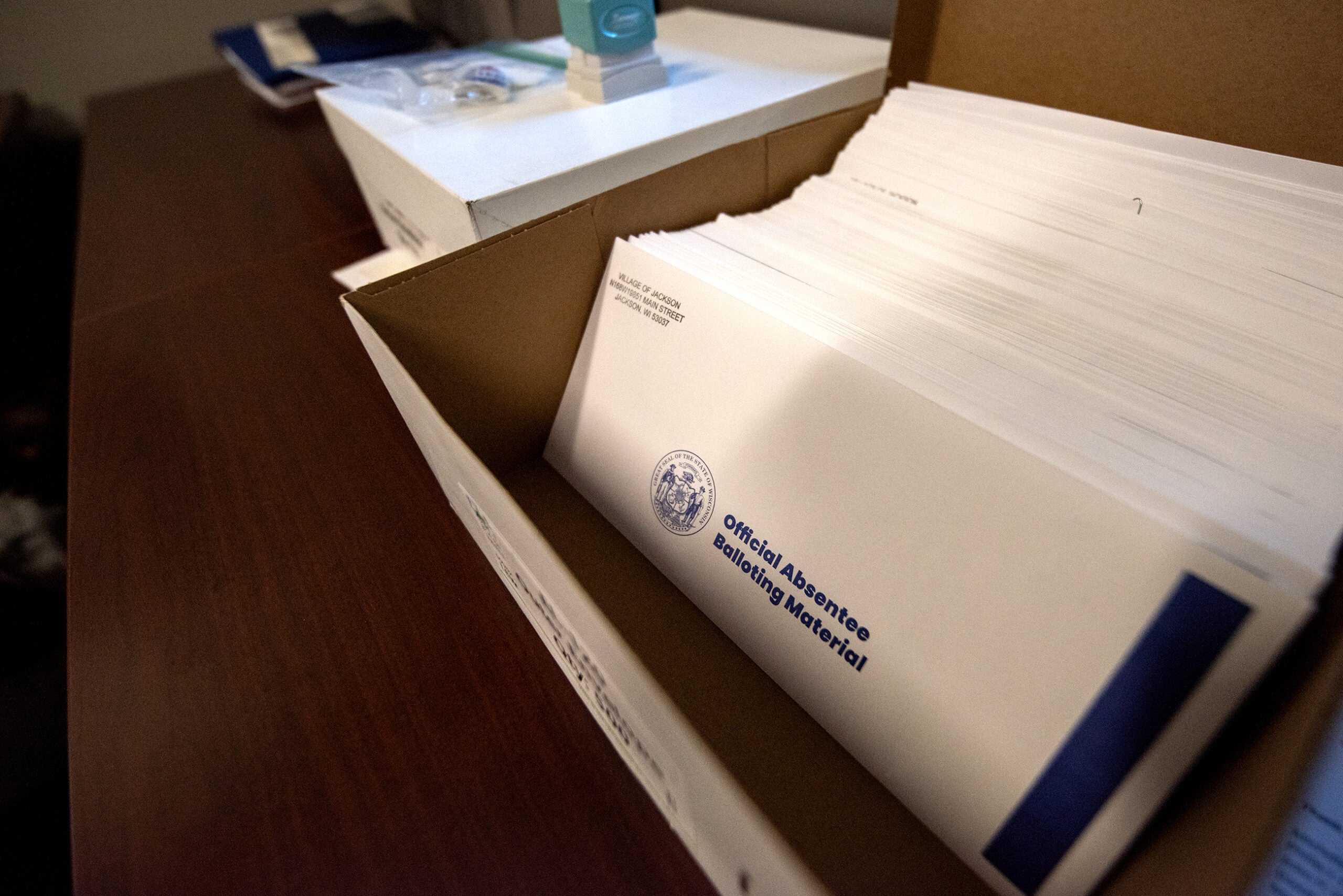
A stack of absentee ballot envelopes are kept in village clerk Anastasia Gonstead’s office Monday, June 24, 2024, in the village of Jackson, Wis. Angela Major/WPR
The U.S. Supreme Court on Monday rejected an attempt by President Donald Trump to rework absentee mail-in voting requirements, an effort that Wisconsin elections officials warned would have been unworkable just weeks out from the midterm elections.
But other federal efforts remain underway to obtain state voter data and investigate some states’ election processes, including Wisconsin’s. The Trump administration describes these as a means of cracking down on noncitizen voting, despite no evidence that widespread fraud affects election outcomes.
“A lot of what we’re hearing from the federal government has the potential to generate misperceptions about the state of our election system — to undermine confidence in it,” said Robert Yablon, who runs the State Democracy Research Initiative at the University of Wisconsin Law School.
The unsigned decision Monday means that new rules about who can receive mailed ballots will not be implemented. Among other requirements, the Trump order would have created a federal voter list, and given the U.S. Postal Service authority over who could vote by mail.
As of Friday, more than 130,000 absentee ballots were on their way to Wisconsin voters, according to the Wisconsin Elections Commission. Wisconsin clerks face a deadline of Sept. 17 to send ballots to military and overseas voters, and other voters who have a standing absentee request on file.
The Supreme Court’s decision mean that people planning to vote absentee can continue as usual, said Yablon.
“A key thing for voters to understand right now is — particularly for people who are planning to vote absentee in Wisconsin this year — the rules have not changed, and their ability to vote absentee is the same as it’s been in the past,” he said.
Trump administration seeking to obtain voter data
The White House requested the change in rules to have tighter control over voter rolls, by requiring states to turn over some voter information to the U.S. Postal Service.
While the Supreme Court’s ruling stops that initiative for now, other federal efforts to obtain state voter data continue.
“For more than a year now, the federal government has been trying to get unredacted voter lists from states around the country, including Wisconsin,” Yablon said.
According to the State Democracy Research Initiative, the Department of Justice has filed 31 lawsuits to compel states, including Wisconsin, to turn over voter data.
Most of those have been dismissed at the circuit court level, but many are making their way through federal appeals. That includes the lawsuit against Wisconsin, which was dismissed in May and is now pending in the 7th U.S. Circuit Court of Appeals.
The U.S. DOJ argues that, because states must maintain accurate voter rolls, it has the right to inspect the records to uphold that requirement.
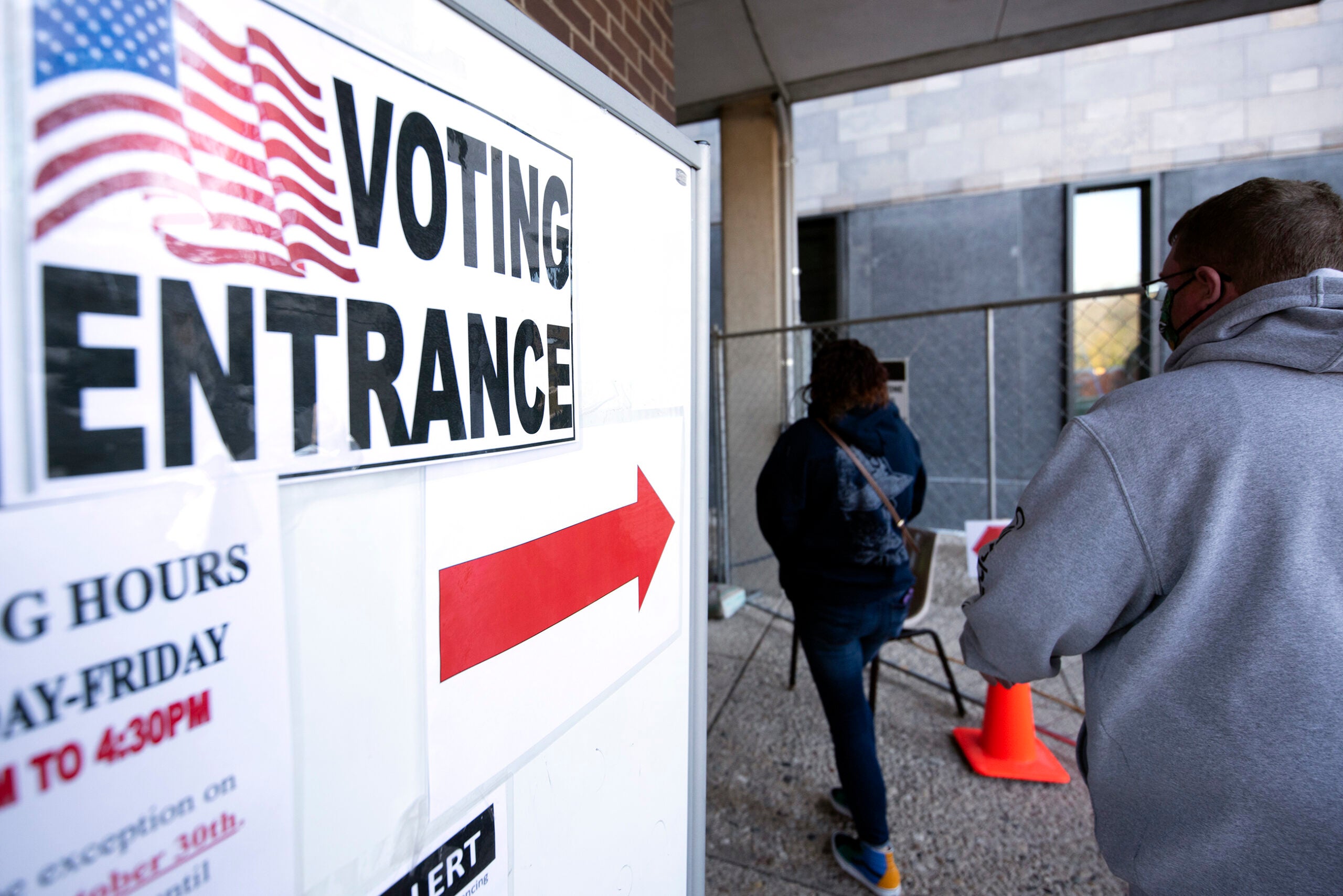
Voters walk to an early voting location Wednesday, Oct. 28, 2020, at Waukesha City Hall. Angela Major/WPR
According to the Associated Press, 29 states and the District of Columbia received orders from the U.S. Department of Justice to retain all records related to the 2024 election. That would go beyond the federally mandated 22 months that election records must be retained.
The states that received the letters, including Wisconsin, are all part of a lawsuit pushing back against the Trump administration’s ongoing efforts to obtain state voter records.
In the letter sent to Wisconsin’s election administrator Meagan Wolfe, Wolfe was informed that she is under investigation, and told that the records must be retained as part of that litigation.
“Your failure to preserve relevant data may constitute spoliation of evidence, which may subject you to civil and criminal sanctions,” wrote Eric Neff, acting chief of the voting section of the DOJ. “We trust that you will preserve for the duration of our investigation and any subsequent litigation all Relevant Documents.”
Wisconsin Elections Commission spokesperson Emilee Miklas didn’t respond to a request for comment. Wisconsin state law allows voter data to be erased after 22 months.
Harmeet Dhillon, head of the Civil Rights Division of the Justice Department, has described the letters as “standard litigation practice.”
According to Yablon, many of the concerns over data sharing are over privacy and questions of how the data will be used.
“This raises the potential for the federal government to generate a lot of misinformation and perhaps not take as much care with that as state law would suggest ought to be taken,” Yablon said.
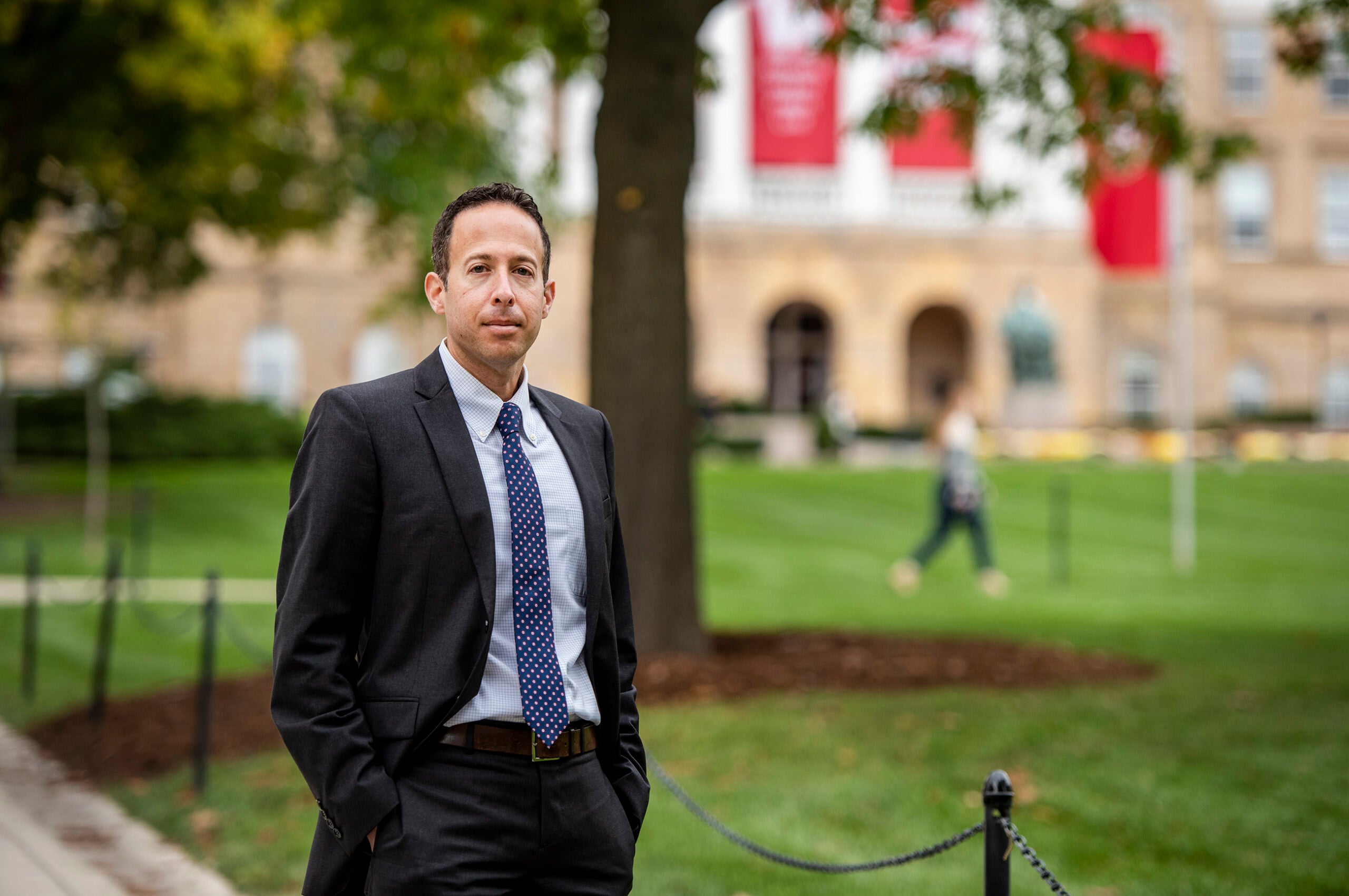
Rob Yablon is a law professor at UW-Madison. Angela Major/WPR
Department of Homeland Security involved
The DOJ has also said that it shares that data with the Department of Homeland Security, to verify voters’ citizenship. Last month, CNN reported that DHS is actively investigating some states’ elections, including Wisconsin’s.
According to a whistleblower report Monday, DHS may be illegally accessing state voter registration databases in that effort.
Other efforts are underway to involve DHS in the White House’s voter integrity work, including by expanding the federal Systematic Alien Verification for Entitlements program, known as SAVE, so that states can check their voter rolls against the national database of citizens. The Supreme Court is expected to weigh in on that ask after lower courts rejected it.
Separately, Trump’s signature voting legislation, the SAVE Act, would require all voters to present documentary proof of citizenship when registering. Voting rights advocates say this requirement would disenfranchise millions of people who don’t have passports, or whose birth certificates don’t match their legal names.
That bill has been held up in the Senate.
After SCOTUS rejects voting changes, feds still eyeing Wisconsin elections was originally published by Wisconsin Public Radio.
If you think stories like this are important, become a member of Urban Milwaukee and help support real, independent journalism. Plus you get some cool added benefits.