
Trump EPA Repeal Collides With Wisconsin’s Shift Away From Coal
Utilities say they are still reviewing the rule change as experts predict continued movement to gas and renewables.
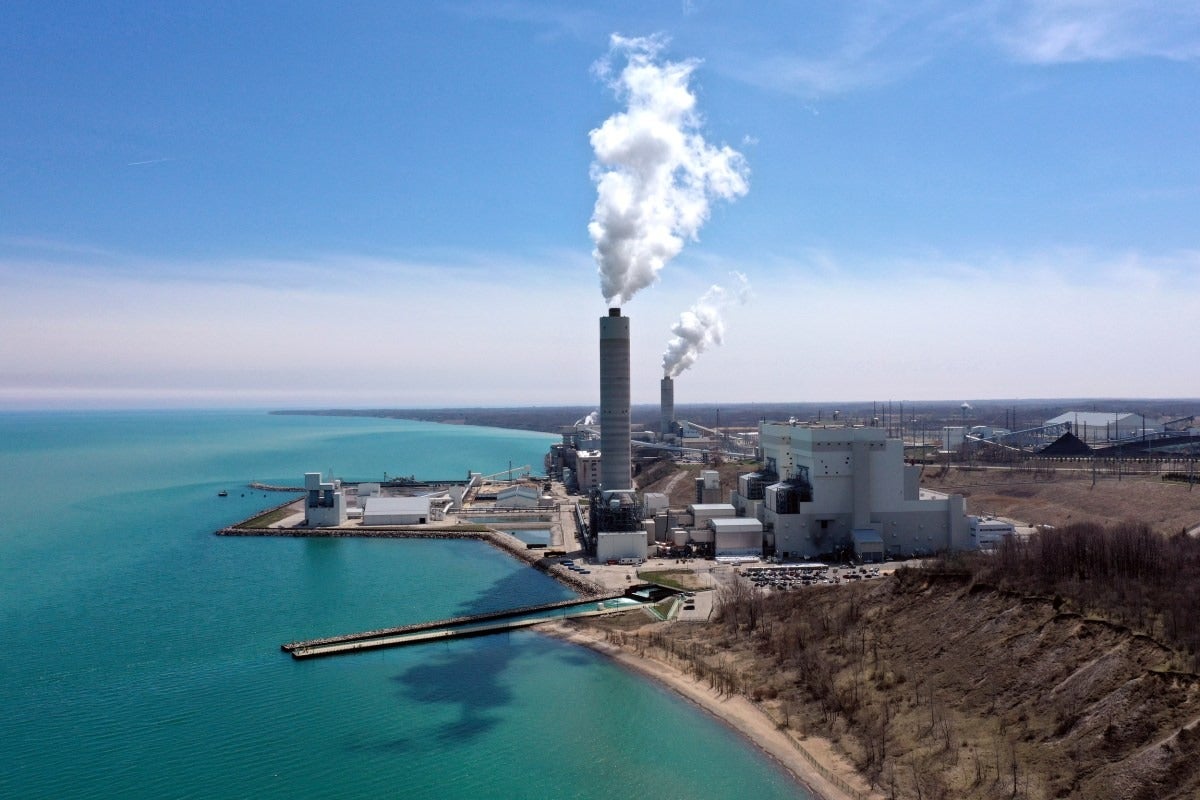
The Oak Creek Power Plant and Elm Road Generating Station, seen here on April 25, 2019, in Oak Creek, Wis., near Milwaukee, are coal-fired electrical power stations. Coburn Dukehart/Wisconsin Watch
The Environmental Protection Agency on Monday said in a statement it’s repealing a 2024 rule on power plant emissions to “unleash the full potential of America’s vast energy resources.”
But the EPA removing its rules regulating emissions for coal and gas power plants won’t ultimately buck the economic trend toward cleaner fuels, according to Steph Tai, University of Wisconsin Law School professor and associate dean of the Nelson Institute for Environmental Studies.
Tai recently spoke on WPR’s “Wisconsin Today,” where they said coal’s influence in power production is trending down as energy companies build up natural gas and renewables like wind and solar power.
“I think the signs are leaning against (building more coal power plants),” Tai said. “We’ve already shifted away from coal more towards natural gas, just because of the economic incentives, not because of regulatory incentives.”
Tai said they expect power companies to continue moving toward natural gas plants or even renewable energy sources, considering instability for natural gas prices from the American-Israeli war against Iran and the closing of the Strait of Hormuz.
Some of Wisconsin’s largest energy providers told WPR in statements they’re still reviewing the rules change.
“Once the language is available from the EPA, we will review and analyze it for any possible impacts,” a spokesperson forAlliant Energy wrote.
We Energies submitted: “Our all-of-the-above power generation strategy remains focused on providing customers with safe, reliable and affordable energy while meeting all applicable environmental requirements.”
While economic forces may direct power companies away from fossil fuels, the Trump administration’s efforts to remove emissions regulations would extend the negative impacts of fossil fuels and their contributions of greenhouse gases to climate change and poor health. That’s according to Dr. Jonathan Patz, director at the University of Wisconsin-Madison Center for Health, Energy and Environmental Research.
“There are multiple pathways through which climate affects our health, be it from heat waves to air quality to infectious diseases, so there’s a major concern there,” Patz told “Wisconsin Today.”
He pointed to a 2019 study that shows Wisconsin could reduce health costs by $21 billion if the state switched to entirely renewable power sources.
“That’s saving 1,900 lives every year, avoiding 34,000 asthma exacerbations every year,” Patz said. “We have in Wisconsin some direct health benefits if we were to get away from fossil fuels globally.”
The EPA decision is part of a broader Trump administration effort to limit regulations on fossil fuels and to make it more challenging for any future administrations to reverse the decision. Tai said they fully expect the legal challenges to the federal government’s authority to regulate emissions under the Clean Air Act to escalate to the Supreme Court.
Tai said past high courts have upheld federal authority to regulate emissions, but the current makeup of the court justices could change that.
“It’s hard to tell how this Supreme Court would go,” Tai said. “They have already overturned a whole bunch of longstanding precedents, so it’s conceivable that they could do that here, but maybe not. It’s hard to tell.”
Loosened EPA power plant regulations could negatively impact Wisconsin public health was originally published by Wisconsin Public Radio.
If you think stories like this are important, become a member of Urban Milwaukee and help support real, independent journalism. Plus you get some cool added benefits.