
How Do You Teach 9/11 To Kids In 2026?
Wisconsin teachers use personal stories, ceremonies and anti-bias lessons to reach a post-9/11 generation.
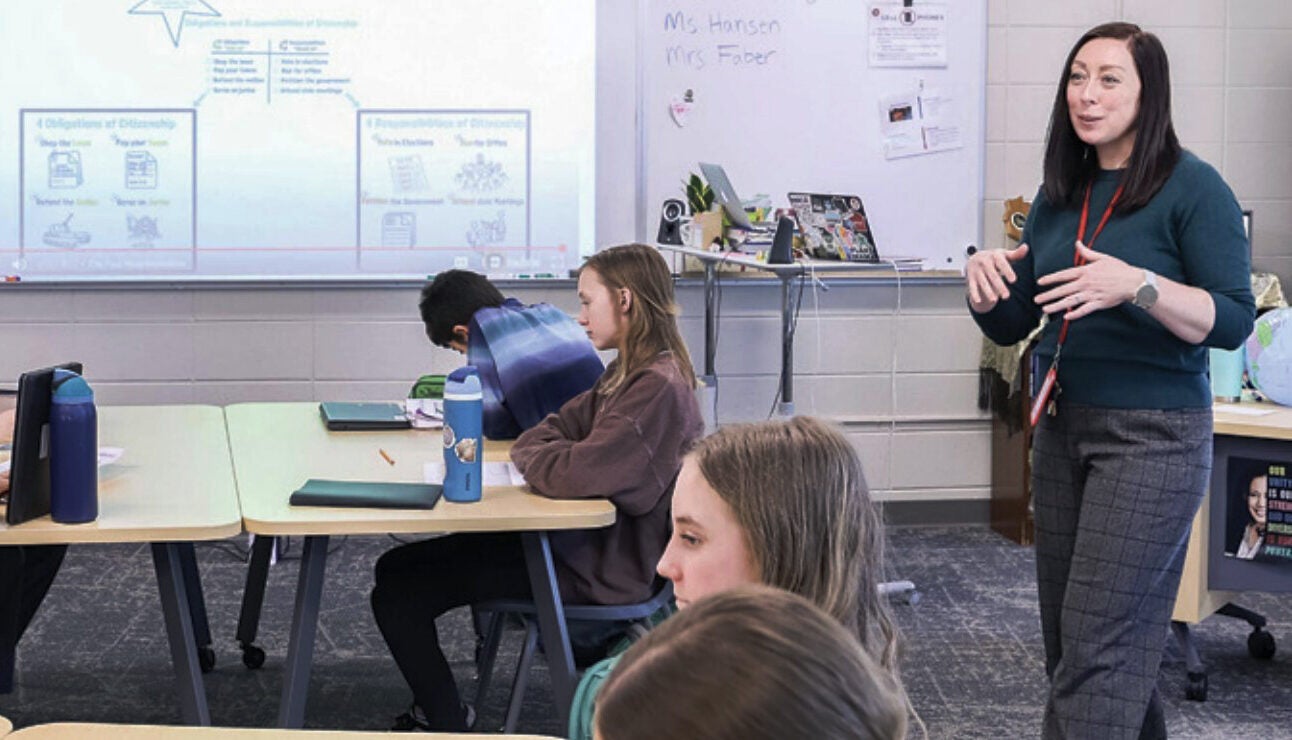
Shorewood social studies teacher Sarah Koppling says she incorporates 9/11 into lessons all year long. Photo courtesy of Sarah Koppling
The first time Sarah Kopplin took over a classroom as a student teacher was 9/11.
Kopplin had spent the night before preparing her lesson for the 10th grade world history class in Stillwater, Minnesota.
But by 7:46 a.m. central time, everything changed.
“The principal went on the loudspeaker and announced that all teachers needed to stop teaching and turn on the television set attached to the wall,” Kopplin said. “And we watched the second plane hit the tower.”
Students and staff were sent home for the rest of the day.
Kopplin’s second day wasn’t better — a student in her class was Sikh and wore a head covering that his classmates suddenly associated with Osama bin Laden, the leader of the Muslim extremists that claimed direct responsibility for the 9/11 attacks.
The 10th grader was beaten by other students at the school.
Twenty-five years later, Kopplin is a social studies teacher in the Shorewood School District.
On Friday, she will tell her students about these events and use age appropriate photos to discuss the 9/11 attacks that killed 2,977 people.
But Kopplin says 9/11 is present throughout the school year in her classroom, to teach empathy.
“I actually use the attacks to frame the entirety of my class because it had such a huge impression on me,” Kopplin said. “Having students mistreated because they were Muslim and Sikh and having them associated with terrorists, even though that’s not who they are. That’s really shaped me as an educator.”
While Kopplin, and many of us, are emotionally tied to 9/11, 30 percent of the people living in the United States weren’t born during the attacks, so Wisconsin teachers are teaching what is, for students, history, said Jeremy Stoddard, a professor at the University of Wisconsin-Madison.
Stoddard and his colleagues at Wisconsin Center for Education have looked at how educators across the country do and don’t teach about 9/11 and the War on Terror that followed.
He says over the last 25 years, teaching has changed and the messages have varied depending on the state.
Ten states have passed laws requiring either curriculum or a schoolwide activity, such as a moment of silence or a school assembly on Sept. 11. Florida, for example, requires 45-minutes of instruction about the event, Stoddard said.
Pennsylvania ordered its Department of Education to create curriculum that schools could use, Stoddard said.
In Wisconsin the state Legislature added Sept. 11 to the list of “special observance” days for schools. But there is not a curriculum requirement.
This week the state Department of Public Instruction sent out resources to schools, but nothing is required. Wisconsin is a local control state, leaving decisions on lessons to school districts.
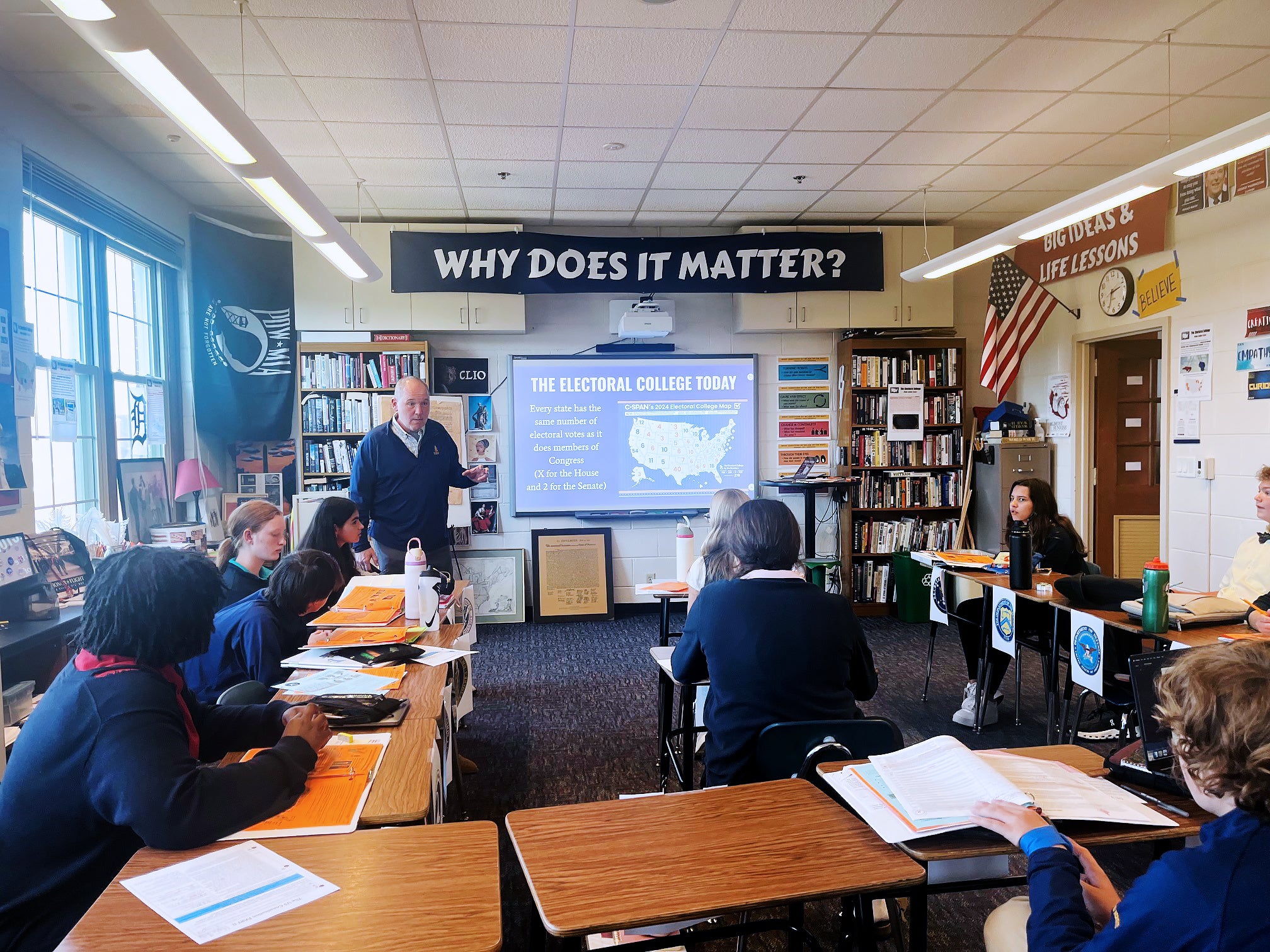
Chuck Taft is a social studies teacher at the University School of Milwaukee. Corrinne Hess/WPR
At the University School of Milwaukee, students will gather outside on Friday morning and hear from six teachers who were on the school’s campus the morning of Sept. 11, 2001.
Two of the teachers were students at the time.
Social studies teacher Chuck Taft says the ceremony will be about remembering but also about public memory and shared experiences.
Taft says there are very few events in American history that created shared memories — Pearl Harbor, the Kennedy Assassination, the Challenger explosion and 9/11.
But the students, and some teachers at the University School, weren’t born 25 years ago.
“We’re trying to get a conversation started in our school, and then we’re asking students to take that conversation home and ask their parents ‘Mom, dad, what’s your 9/11 story?” Taft said.
25 years later, Wisconsin schools teaching and observing 9/11 was originally published by Wisconsin Public Radio.
If you think stories like this are important, become a member of Urban Milwaukee and help support real, independent journalism. Plus you get some cool added benefits.