Data Shows Enbridge Oil and Gas Spill is Largest Reported in Wisconsin
31,000 barrels spilled. Environmental advocates push for more state monitoring.
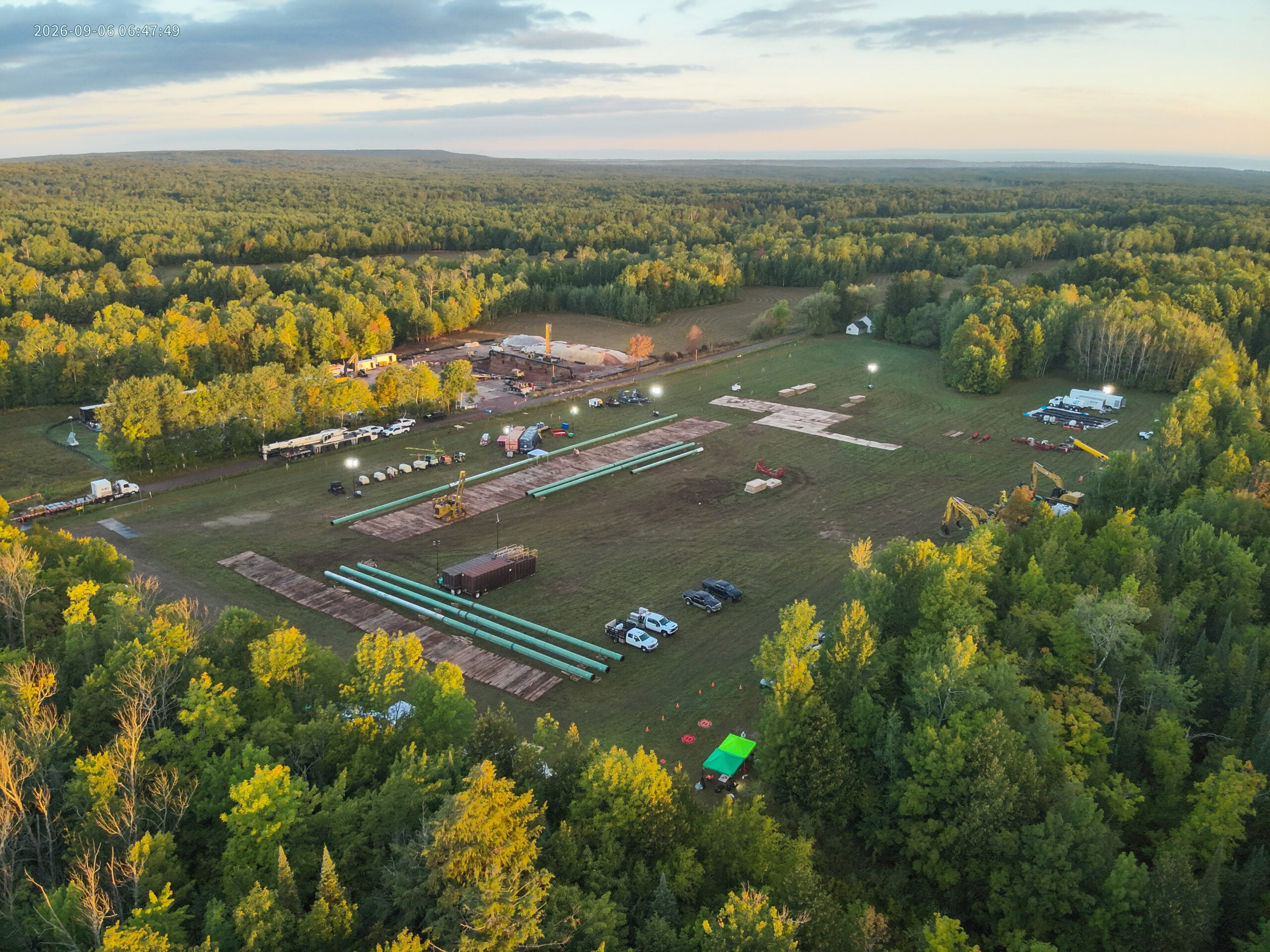
Enbridge crews have begun working on a temporary bypass around the site of a gas leak on Enbridge’s Line 5 in Iron County that released 1.3 million gallons of mainly propane and butane. Photo courtesy of Enbridge
A gas leak that occurred last month on Enbridge’s Line 5 is the largest oil and gas pipeline spill reported in Wisconsin in more than 50 years, according to a WPR review of federal data.
WPR analyzed hazardous liquid accident data submitted to the federal Pipeline and Hazardous Materials Safety Administration and data submitted by Enbridge and its predecessor Lakehead Pipe Line Company since 1970. The data represents reporting for pipeline facilities used to transport hazardous liquids that include crude oil and natural gas liquids.
Federal data indicates the Aug. 25 leak in Iron County that released 31,000 barrels — or 1.3 million gallons — of natural gas liquids is the company’s largest release reported to federal regulators. Line 5 remains shut down.
Enbridge has said the leak occurred after a subcontractor’s unoccupied flatbed truck rolled into an open excavation site for a Line 5 valve project, striking the pipeline and releasing mainly propane and butane into the atmosphere.
“The vast majority of the remaining two thousand barrels of liquid initially contained within the excavation site, have now also vaporized and dispersed. Today crews continue working on removing the remaining liquid from the trench,” said Enbridge spokesperson Juli Kellner in a statement.
Environmental groups are urging the Wisconsin Department of Natural Resources to do more in response to the spill, including demands for an independent investigation and revocation of permits for Enbridge’s $1 billion reroute of Line 5. Evan Feinauer, senior staff attorney for Clean Wisconsin, said he hopes the agency is actively exploring its options.
“The number of issues have now started to add up to a point where it’s problematic and concerning about what are other issues that are going to happen as they continue construction, both at the valve site where they had the leak and the other areas as well as on the reroute itself,” Feinauer told WPR.
On Friday, the National Wildlife Federation was among nine groups that called on the state to revoke permits for Enbridge’s Line 5 reroute in a letter to Gov. Tony Evers, the DNR and other state agencies.
“We call on Governor Evers to use the authority he already has,” the letter states.
The governor’s office referred questions to the DNR, which did not immediately respond to a request for comment Tuesday.
Groups also said the state must ensure the National Transportation Safety Board is involved rather than solely Enbridge or PHMSA, which is investigating the incident.
PHMSA has issued a corrective action order to Enbridge that requires the company to submit the failed section of pipe to a third-party lab for mechanical and metallurgical testing. Enbridge must also submit a third-party analysis on the cause of the line’s failure and whether similar conditions exist elsewhere on Line 5.
An NTSB spokesperson said it doesn’t appear the agency is investigating the incident at this time, noting the NTSB does not investigate every pipeline leak or explosion.
Environmental advocates also want to see state agencies have a more active role in air, water and groundwater monitoring at the site.
In an update, Enbridge said soil and water monitoring plans are in place in addition to plans for testing and properly disposing of soil. The company has said sampling of surface water and a nearby residential well showed no impacts from the leak, and monitoring wells have also been installed at the site. Monitoring has also shown safe air quality outside the evacuation area.
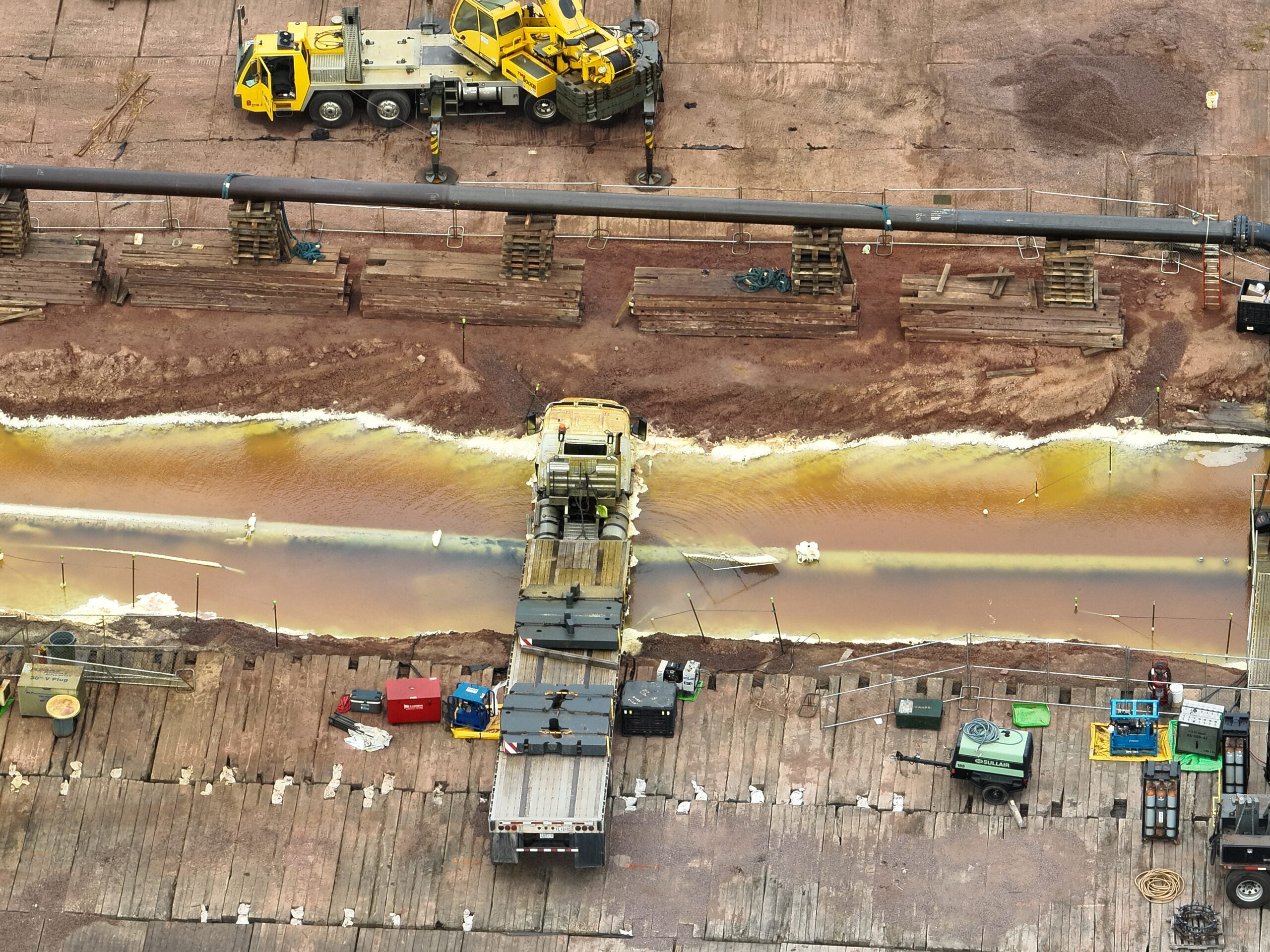
Enbridge said most of around 2,000 barrels, or 84,000 gallons, of natural gas liquids have dispersed at the site of an Aug. 25 leak in Iron County. The Canadian energy firm brought in equipment to burn off the remaining gas in a controlled manner. Photo courtesy of Enbridge
DNR Secretary Karen Hyun has told WPR and PBS Wisconsin that the agency has not yet been granted permission to access the site by PHMSA due to safety concerns. Beth Wallace, Great Lakes Climate and Energy Director with the National Wildlife Federation, said it’s “unheard of” that state agencies can’t access the site.
“We have major concerns that there may be an effort to preempt state oversight in this moment, and spill response absolutely requires state authorities to be part of the unified command,” Wallace told WPR.
Enbridge is now working on building a 1,500-ft long temporary bypass around the leak with a goal of restoring the pipeline to operation by Sept. 12. Wallace questioned whether an emergency order or approvals have been issued and by which agencies, adding the pipeline should remain shutdown until an investigation is done.
At least five releases of drilling fluid have occurred on the Line 5 reroute after another frac-out occurred on Sept. 2. The Milwaukee Journal Sentinel reported 100 gallons was released as the company drilled under the Potato River. Up to 1,900 gallons spilled during similar drilling in late June.
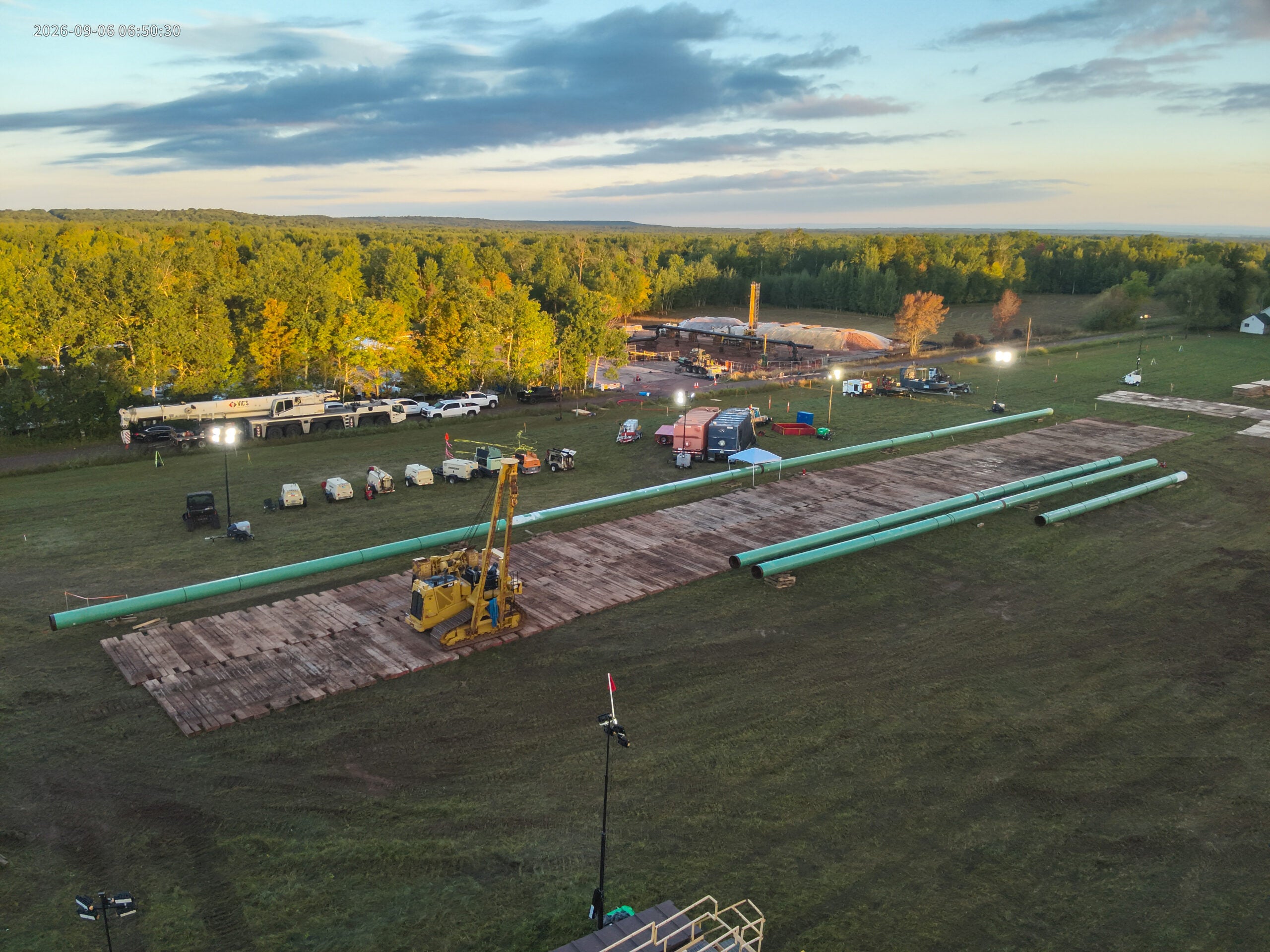
Crews are building a 1,500-ft. long segment around the site of Enbridge’s gas leak in Iron County. Photo courtesy of Enbridge
Line 5 typically carries up to 23 million gallons of crude oil and natural gas liquids daily from Superior to Sarnia, Ontario.
Enbridge has been building a new 41-mile segment of the 73-year-old pipeline around the reservation of the Bad River Band of Lake Superior Chippewa. The tribe and environmental groups have mounted legal challenges against state approvals for the project.
In 2020, Enbridge proposed the reroute after the Bad River tribe sued the company in 2019 to shut down and remove Line 5 from tribal lands where Enbridge lacked easements for the pipeline.
Three years ago, a federal judge found the company was trespassing and ordered Enbridge to pay roughly $5 million and shut down or reroute Line 5. The tribe and Enbridge appealed the decision. In August, a federal appeals panel ruled that Enbridge has been trespassing and must remove the pipeline from the Bad River reservation. However, it gave the company more time to complete the Line 5 reroute.
The company has completed construction on roughly two-thirds of the project, which employs around 700 workers.
Federal data shows Enbridge leak is the largest reported oil and gas spill in Wisconsin was originally published by Wisconsin Public Radio.
If you think stories like this are important, become a member of Urban Milwaukee and help support real, independent journalism. Plus you get some cool added benefits.