

Should Apostle Islands Be a National Park?
Tom Tiffany has pushed federal bill. Some local and tribal officials say infrastructure is lacking.
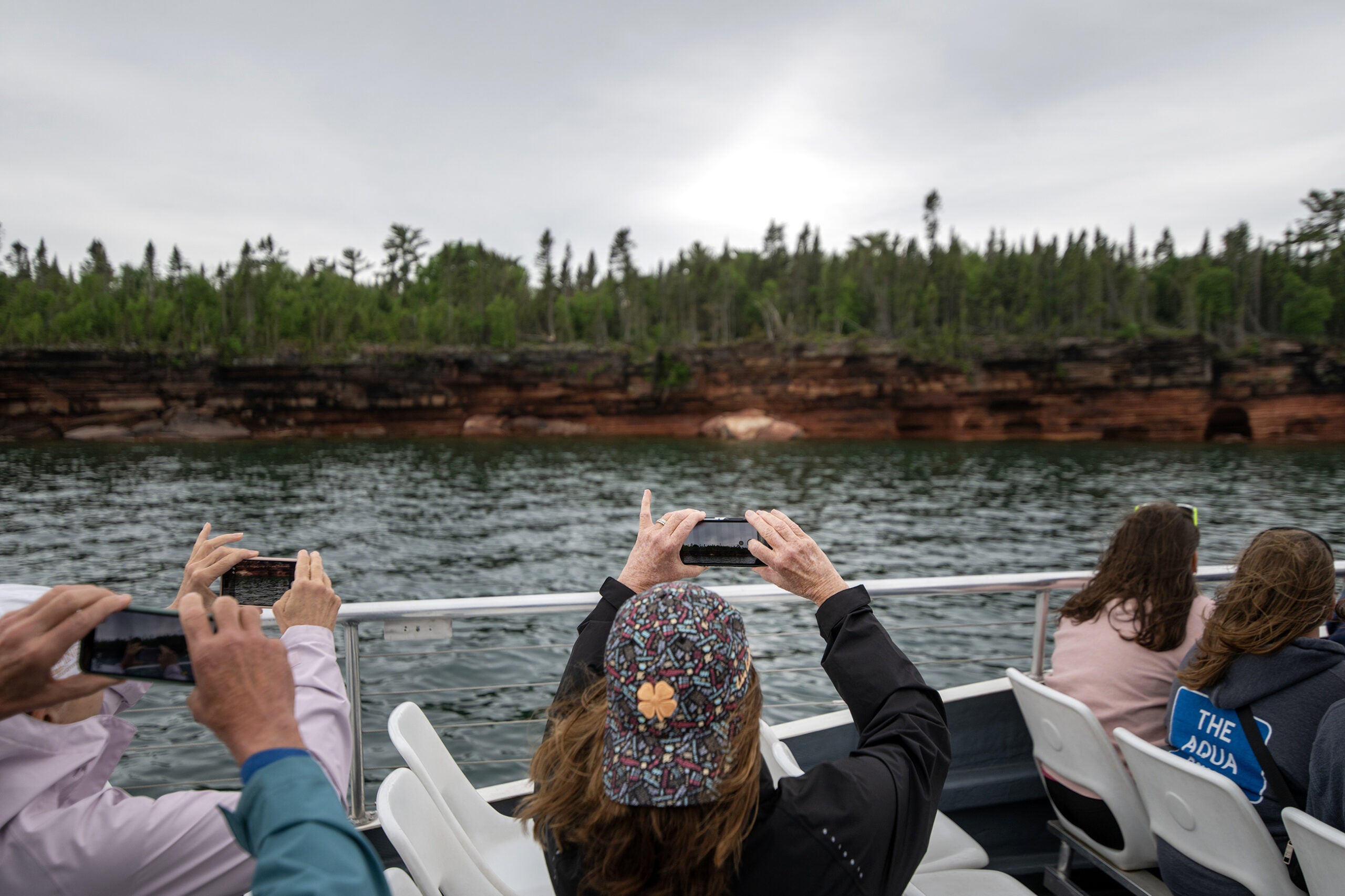
People take photos of the Apostle Islands during a cruise tour Wednesday, July 8, 2026, in Bayfield, Wis. Angela Major/WPR
Along the city dock in Bayfield, tourists are lining up to board the 65-foot long vessel, Archipelago, for Apostle Islands Cruises’ grand tour of the Apostle Islands. The islands are considered the crown jewels of Lake Superior, and hundreds of thousands of tourists visit each year to take in their sandstone cliffs and honeycomb caves.
Bayfield County Tourism Director Mary Motiff said the islands are the county’s most popular attraction by far.
“The Apostle Islands are literally the thing that puts us on the map, and it affects people from all over,” Motiff said. “Even people who are staying in Cable and Hayward and Duluth are making day trips to the Apostle Islands.”
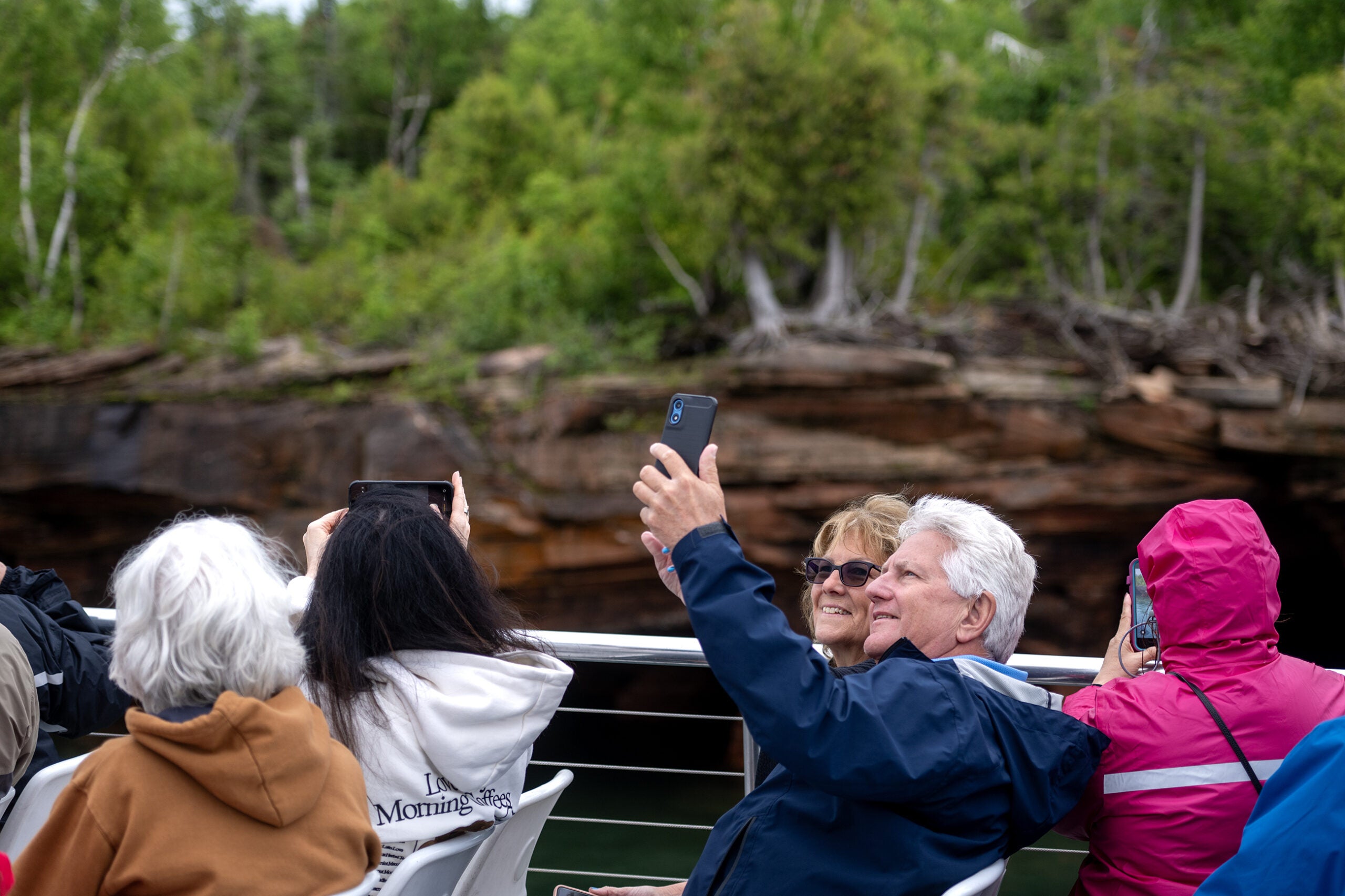
People take photos as they pass by the Apostle Islands on Wednesday, July 8, 2026, in Bayfield, Wis. Angela Major/WPR
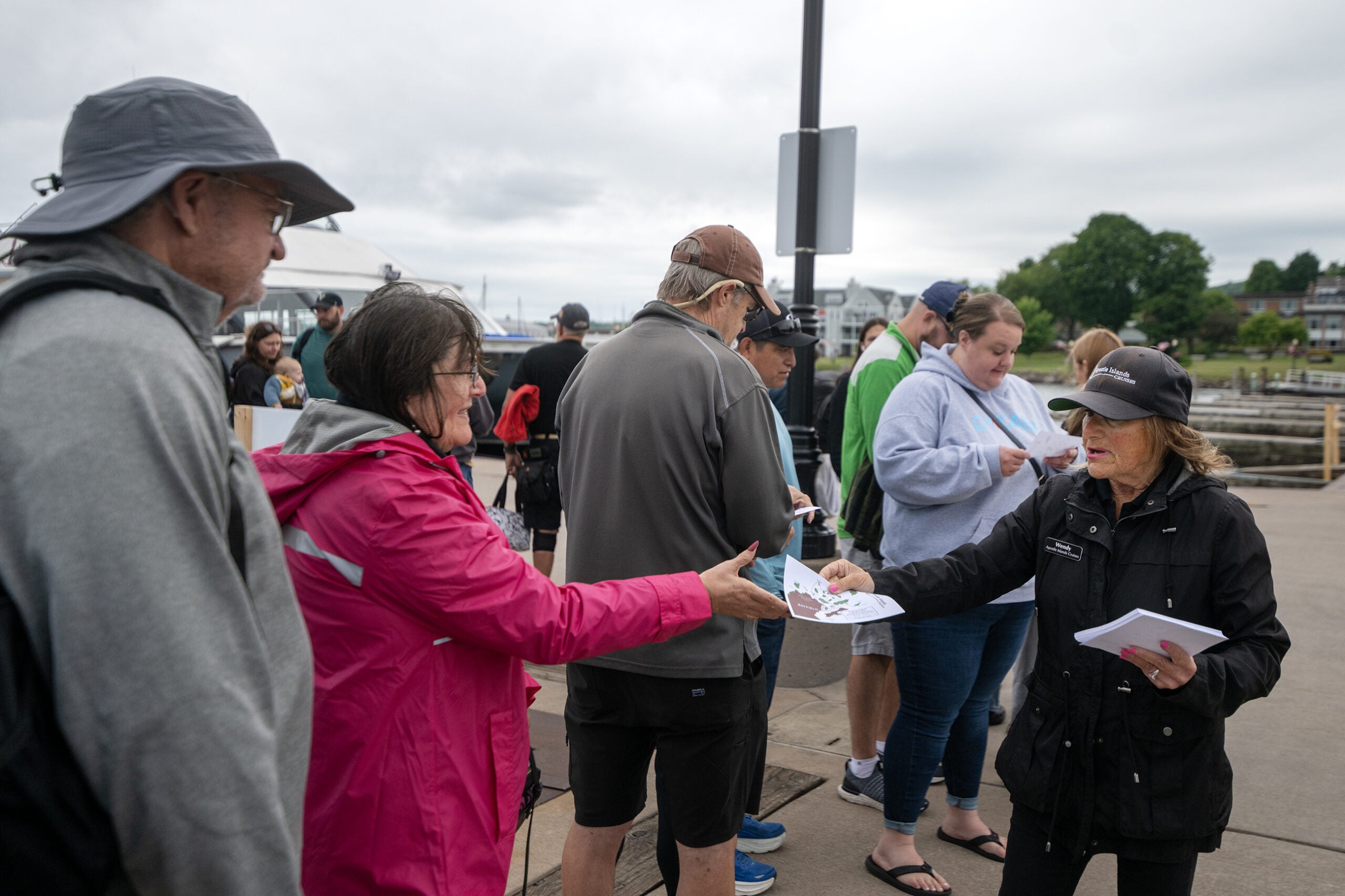
Wendy Young passes out maps and gives an introduction to a cruise to the Apostle Islands on Wednesday, July 8, 2026, in Bayfield, Wis. Angela Major/WPR
Lorna Turner is here from Illinois. As the boat glides toward them, she said visiting the islands has been on her bucket list for a while. She thinks it’s a great idea to make them a national park.
“It would probably draw more tourists here, which I think is probably a good idea,” Turner said. “Both for the economy and for the popularity of the islands.”
But a proposal by a GOP congressman to turn the islands into a national park has also been met with skepticism or outright hostility from many in the area, who worry that a new influx of tourists would compromise the relaxed atmosphere and potentially strain the region’s infrastructure.
Demaris Brinton, co-owner of Apostle Islands Booksellers, said she worries the designation would overwhelm Bayfield.
“It feels like a home, and it feels like a real community that can welcome visitors and can absorb the level of visitors we get now, without it feeling like an amusement park,” Brinton said. “The way it exists now just doesn’t seem like it would be able to maintain that character if you were going to expand it to increase the number of visitors that come here.”
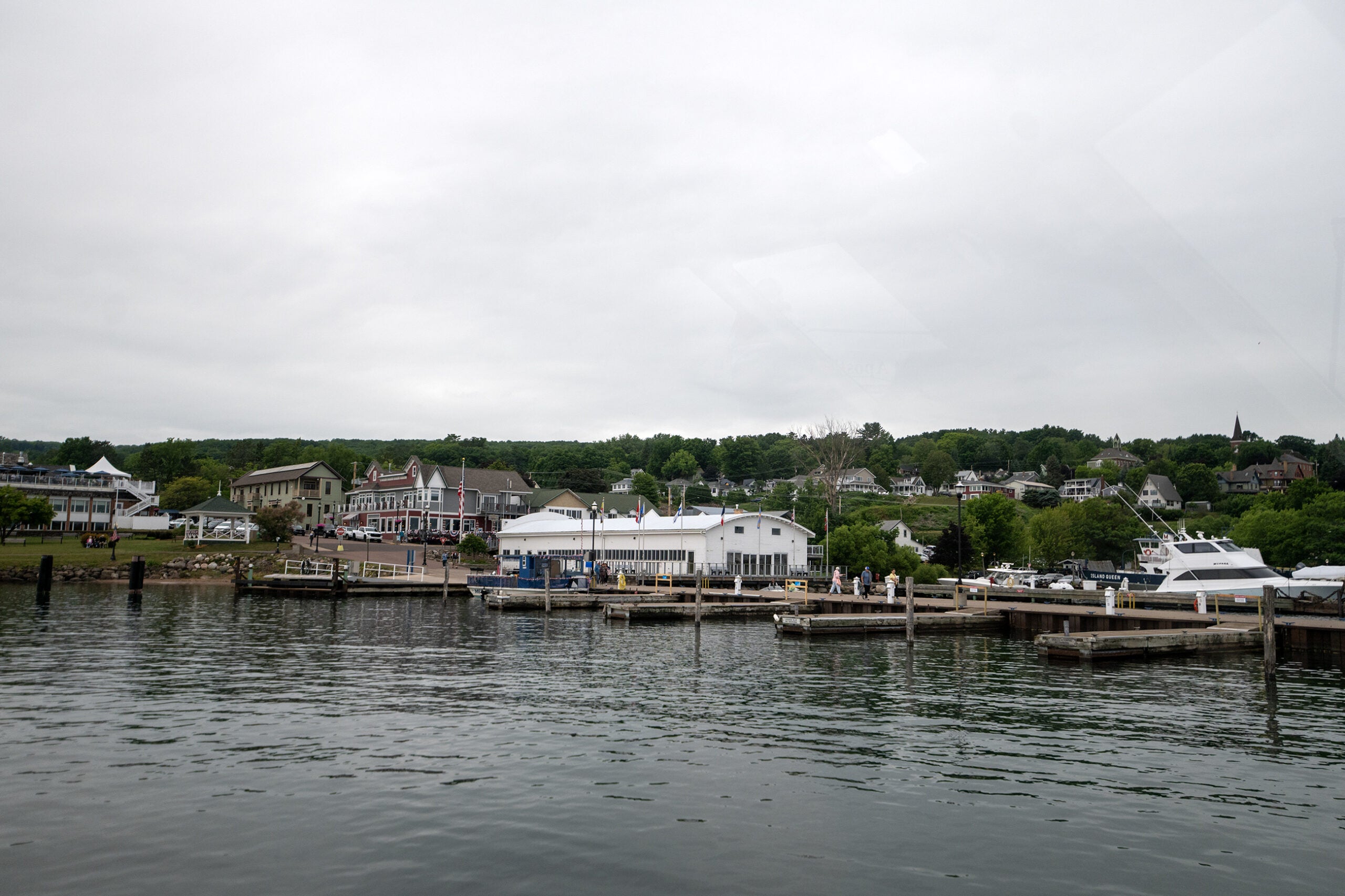
A docking area on Lake Superior on Wednesday, July 8, 2026, in Bayfield, Wis. Angela Major/WPR
Known as the Gateway to the Apostle Islands National Lakeshore, Bayfield’s roughly 600 residents make it Wisconsin’s smallest city. But during the summer tourism season, its population can daily swell to at least 3,000.
Almost a century ago, the first study was conducted to set aside the islands as a national park. Decades later, President John F. Kennedy recognized the islands were worth preserving during a conservation tour with Wisconsin U.S. Sen. Gaylord Nelson, who spearheaded an effort to designate the Apostle Islands National Lakeshore.
But a national park designation would bring new attention and more visitors to the region. Two years ago, U.S. Rep. Tom Tiffany, R-Minocqua, first introduced a bill to redesignate the Apostle Islands as the Apostle Islands National Park and Preserve. The proposal was met with immediate pushback from local communities and Lake Superior tribes. Opponents criticized the proposal for lacking details and providing few opportunities for local tribes and communities to weigh in about concerns.
Tiffany, now the Republican candidate for Wisconsin governor, has continued to push the proposal. Last fall, he reintroduced the legislation, saying at a U.S. House committee hearing in February that the recognition was long overdue.
“By elevating the Apostle Islands from a national lakeshore to a national park, we can ensure that thousands more are able to visit this area,” Tiffany said. “This will be a win for the people in my state and the country at large, as more people get to enjoy the crown jewels of Wisconsin.”
Tribes among those who say national park status would harm the region
The Apostle Islands were home to Native Americans for thousands of years before Europeans settled in villages and fish camps in the late 19th century. Sandstone quarries and logging companies once operated there, and they boast the largest collection of lighthouses in the National Park System.
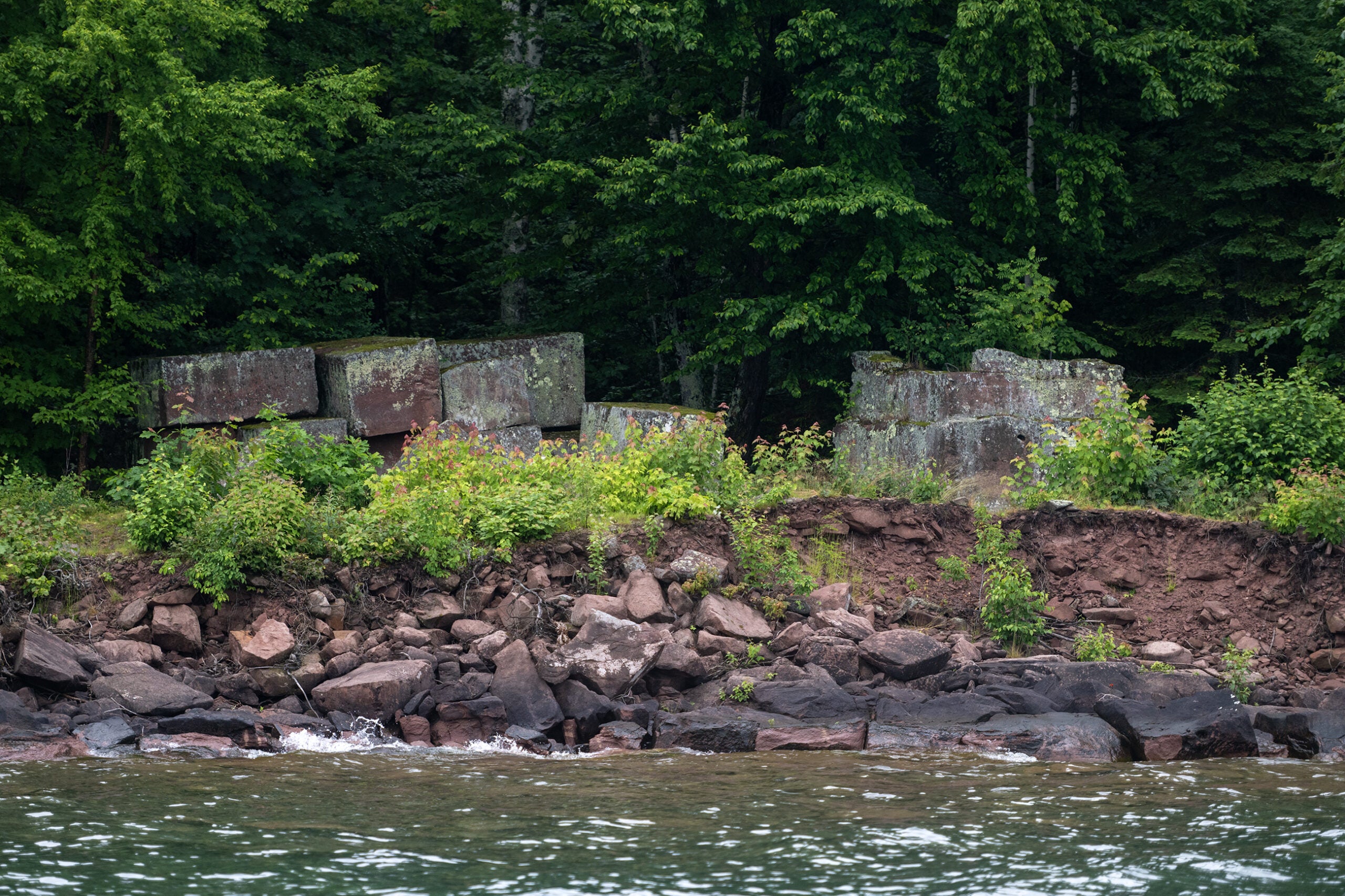
The remains of a former quarry have been left on the Apostle Islands on Wednesday, July 8, 2026, in Bayfield, Wis. Angela Major/WPR
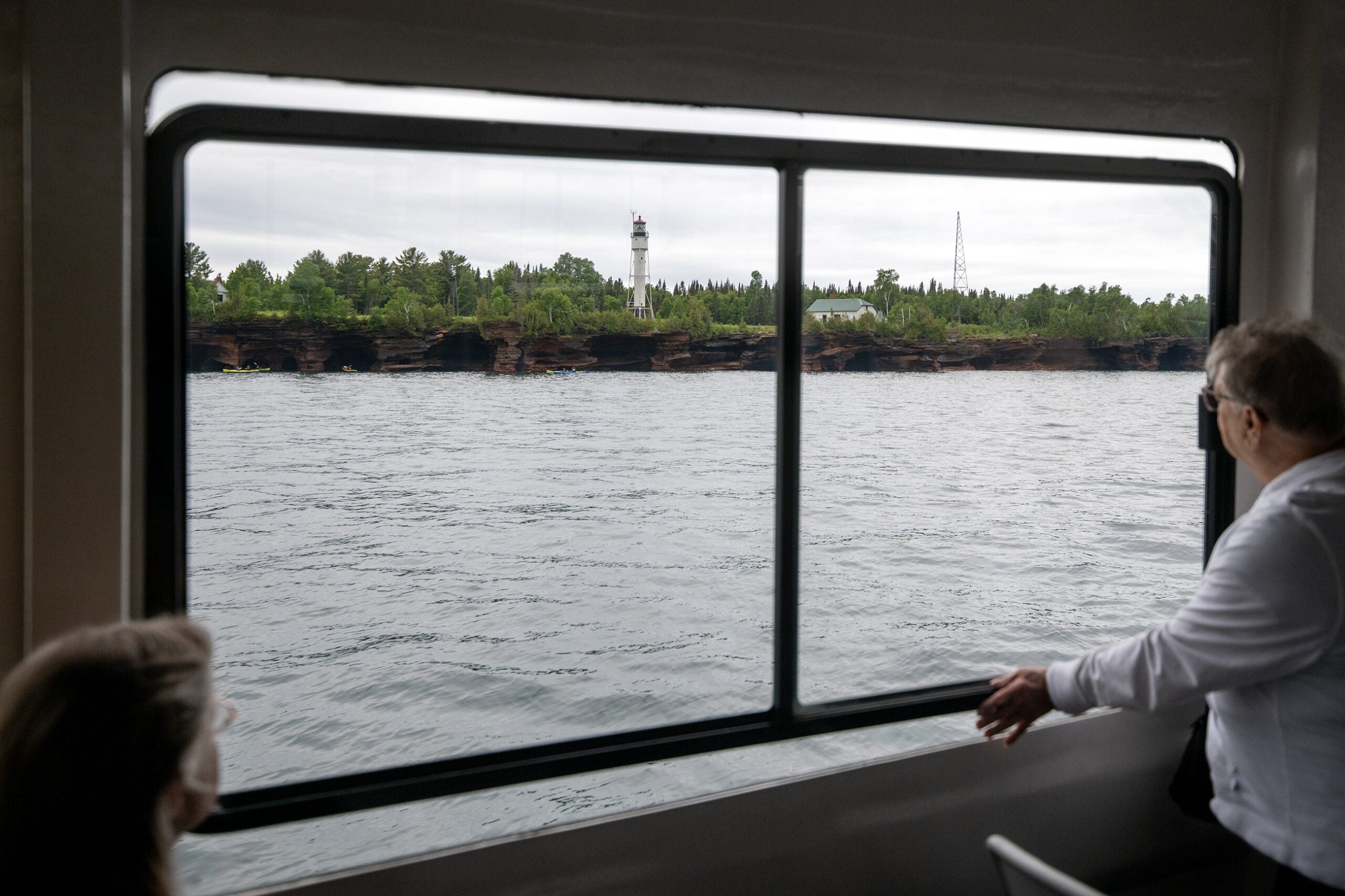
People gaze out of a window as they pass by the Apostle Islands on Wednesday, July 8, 2026, in Bayfield, Wis. Angela Major/WPR
Under his proposal, Tiffany has said the National Park Service would enhance displays on the area’s rich history. The Congressional Budget Office estimates it would cost less than $500,000 over the next five years to change signs and displays under the bill. Ownership and management of the area would not change. Tiffany’s office said Sand Island would be designated a national preserve to protect hunting, and tribal treaty rights would be upheld.
Tiffany didn’t grant WPR’s request for an interview, but he has said the redesignation would increase tourism and potentially double the economic impact in surrounding communities. Last year, roughly 261,000 people visited the Apostle Islands National Lakeshore. In 2024, visitors spent $49 million and generated a $60 million impact on the regional economy, according to most recent data.
Nicole Boyd said she doesn’t buy Tiffany’s “pinky promise” that treaty rights would be unaffected. She’s chairwoman of the Red Cliff Band of Lake Superior Chippewa. She noted that the islands are part of the tribe’s migration story.
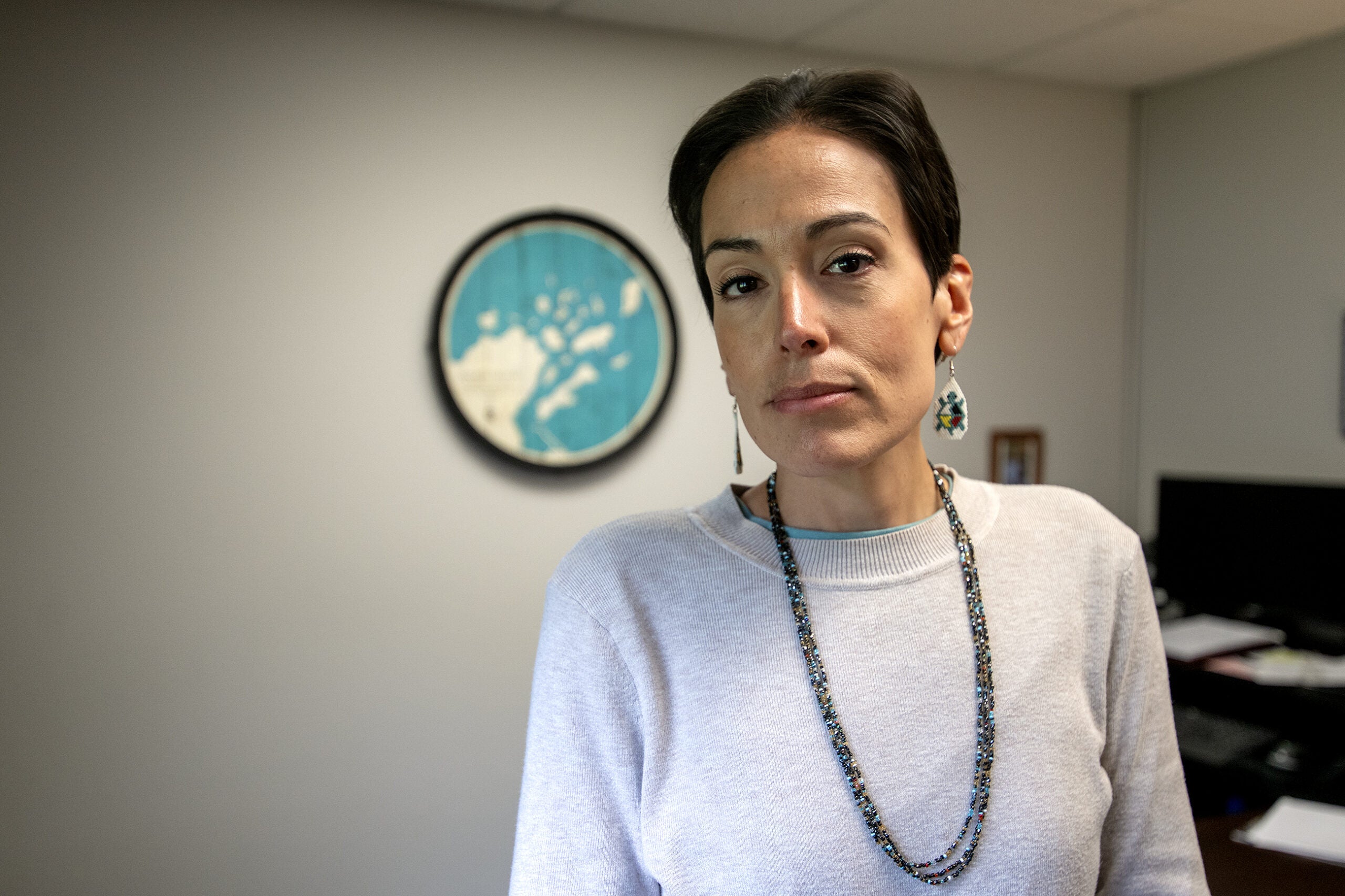
Red Cliff Band chairperson Nicole Boyd stands in her office Wednesday, July 8, 2026, in Bayfield County, Wis. Angela Major/WPR
Boyd said Tiffany didn’t hold hearings on the proposal locally and didn’t meet with the tribal council.
“We’re very worried about the safety of visitors if they were to come here, and we don’t have the emergency services in place. We don’t have the amenities in place, and mostly we’re worried about environmental impacts,” Boyd said.
In February, Tiffany urged against an amendment requiring tribal consultation on the proposal, saying it would further delay the process. He said his staff met with Red Cliff’s lobbyist more than a dozen times on the bill, resulting in language to protect tribal treaty rights to hunt, fish and gather. He noted that the tribe similarly opposed designation of the lakeshore more than 50 years ago.

A bald eagle sits in a tree on the Apostle Islands as a cruise passes by Wednesday, July 8, 2026, in Bayfield, Wis. Angela Major/WPR
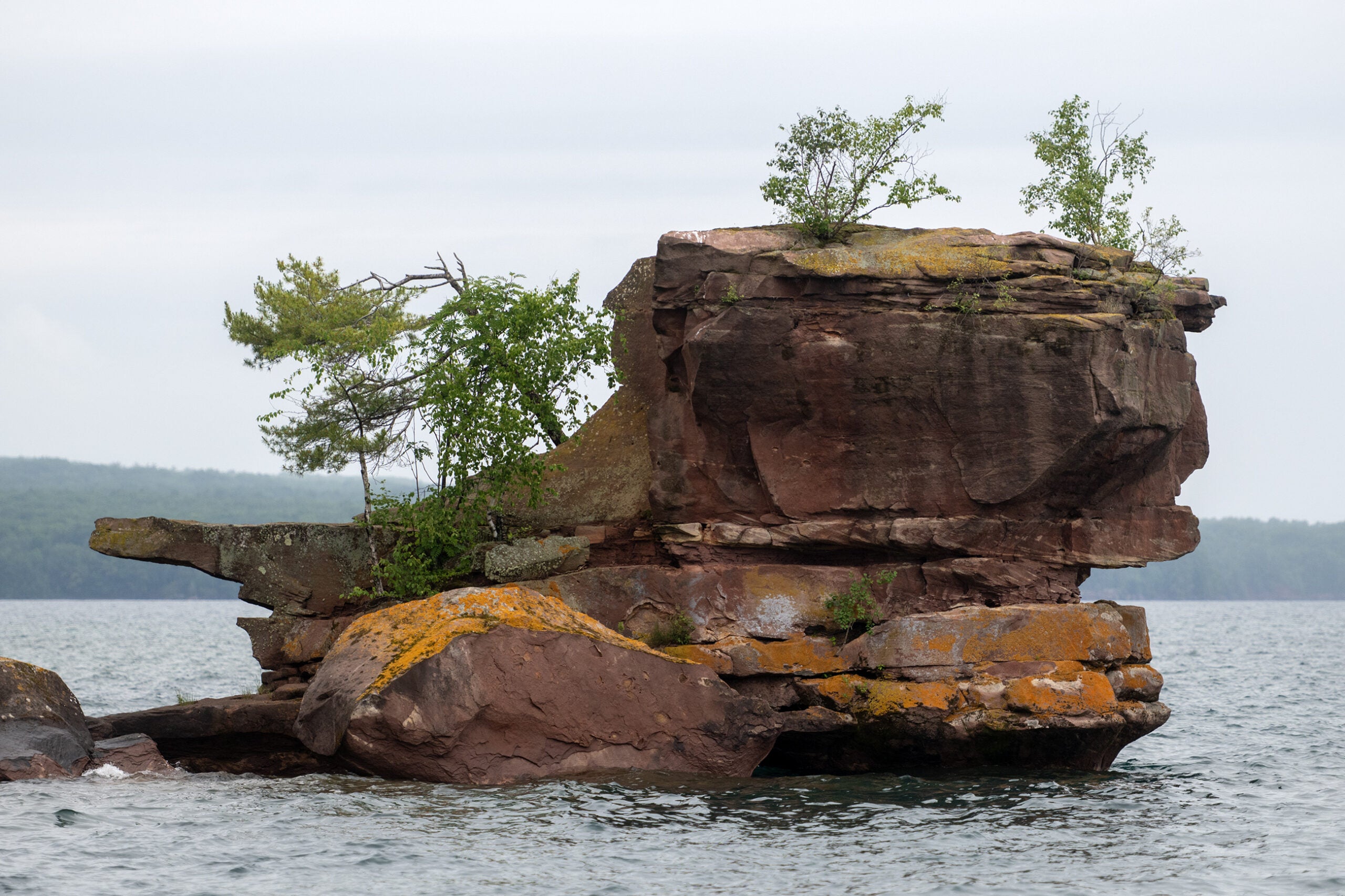
Trees grow on a rock formation off the Apostle Islands on Wednesday, July 8, 2026, in Bayfield, Wis. Angela Major/WPR
But Boyd is not alone in her concerns. Two years ago, Red Cliff and the Bad River Band of Lake Superior Chippewa passed resolutions in opposition to the bill along with Bayfield County, surrounding towns and the city of Bayfield. Bayfield Mayor Lyn Cornelius said the city’s position hasn’t changed.
“Tom Tiffany has not been here to sit down with us and discuss the possibility of this and the impact on the city of Bayfield,” Cornelius said. “They say the money can come afterwards. But if you’re going to have that influx of people coming in, we need that infrastructure built first.”
Under the redesignation, Cornelius and other local and tribal officials worry that more tourists will mean more traffic, trash and stress on already strained emergency services that rely on volunteers. Ambulance services in the county missed around 6 percent of more than 1,800 calls last year.
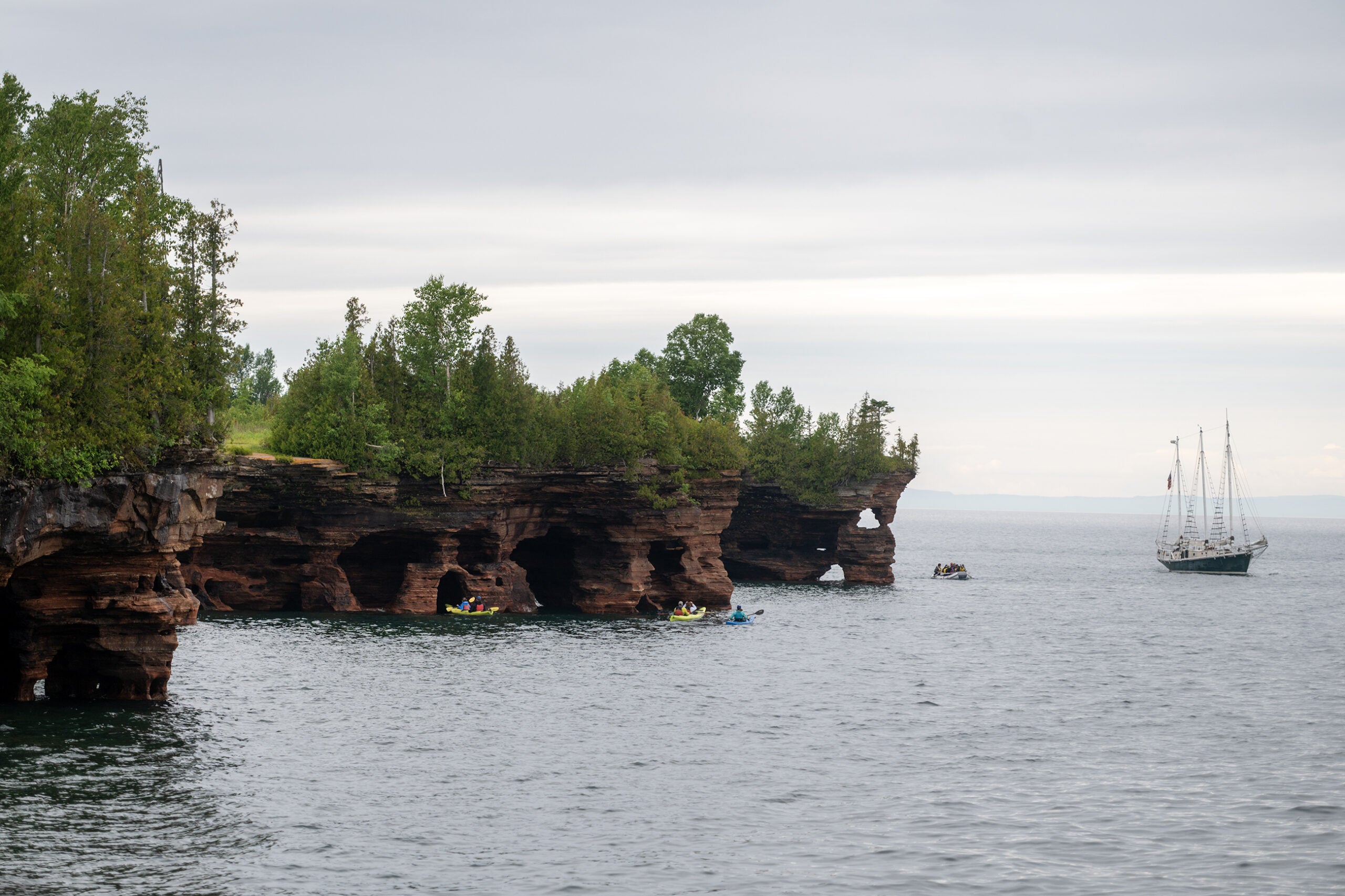
Kayakers explore the Apostle Islands on Wednesday, July 8, 2026, in Bayfield, Wis. Angela Major/WPR
They also point to a shrinking workforce amid the county’s growing aging population, of which around half of residents are 55 and older. Local officials also highlight a limited housing supply. More than 40 percent of county households are vacant, but many are seasonal homes or short-term rentals. Some estimates show around 750 housing units would be needed over the next five years to meet current demand.
Steve Finco, chair of the town of Oma in Iron County, is among northern Wisconsin community leaders, elected officials and economic development groups who back the proposal. He said the redesignation would bring in federal funding to address concerns raised by some local communities.
“There’s not going to be funding, there’s not going to be programs to support the visitors that would be there, until you get the designation,” Finco said.

A book features scenic photos of the Apostle Islands on Wednesday, July 8, 2026, in Bayfield, Wis. Angela Major/WPR
As he runs for governor, Tiffany is not seeking reelection to Congress, raising questions about the future of the proposal. In a statement, a spokesperson for his Democratic opponent for governor, Milwaukee County Executive David Crowley, said the proposal “shouldn’t be forced on Wisconsinites because they need to have a say in what happens in their local communities.” Michael Alfonso is the GOP candidate to succeed Tiffany in the heavily Republican district. Alfonso’s campaign manager William Blathras said Alfonso “looks forward to hearing directly from local officials, business owners, tribal nations, and others.” His opponent, Bayfield Democrat and former state lawmaker Fred Clark, opposes the proposal because it “would add dramatically to overcrowding and possible overuse of this beloved lakeshore without adding any additional resources to manage negative impacts.”
Bayfield economy depends on tourism spending
In Bayfield County, tourism is already big business, sustaining one in four jobs. The leisure and hospitality sector is the county’s largest industry. Last year, Bayfield County tourism generated a record $100 million economic impact as the state saw its highest number of visitors ever.
In early July, Paul Feckner and Janelle Dorn of Tuscon, Arizona, were among tourists on the Archipelago taking in the Apostle Islands for the first time. Dorn said the experience was a breath of fresh air from the dry, hot Arizona desert. For Feckner, he said he would vote to turn the Apostle Islands into a national park “in a heartbeat” to preserve them.
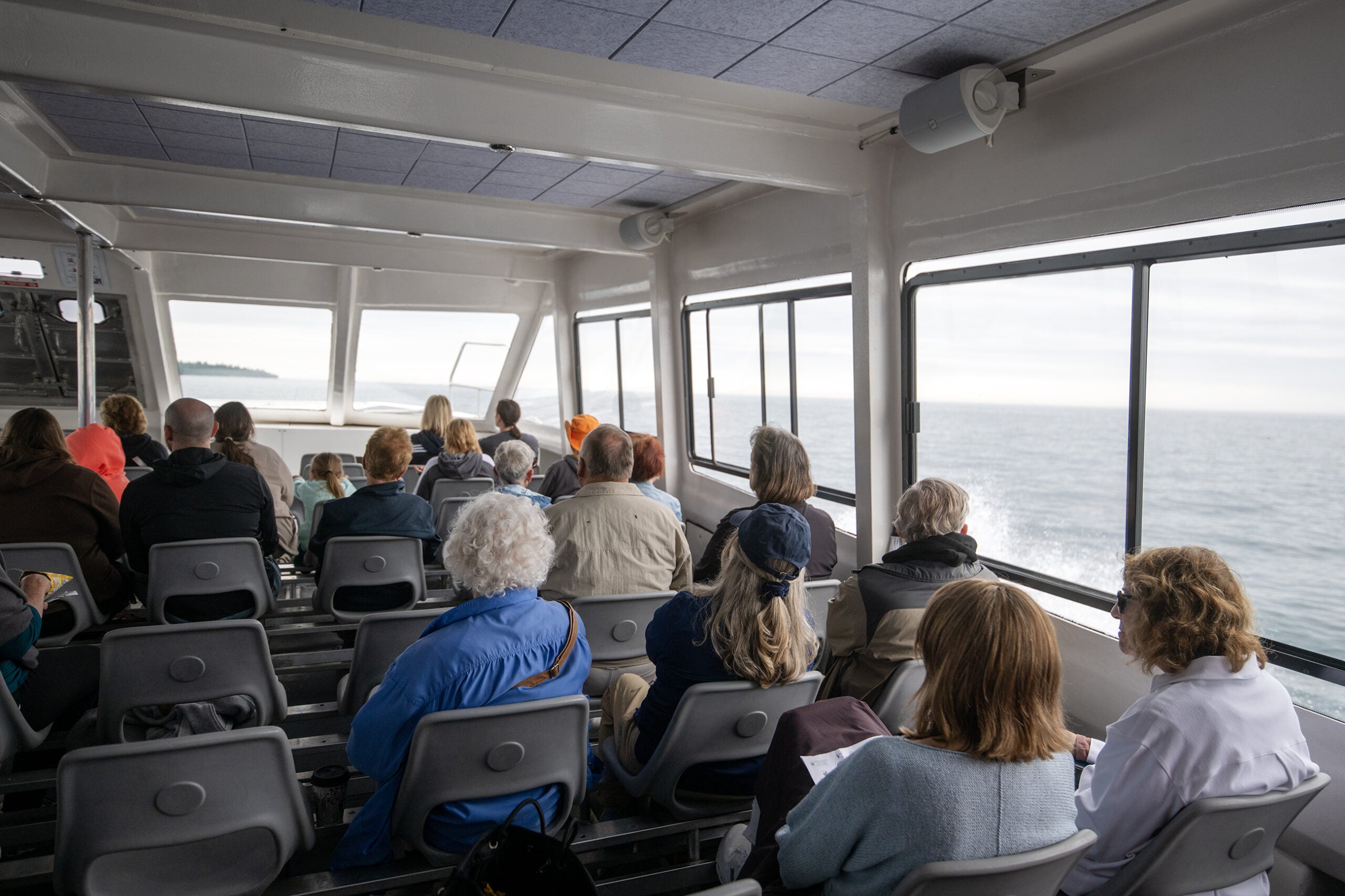
People look out windows at the Apostle Islands during a cruise Wednesday, July 8, 2026, in Bayfield, Wis. Angela Major/WPR
“You get probably more tourists here during the summertime. That influx brings in a lot of undesirable issues, so to speak: crowds, trash, traffic. Being a local up here, that would bother me,” Feckner said. “However, you’ve got to take the good with the bad because tourism brings in the money, and a lot of people make their living on that tourism money.”
Some economic development officials have supported the bill in the hopes that they could capture tourists traveling to the islands and the related economic boost, including Dick Hartman, economic development director for Burnett County.
“I did think it would bring more prosperity, more people, more money for existing industries, and help create additional industries,” Hartman said.
Yet he acknowledged concerns expressed by opponents and agreed there will be need for additional infrastructure improvements. Some communities and groups who initially backed the proposal have since pulled their support amid local concerns. They include the Bayfield County town of Barnes and Bayfield County Economic Development Corporation.
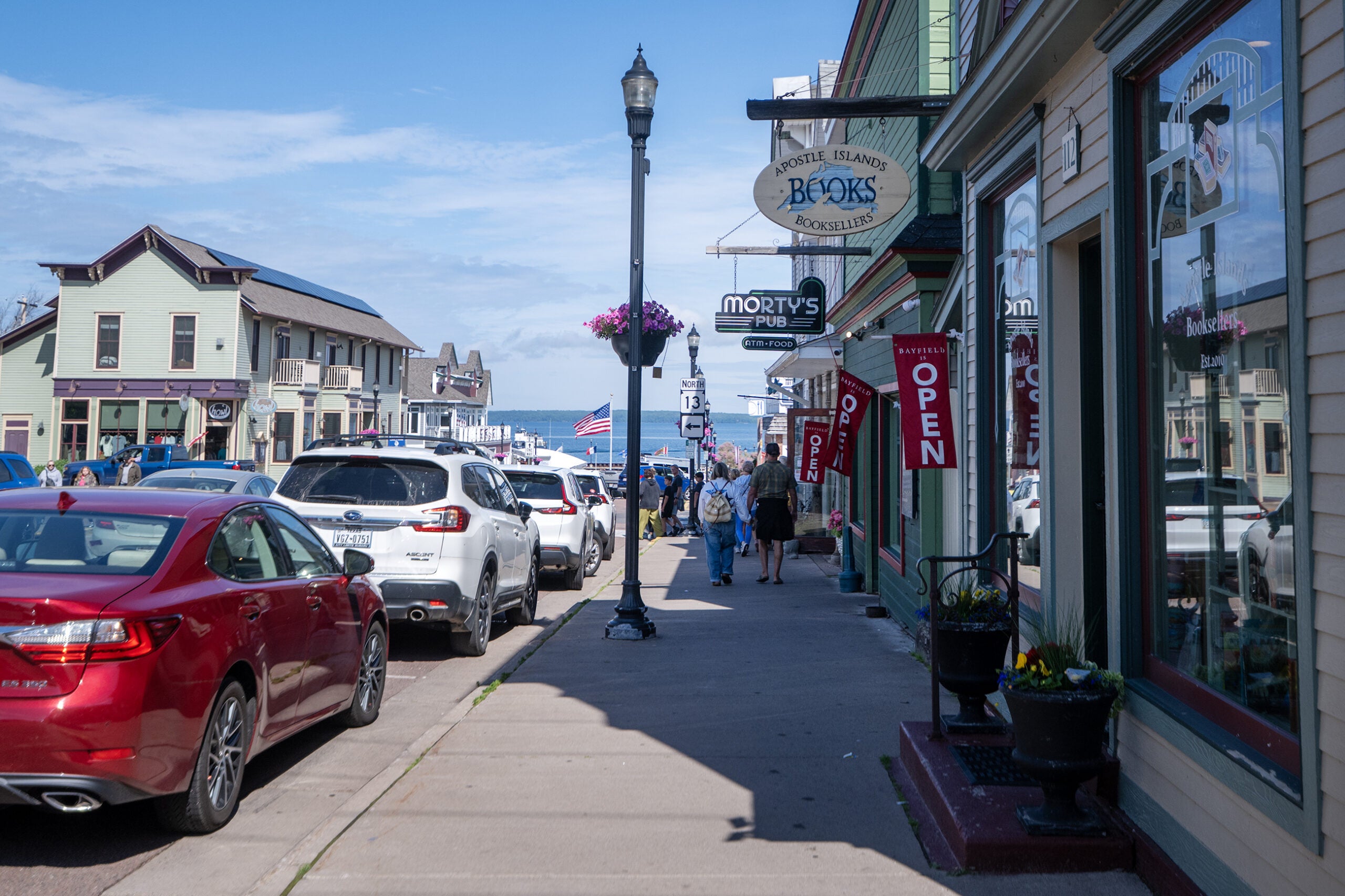
Pedestrians stroll on the sidewalk past businesses Wednesday, July 8, 2026, in Bayfield, Wis. Angela Major/WPR
Supporters say some want economic development, but not in their backyard. Hartman said he thinks the redesignation could be a benefit to the area if done properly, but thinks it would be wise to conduct a feasibility study.
Congress is not required to request a study in order to pass legislation on new designations, but the National Park Service recommends study of potential additions. The agency said it doesn’t comment on pending legislation.
Tiffany has pointed to Indiana Dunes. In 2019, the national lakeshore was renamed Indiana Dunes National Park under a spending bill signed by President Donald Trump. The number of visitors grew 50 percent from 2018 to roughly 2.6 million last year. During the same span, visitor spending nearly doubled from $77 million to $142 million in 2024.
A 2018 study by Headwaters Economics examined eight national parks that had been redesignated from national monuments. On average, it found visits increased 21 percent five years after redesignation, said Megan Lawson, economist with the nonprofit research group.
“There’s a lot of benefits that come with that but also strain that it absolutely puts on local communities,” Lawson said. “The more they can plan ahead, secure funding to support infrastructure upgrades and other needs that they’ll have, I think the more they can plan ahead, the better,” Lawson said.

A postcard is sold in a Bayfield, Wis., store Wednesday, July 8, 2026. Angela Major/WPR
Designation debate comes as NPS has seen slashing budget cuts
After Indiana Dunes was redesignated, Bill Lopez, council president for the town of Porter — a community of 5,200 people — experienced more visitors who spent multiple days in the area rather than day trips.
“There’s really, I would say, not that much negative impact other than we do run a little bit more overtime for the police department during the summer months with it, and the fire department has a greater number of calls,” Lopez said.
Lopez said they started a pilot program last year to staff their volunteer fire department with three firefighters during the day to handle calls from Memorial Day through Labor Day.
Emergency calls are a concern for Lissa Flemming. The Bayfield business owner said she volunteered for 10 years as an emergency medical technician for the city’s volunteer ambulance service. Beyond that, she’s worried about the capacity of National Park Service staff to accommodate more visitors.

Lissa Flemming works in her shop, Silverwaves Jewelry, on Wednesday, July 8, 2026, in Bayfield, Wis. Angela Major/WPR
“Our national parks right now are under attack anyway because there’s not enough staff,” Flemming said.
The National Park Service lost 16 percent or more than 3,100 full-time jobs as part of the Trump administration’s efforts to slash the federal workforce. Clark, the Democratic candidate in the 7th Congressional District, has said the lakeshore is down 15 positions from 28 employees. When asked, the agency didn’t provide details on current staffing or funding levels for the Apostle Islands National Lakeshore. An NPS spokesperson said the agency remains focused on providing meaningful experiences to visitors while responsibly managing resources.
Beta Bodin, president of Bodin’s Inc. in Bayfield, said national parks aren’t being funded to the levels they need to be properly managed.
“Why would we be in favor of increased traffic that a park might bring, if there’s no funding to support the infrastructure of the park?” Bodin said.
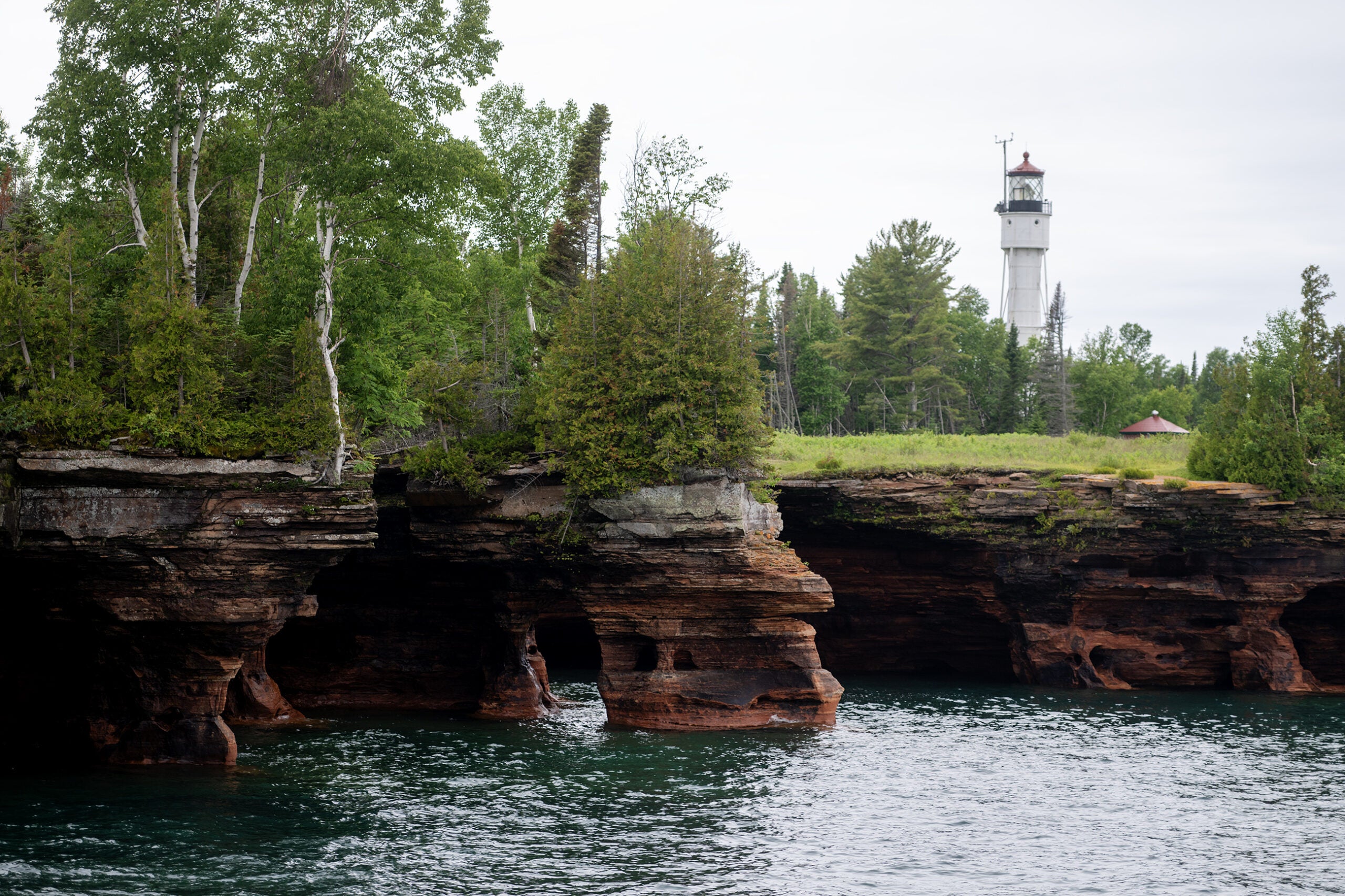
A lighthouse stands above the trees Wednesday, July 8, 2026, at the Apostle Islands in Bayfield, Wis. Angela Major/WPR
The Apostle Islands National Lakeshore is facing a $57 million backlog of deferred maintenance. This spring, the Trump administration requested $2.2 billion for the National Park Service in the 2027 budget — almost a third less than the agency received this year. In June, a U.S. House appropriations committee scaled back proposed reductions to a one percent cut from last year’s funding levels.
Still, Bodin and others are skeptical of Tiffany’s proposal, highlighting his voting record on public lands and environmental issues.
In 2020, Tiffany voted against the Great American Outdoors Act, which established a fund to address overdue maintenance needs on public lands and national parks. Tiffany has been critical of the agency’s management of the ongoing backlog, but he is now cosponsoring a bill that would extend and reauthorize the 2020 law.
No action has been taken on Tiffany’s bill since February. However, the proposal has been included in the House appropriations bill along with 50 other policy provisions. In June, Democrats attempted to strip those riders without success. Neither bill has been taken up by the full House.
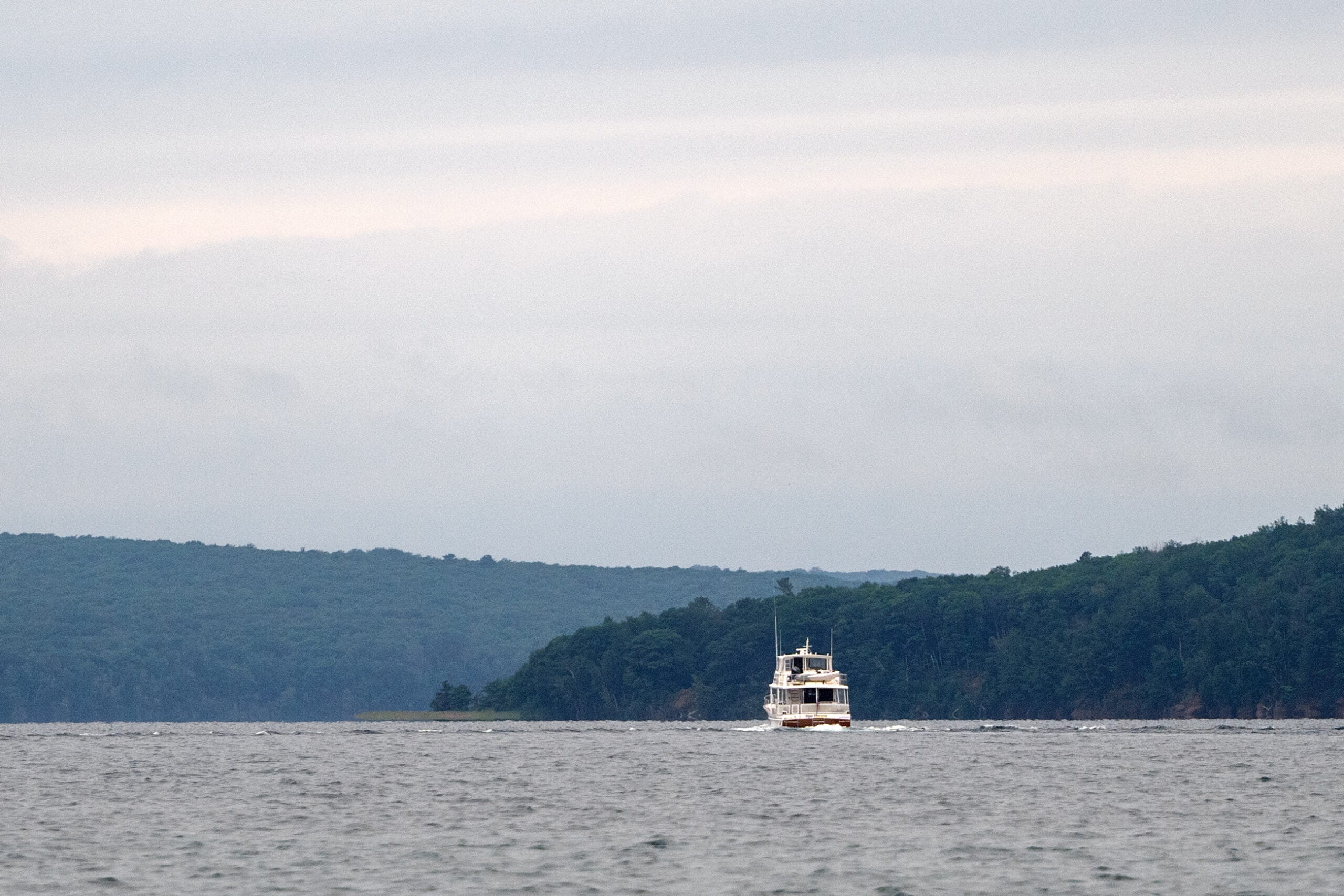
A boat travels near the Apostle Islands on Wednesday, July 8, 2026, in Bayfield, Wis. Angela Major/WPR
Should Apostle Islands be a national park? Some say proposal lacks community buy-in. was originally published by Wisconsin Public Radio.
If you think stories like this are important, become a member of Urban Milwaukee and help support real, independent journalism. Plus you get some cool added benefits.
Political Contributions Tracker
Displaying political contributions between people mentioned in this story. Learn more.






















Ashland, Bayfield, and Douglas counties surround the Apostle Islands and would be the most affected, all voted against Tom Tiffany in his Congressional races and will vote against him in the upcoming Governor’s race. To say he is not trusted or liked in these lake fronted counties and Reservations(Bad River,Red Cliff,LCO) is an understatement. He knows it and avoids meeting with the people who reside on Lake Superior like they have the plague. Tiffany was known as “Taconite Tommy” when he supported/worked for the “fly by night ” mining company Gtac in the Penokkee Range.even though he was not a Representative of the District where the mine was proposed. Fred Clark, the Democrat running in the Governor’s race lives in Bayfield and knows why the lake shore locals do not support the Tiffany bill.
Tiffany says that letting the people most impacted by his bill will slow down the process. Tiffany does not see the need for letting residents have a say in the process. This has been modus operandi of his party for the last 2+ decades. The National Lakeshore designation has worked for the last 60+ years. The designation has protected the fragile ecosystem and respect Native American treaty rights, as well as needs of local communities. My questions to Tiffany are, 1) How will your bill improve the management of the Apostle Islands without negatively impacting the ecosystem and all the local residents?
I think Tiffany’s bill is a solution looking for a problem. Just say no.