Two More Measles Cases In Wisconsin, Not Tied To Earlier Outbreaks
New Iowa and Lafayette county cases are separate from Dane and Waukesha infections linked to international travel, DHS says.
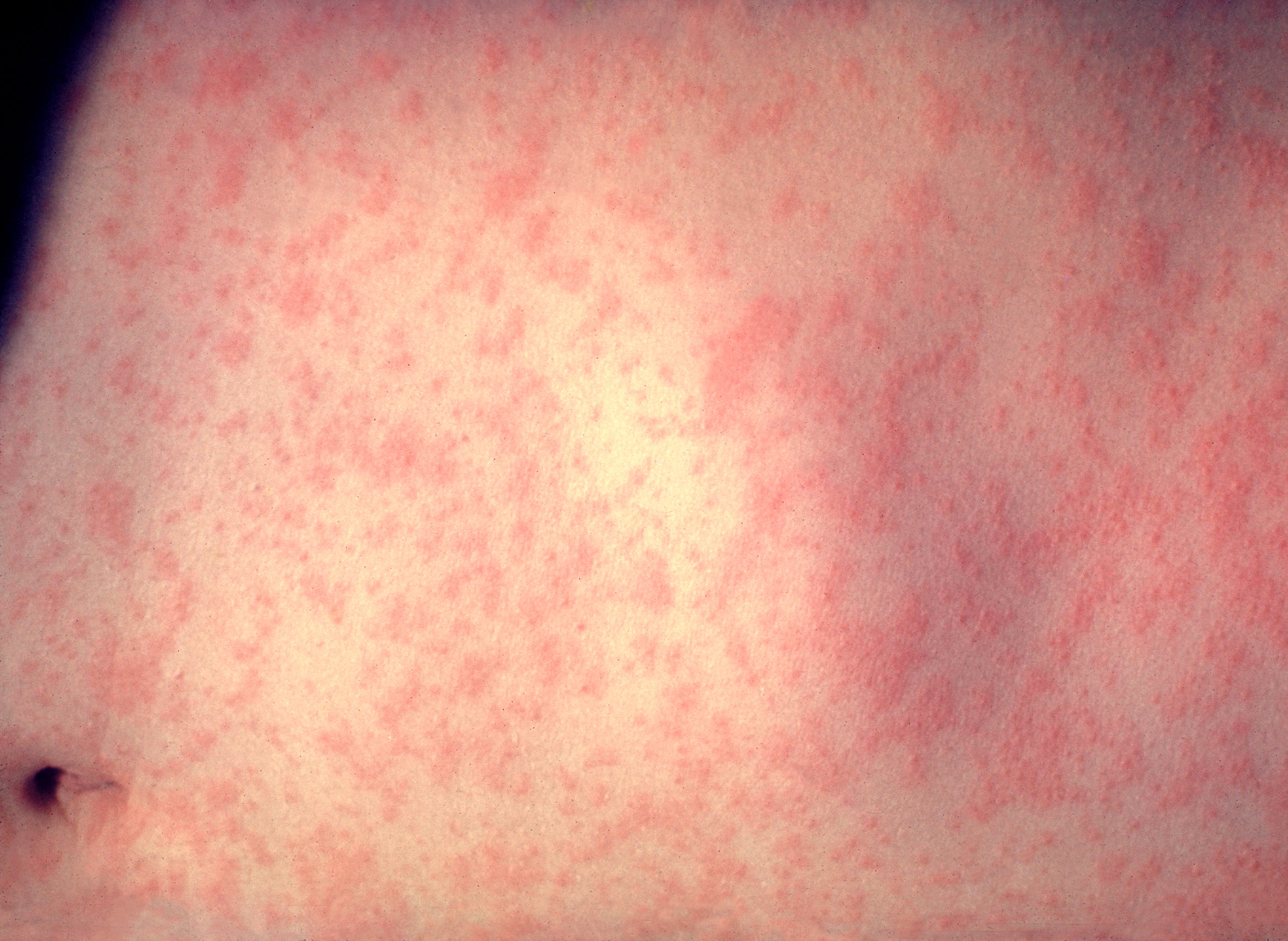
A skin rash is observed on a patient’s abdomen 3-days after the onset of a measles infection. The image was captured at New York Hospital-Cornell Medical Center in 1958. Photo by Heinz F. Eichenwald, MD /CDC Public Health Image Library.
State health officials have confirmed two new cases of measles among residents living in Iowa and Lafayette counties. Testing by the Wisconsin State Lab of Hygiene confirmed measles in an Iowa County resident and a Lafayette County resident, according to the Wisconsin Department of Health Services. The cases are unrelated to two reports of measles earlier this year among residents in Dane and Waukesha counties.
“The cases are believed to have been exposed in Wisconsin, suggesting there may be additional measles cases in communities that have not yet been identified,” the agency said in a news release.
Measles is a highly contagious virus that causes a high fever, cough, runny nose, red eyes and a widespread skin rash. Symptoms typically appear 10 to 21 days after exposure.
Health officials said an investigation is ongoing, and they’re identifying and notifying people who may have been exposed. The agency said no public locations have been detected where community members may have been exposed at this time, but DHS said it would update the agency’s website with any further developments.
State health officials are not identifying the individuals involved, citing privacy concerns.
In January, the agency reported the first measles case in a Waukesha County resident that was tied to international travel. In February, state and local health officials identified a second case of measles in a University of Wisconsin-Madison student that was also contracted during travel outside the country.
Measles spreads from person to person through the air or on surfaces for up to two hours after a sick person coughs or sneezes. If a person is infected with the virus, the Centers for Disease Control and Prevention said 9 out of 10 people will contract measles unless they’re protected. One in four people are hospitalized after contracting the virus, according to DHS.
Measles can be prevented with two doses of the measles vaccine, which is 97 percent effective. Adults born before 1957 are considered immune to the virus. Health officials say residents should check their vaccination status and notify their healthcare provider if they develop symptoms, and those exhibiting signs of the virus should stay home.
As of last week, more than 2,400 cases of measles have been confirmed nationwide this year. That’s the most cases since 1991, representing a 35-year high.
2 new cases of measles confirmed in Wisconsin was originally published by Wisconsin Public Radio.
If you think stories like this are important, become a member of Urban Milwaukee and help support real, independent journalism. Plus you get some cool added benefits.