
Wisconsin DNR Crews Help Battle Northern Minnesota Wildfires
About two dozen Wisconsin firefighters are cutting fire lines and chasing hotspots near Chub Lake and the Boundary Waters.
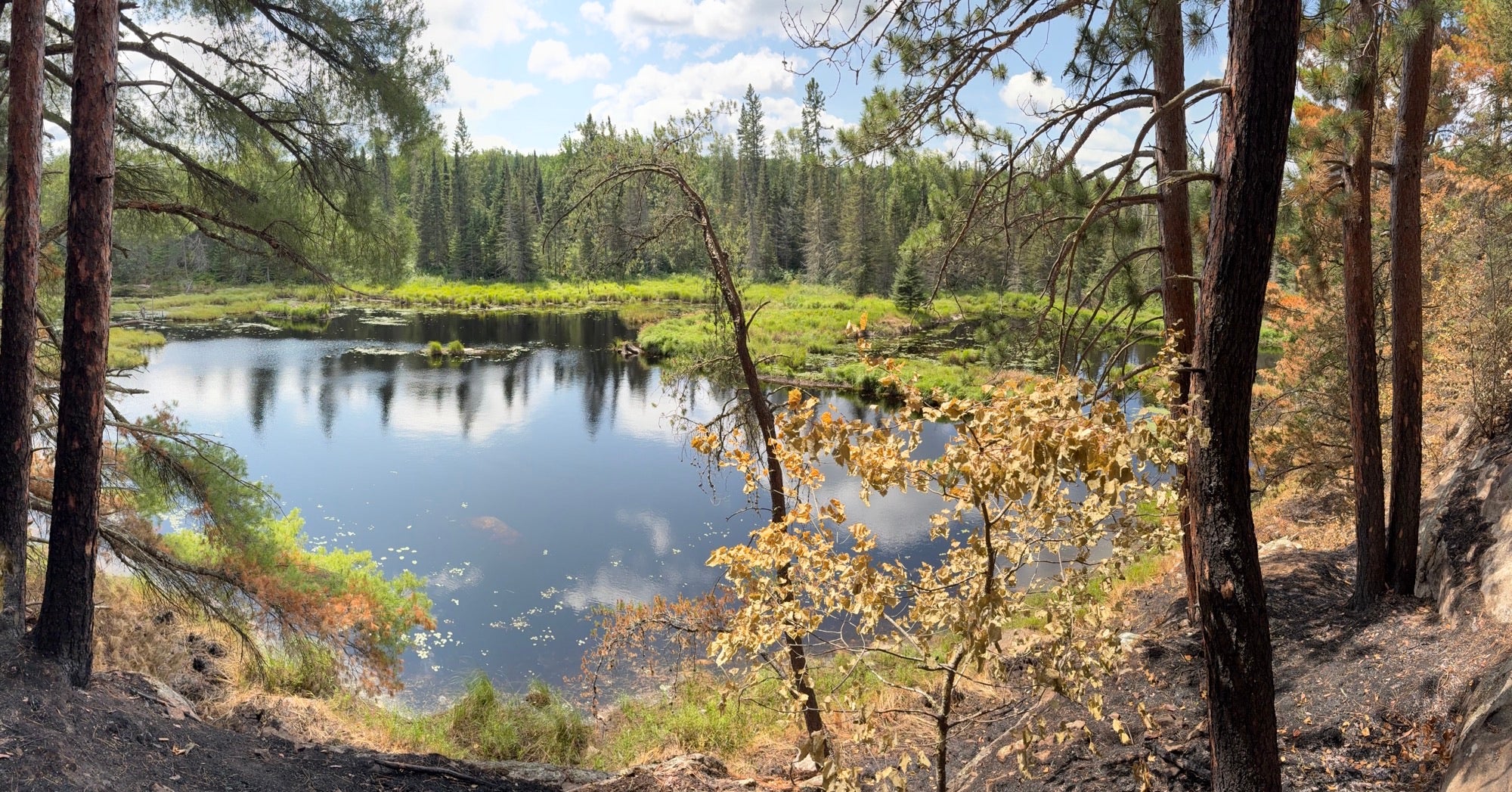
A remote beaver pond used as a water supply used to extinguish the Chub Fire in northern Minnesota. Photo courtesy of the Wisconsin DNR
Amid extreme heat, a crew of about 10 firefighters with the Wisconsin Department of Natural Resources sawed a path Sunday through the Superior National Forest as they sought to run hose from a beaver pond to douse a blazing wildfire.
The crew had just arrived for a two-week stretch to assist state, federal and local officials with beating back fires in northern Minnesota, said Keith Ploeckelman, the DNR’s crew boss for the team of firefighters.
“We were on saws the day we got here, and it was well over 90 degrees,” Ploeckelman said. “That was quite a workout. None of us were really 100% prepared for that.”
Earlier this week, more than 20 fires were burning across more than 70,000 acres in northern Minnesota and Canada, including the Boundary Waters Canoe Area Wilderness.
Ploeckelman and his team were cutting a 10-foot-wide line through remote and rocky areas to hold the line on smaller fires that include the roughly 350-acre fire north of Chub Lake. As of Thursday, the blaze was more than 86 percent contained, aided in part by rain.
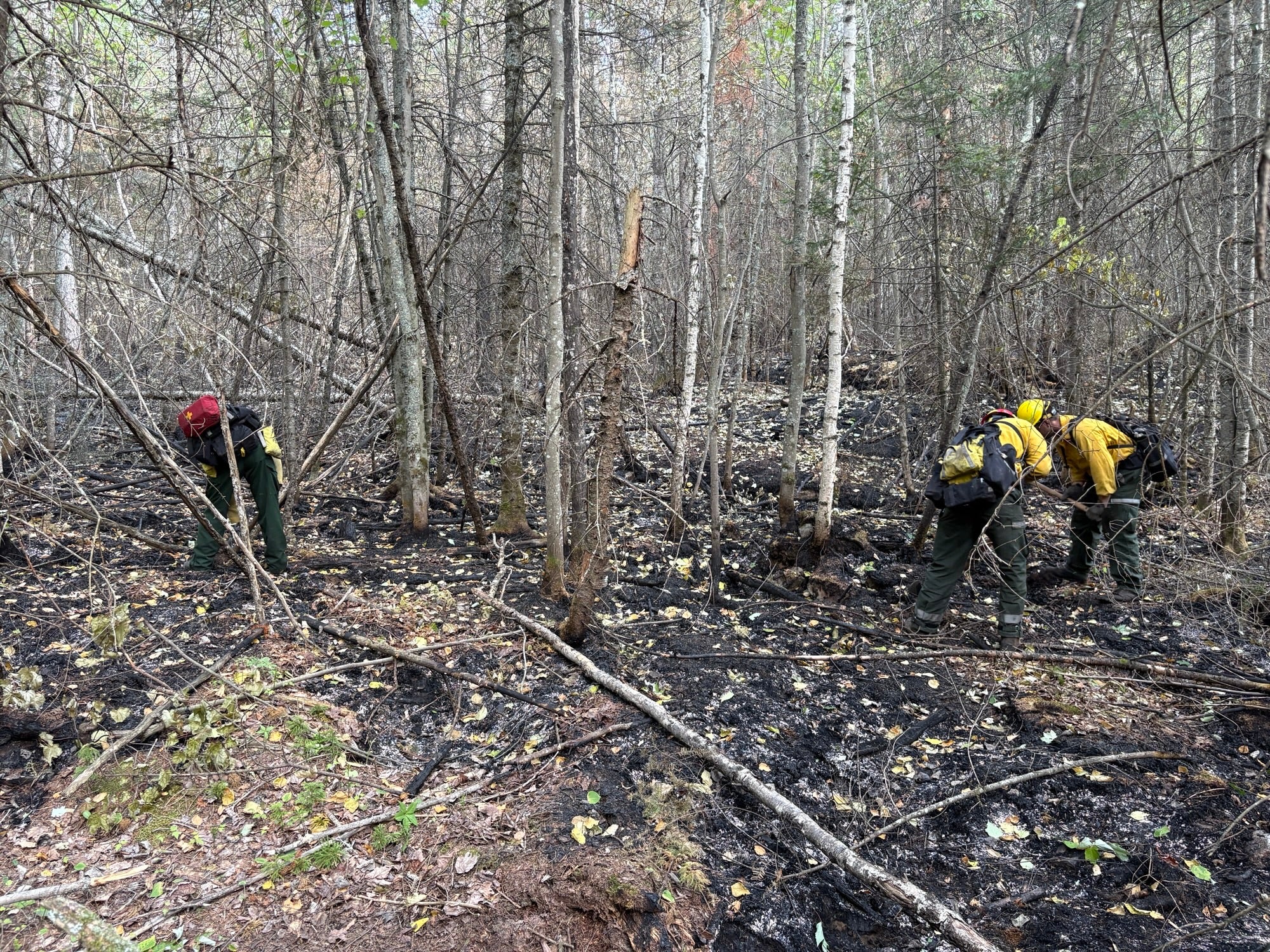
A crew of Wisconsin DNR firefighters checks for heat along the edge of the Chub Fire in northern Minnesota. Photo courtesy of the Wisconsin DNR
While the fire isn’t moving much, Ploeckelman said it’s burned through the soil and roots of trees, prompting safety concerns at times.
“We dealt with some pretty windy conditions the other day, and it got to the point where we just decided to disengage because there were so many trees falling down that we just went and found a spot where it was safe to stand by until the wind died down,” he said.
The fire has been smoldering under a thick layer of leaf litter on the ground, stemming from lightning strikes earlier this month. Derek Jochimsen, DNR crew boss trainee, said it’s been challenging to run hose to the edges of the fire and put out hotspots.
“We might have to dig 1 to 2 feet down to get all of the heat extinguished out of some of these areas because there’s that much organic matter built up,” Jochimsen said.
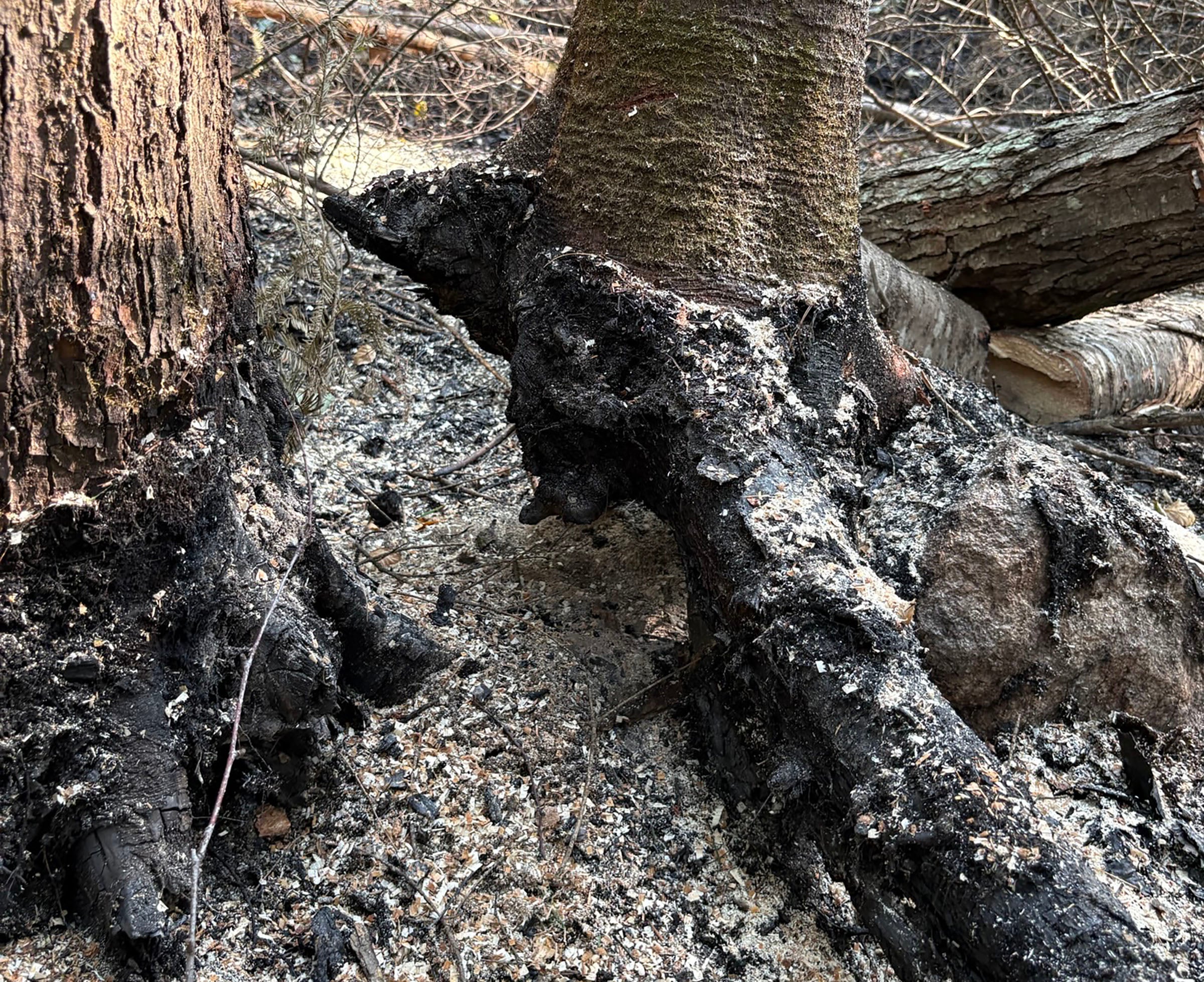
Charred roots have created unstable trees during windy conditions as Wisconsin DNR firefighters work to contain the Chub Fire in northern Minnesota. Photo courtesy of the Wisconsin DNR
About two dozen firefighters from the Wisconsin DNR are among roughly 800 firefighters battling blazes in northern Minnesota. Jim Kujala, soon-to-be-chief of the DNR’s Forest Fire Protection Section, said they’ve sent 88 staff to nine states so far this year.
“That’s slightly above average for this time of year. We’re still fairly early in the fire season,” Kujala said.
On Wednesday, he was driving back from Idaho, where he and others had been helping battle the nearly 7,000-acre Claremont fire.
It’s been a busy fire season for western states. More than 41,000 fires have burned nearly 3.9 million acres so far this year, according to the National Interagency Fire Center. The center is forecasting above-normal risk of wildfires across portions of the west as drought conditions have worsened in areas, including in Minnesota.
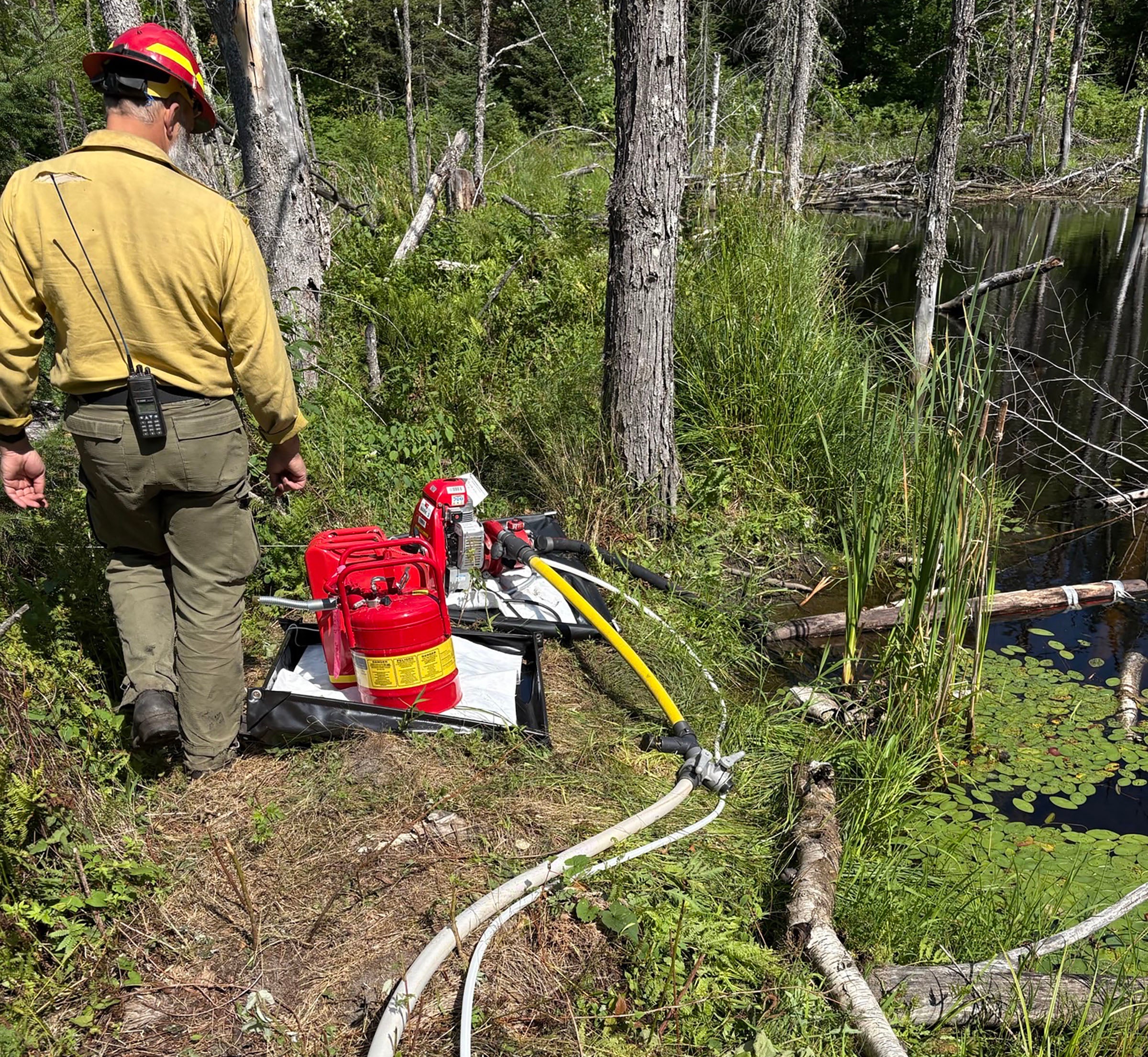
A pump is set up to draw water from a pond as firefighters run a mile of hose through the forest to put out smoldering segments of the Chub Fire. Photo courtesy of the Wisconsin DNR
Kujala said they’re keeping an eye on drought conditions creeping up in Wisconsin as they decide how many personnel to devote to out-of-state fires. Staff and equipment are shared through mutual aid agreements with federal agencies including the Forest Service and the Great Lakes Forest Fire Compact. The compact includes Wisconsin, Michigan and Minnesota along with Canadian provinces Manitoba and Ontario.
“A lot of our staff, they’re in the job because they love doing that work,” Kujala said. “There is adventure and the benefit and satisfaction you get from helping save homes, helping get the fires put out.”
Crews are often working 16-hour days and resting at night in houseboats offered by the Voyagaire Lodge in Crane Lake.
On hotter days, they’ve had a difficult time keeping saws running. As aircraft dumps water on flames that have reached hundreds of feet in the air, their work is focused on dragging through the dirt to find embers still burning.
“You have to do a really good job, or you’re going to be back when it starts burning again,” Ploeckelman said.
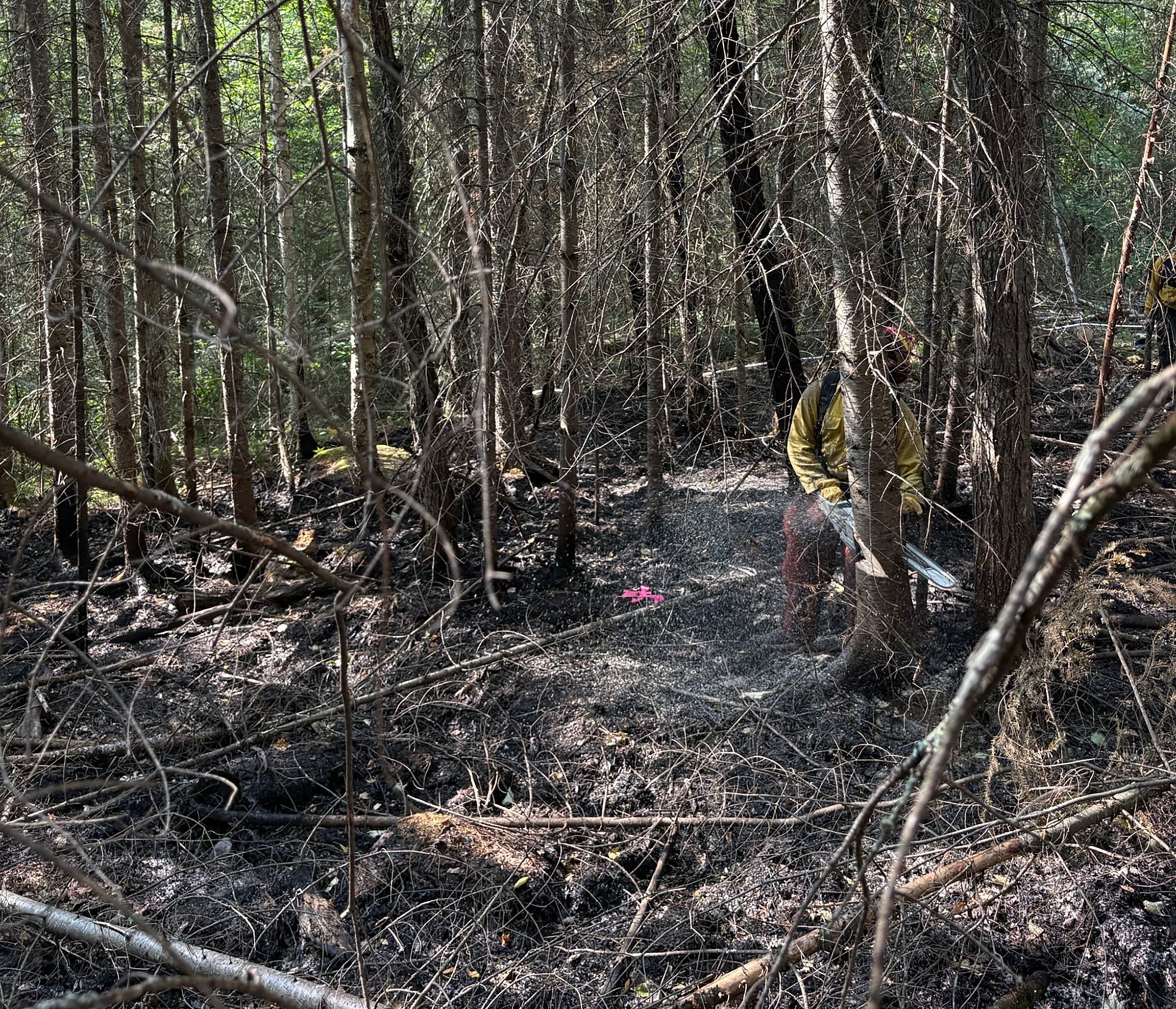
A Wisconsin DNR crew saws down trees weakened by the Chub Fire in northern Minnesota. Photo courtesy of the Wisconsin DNR
Minnesota Public Radio reported 8,000 campers have been evacuated due to the fires along with dozens of homes, resorts and cabins around Ely. Wildlife are also fleeing the flames.
“We were driving our rigs down the road, and a wolf crossed in front of us and was running through the burned area of the fire and just trying to get from point A to point B,” Jochimsen said.
Jochimsen and Ploeckelman will be fighting fires in northern Minnesota through Aug. 1, and Kujala said the DNR has been in talks with federal partners about sending another 10 to 20 staffers to assist next week.
The experience allows Ploeckelman and Jochimsen, who both have been fighting fires for 18 years, to develop skills they can use to fight fires back home. Jochimsen said it’s a great opportunity to help their neighbors in need.
“Everyone’s there for the same reason,” he said. “We’re all there to help.”
Wisconsin DNR staff help battle back fires in northern Minnesota was originally published by Wisconsin Public Radio.
If you think stories like this are important, become a member of Urban Milwaukee and help support real, independent journalism. Plus you get some cool added benefits.