
Milwaukee Study Finds Post-COVID Shift in Suicides
Older people, Black residents now make up higher percentage of suicides.
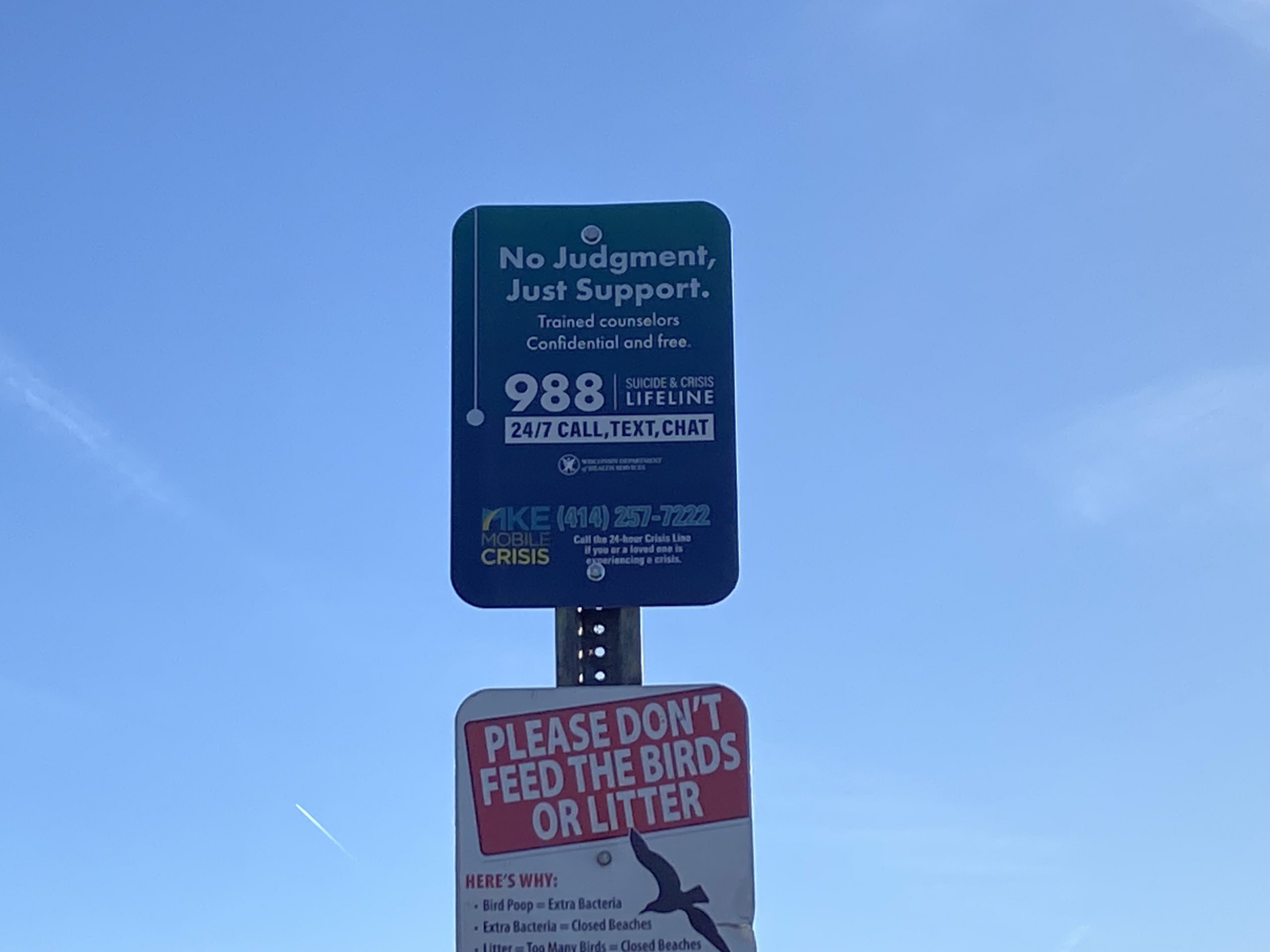
A new suicide prevention sign posted along Milwaukee’s lakefront. Photo taken Nov. 13, 2025 by Graham Kilmer.
New data from Milwaukee County highlights how rates of suicide have changed since the COVID-19 pandemic.
Milwaukee County, the Medical College of Wisconsin and the Greater Milwaukee Foundation partnered on the study comparing demographic information from suicide deaths before and after March of 2020.
Preliminary data from the report does not show a notable change in the overall rate of suicide going back to 2002, according to Dr. Ben Weston, Chief Health Policy Advisor for Milwaukee County.
He said the total number of deaths in a given year has ebbed and flowed over time, from a low of 87 suicide deaths in 2002 to a peak of 156 deaths in 2017.
But the demographics of people who have died of suicide have shifted.
Since the pandemic, a larger percent of suicide deaths are happening among people age 65 and older. Nineteen percent of suicides in the county since March 2020 have been in older adults, compared to around 12 percent in the nearly two decades before — a 54 percent relative increase.
There was also a 42 percent relative increase in suicide deaths among Black residents. The population made up 14 percent of deaths prior to the pandemic, but has since made up nearly 20 percent of deaths.
“These findings matter because they help us to better understand where prevention efforts need to evolve,” Weston said. “I think they also reinforce that suicide prevention doesn’t take a one-size-fits-all approach.”
He said the COVID-19 pandemic caused new sources of stress, from increased isolation to economic pressures like job losses and a higher cost of living.
But Weston said other factors pre-date 2020 and have simply gotten worse over time, including a lack of access to affordable health care and the continued epidemic of loneliness that’s been identified nationwide.
These pressures are taking a toll on residents across the state, said Leah Rolando, Suicide and Drug Harm Prevention Specialist with Safe Communities in Dane County. She said they have also seen more older adults dying from suicide, and she said the increasing cost of health care and insurance is playing a role.
“In the data that we get on suicide deaths in Dane County, we’ll see health conditions listed as a risk factor, or chronic pain listed as a risk factor,” she said.
While her group focuses on providing resources to people in crisis, she said ensuring state residents have their basic needs met before they are struggling is critical to curbing future suicide deaths.
“I think we can do both, and just try to connect people more in a world that’s increasingly disconnected,” she said.
In Milwaukee County, Weston said officials are also hoping to better understand trends in suicide attempts by studying data collected by emergency medical services.
He said the study authors will use artificial intelligence to sort through the 150,000 EMS calls in the county each year to identify cases of suicide attempts and highlight trends that could inform future prevention efforts.
Milwaukee study highlights post-COVID shift in suicide deaths was originally published by Wisconsin Public Radio.
If you think stories like this are important, become a member of Urban Milwaukee and help support real, independent journalism. Plus you get some cool added benefits.