
EPA Announces $94 Million for Wisconsin to Replace Lead Pipes
Federal money comes from 2021 bipartisan infrastructure law.
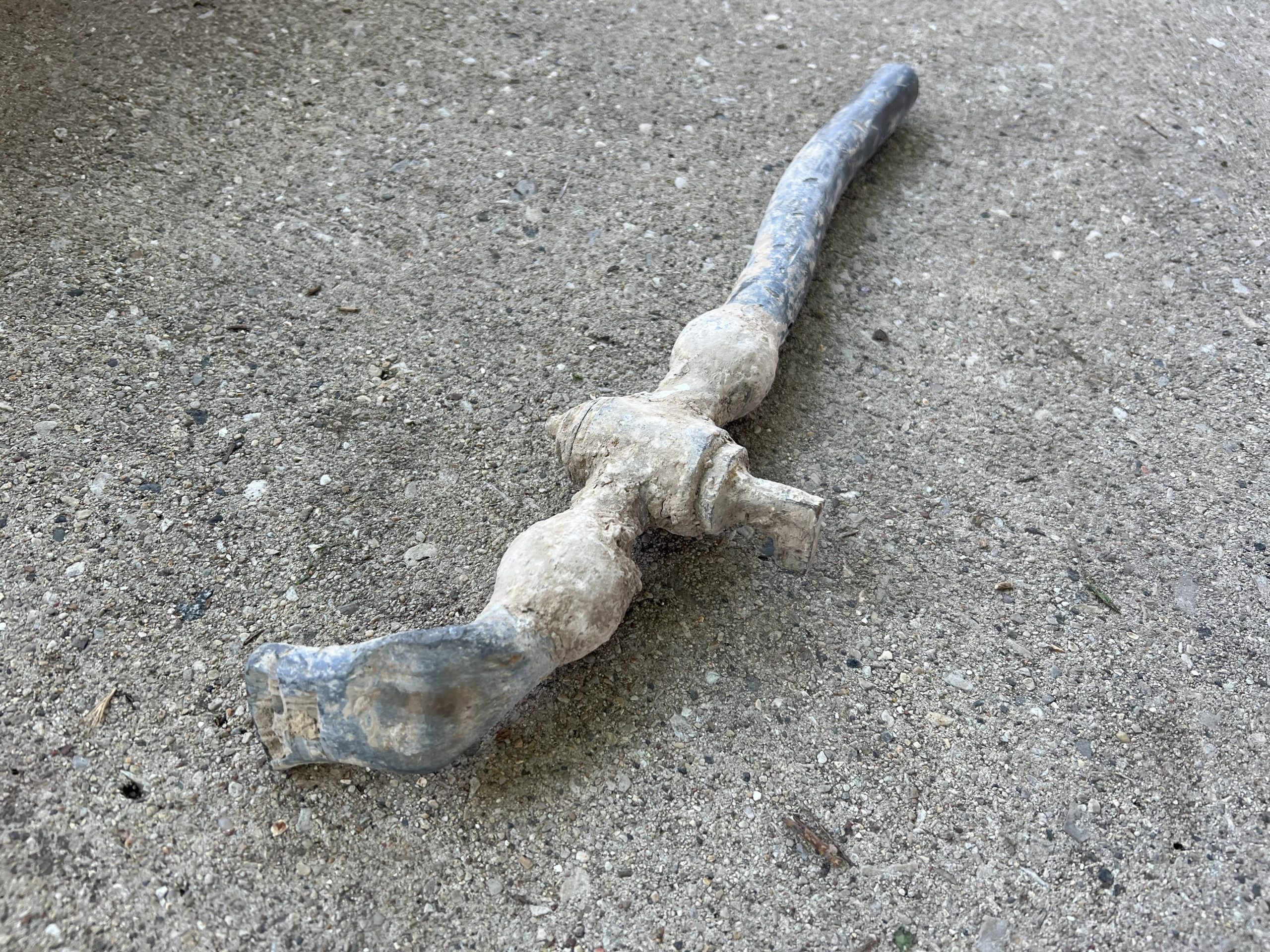
A portion of a lead service line removed from a house on S. 12th St. Photo by Jeramey Jannene.
The Environmental Protection Agency announced Wednesday that it’s awarding nearly $2.9 billion through a state revolving loan fund to help states find and replace lead pipes, including $94.3 million for Wisconsin.
The announcement comes as President Donald Trump has proposed a 90 percent cut for state revolving loan funds under the agency’s 2027 budget. The money awarded through the Drinking Water State Revolving Fund comes from $15 billion set aside under the bipartisan infrastructure law to speed up replacement of lead service lines.
In a news release, EPA made no mention that the funds came from the Infrastructure Investment and Jobs Act passed by Congress in 2021. The agency said the investment is part of the agency’s “unwavering commitment to Making America Healthy Again.”
“The Trump EPA is committed to tackling lead exposure and this $2.9 billion will help protect current and future generations by accelerating local efforts to find and replace toxic lead pipes,” said EPA Assistant Administrator for Water Jess Kramer in the release.
Around half of the funds awarded to Wisconsin, or $46.2 million, will be devoted to water systems in disadvantaged communities as grants or principal forgiveness loans.
“Every lead pipe we remove is a victory for public health in Wisconsin,” said EPA Region 5 Administrator Anne Vogel in a statement. “This $94 million through the Drinking Water State Revolving Fund will support the nuts-and-bolts work —building complete service line inventories and replacing lead lines from curb to tap.”
The funding provided to Wisconsin is based on the EPA’s survey and assessment of drinking water infrastructure needs among states. As of 2023, the agency projected Wisconsin has more than 343,000 lead service lines based on survey responses. Over the next 20 years, it’s estimated the state will have $11.75 billion in drinking water infrastructure needs including pipe replacement and treatment upgrades.
Lead in paint and dust are the primary source of lead exposure in Wisconsin, but drinking water is another pathway. Almost 5 percent of more than 95,000 kids younger than 6 who were tested had lead poisoning in 2024, according to state data. In Milwaukee, data shows around 20 percent of kids in some areas have lead poisoning.
Research has shown that lead exposure in early childhood can have long-lasting effects that can affect cognitive development and academic achievements later in life.
Earlier this year, the EPA said it would defend a 10-year deadline imposed under the Biden administration for removal of lead pipes for most communities by 2037. EPA Administrator Lee Zeldin has said clean, safe drinking water is a top priority under the agency’s “Powering the Great American Comeback” initiative.
However, Republicans and Democrats pushed back against plans to gut the agency’s state revolving loan funds during a U.S. Senate appropriations subcommittee hearing on May 13. Zeldin defended the agency’s budget and added that some states have not utilized money under the state revolving loan funds.
“We’ve been able to get more money out the door by reallocating state money from states where they weren’t spending the money,” Zeldin told lawmakers. “The other good news is that you have a lot of states where they just don’t have issues with lead service lines, so they were able to return that funding as well.”
On Wednesday, the EPA said it’s redistributing an additional $18.7 million in previously announced funding for lead. Wisconsin is eligible to receive an additional $852,000, but it must apply for the money by the end of September.
EPA announces $94M for Wisconsin to find and replace lead pipes was originally published by Wisconsin Public Radio.
If you think stories like this are important, become a member of Urban Milwaukee and help support real, independent journalism. Plus you get some cool added benefits.
More about the Lead Crisis
- DNR Lead Service Line Replacement Outreach Grant Program Finishes Strong - Wisconsin Department of Natural Resources - Sep 15th, 2026
- Why Milwaukee’s Lead Pipe Program Is Cheaper, Faster — And Still At Risk - Jeramey Jannene - Jun 1st, 2026
- EPA Announces $94 Million for Wisconsin to Replace Lead Pipes - Danielle Kaeding - May 20th, 2026
- New Documentary Exposes Federal Funding Cliff at the End of 2026, Wisconsins Push to Replace All Lead Pipes - Wisconsin Conservation Voters - May 5th, 2026
- Gov. Evers Signs New PFAS, Lead Regulations - Danielle Kaeding - Mar 2nd, 2026
- City Receives $400,000 Grant For Lead Screening - Sophie Bolich - Feb 24th, 2026
- Rep. Madison Proposes Restoring Local Control Over Lead Inspections - State Rep. Darrin Madison - Jan 6th, 2026
- $43 Million Later, MPS Says Classrooms Are Safe From Lead Dust - Corrinne Hess - Dec 18th, 2025
- MPS Buildings Cleared of Lead-Paint Risks after 10-Plus Months of Work - Milwaukee Public Schools - Dec 17th, 2025
- Wisconsin Moves to Require Lead Service Lines Replaced By 2037 - Danielle Kaeding - Dec 11th, 2025
Read more about Lead Crisis here





















Thanks, Dems & Biden.
No thanks, GOP and MAGA for slowing it all down and screwing the whole process up and then still trying to spin and sell it as themselves.