
Report Ties Planned Gas Plants To 100-Plus Premature Deaths
UW researchers say southeast Wisconsin projects would boost fine particle pollution; utilities dispute the findings.
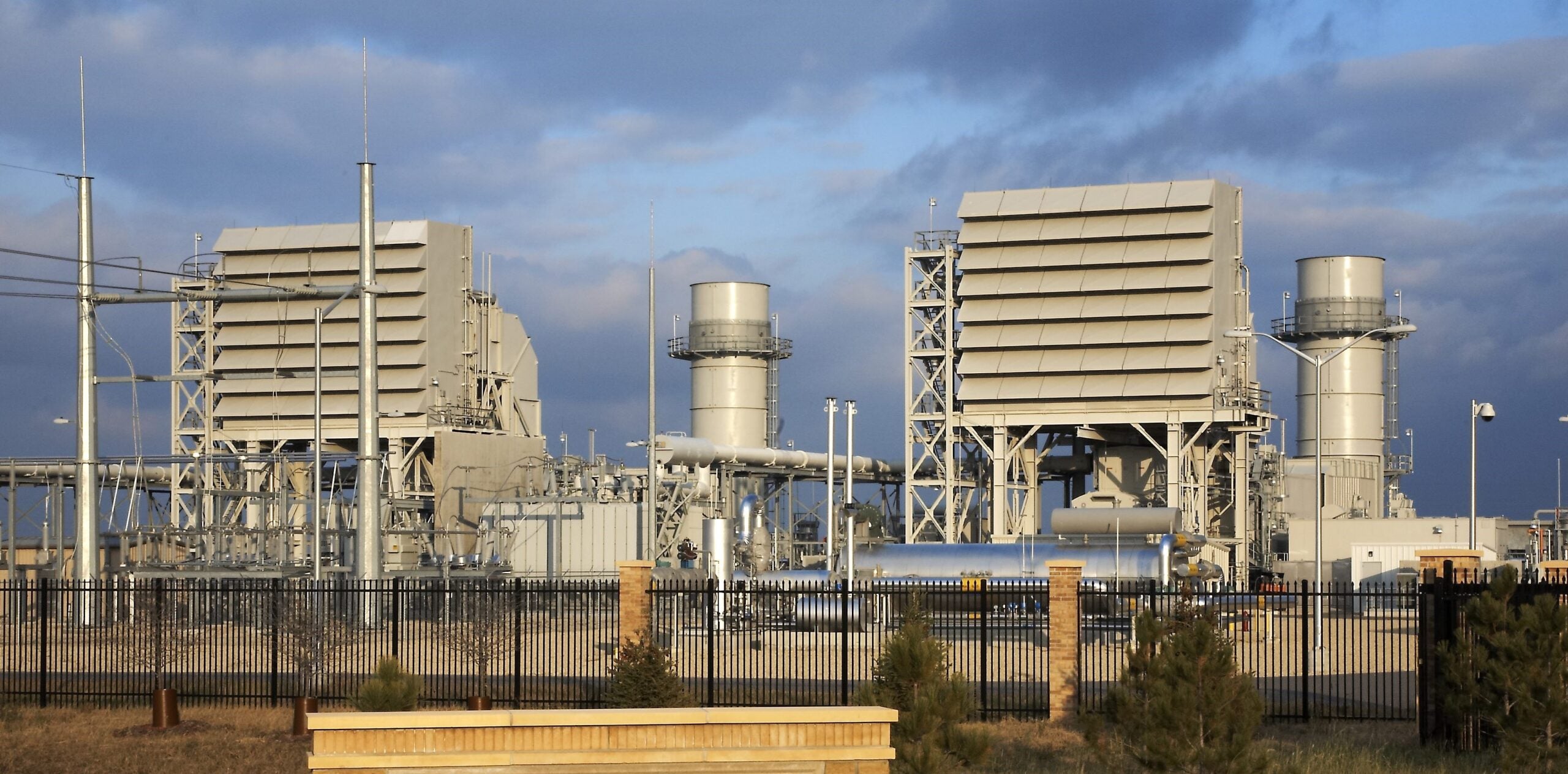
A simple cycle natural gas power plant is seen in Minnesota. Photo courtesy of Invenergy
Air pollution from two proposed natural gas plants in southeast Wisconsin could contribute to more than 100 premature deaths over the projects’ estimated 30-year lifespan and lead to higher air pollution exposure across the Upper Midwest.
That’s according to a recent whitepaper from researchers with the Climate Solutions for Health Lab at the University of Wisconsin-Madison.
The research looks at the potential air quality and health effects of the planned Red Oak Ridge Energy Center in Kenosha County and the Foundry Ridge Energy Center in Walworth County. But the companies behind the projects dispute the report’s methodology and findings.
Chicago-based energy developer Invenergy filed applications with the Public Service Commission last year to build the projects. We Energies applied to acquire the natural gas plants in November 2025 as part of a plan to add almost 3 gigawatts of power to the electric grid to meet rising demand from data centers.
The two natural gas projects account for around half of that new generation capacity. The developer and utility have said the power plants would be “peaker plants” used to meet spikes in electricity demand.
The plant in Kenosha County would be able to generate up to around 1.2 gigawatts of electricity, while the plant in Walworth County would be able to generate up to 324 megawatts, according to the Public Service Commission.
According to the report from UW-Madison researchers, Red Oak Ridge would be the second-largest of Wisconsin’s 29 existing natural gas power plants and Foundry Ridge would be the 12th-largest.
“A gigawatt of electricity capacity is really about the capacity needs of a small city, so these are not insignificant projects,” said Nick Mailloux, one of the report’s authors and a postdoctoral research associate at UW-Madison.
We Energies spokesperson Brendan Conway said in a statement that the projects will meet air quality standards set by the U.S. Environmental Protection Agency and the Wisconsin Department of Natural Resources.
“These proposed plants are designed to run when needed during peak demand to keep the lights on,” he said. “As we use more renewable energy, we need to make sure we can power the grid when the sun is not shining and the wind is not blowing.”
The report found that the plants would lead to higher fine particulate matter exposure in the Upper Midwest, with the largest effects in southeast Wisconsin, western Michigan and the Chicago area.
Mailloux said there’s no level of exposure to fine particulate matter that can be considered safe, even under thresholds set by the state and federal governments that define allowable exposure levels.
“Health harms continue to accrue even below those threshold levels, and exposure to elevated fine particulate matter leads to a host of different health harms,” he said. “That’s things like premature mortality from heart disease, lung cancer, chronic obstructive pulmonary disease, stroke. It also leads to a lot of nonfatal health outcomes, including asthma, particularly in children, and respiratory issues.”
But the report estimates that fine particulate matter exposure from the facilities could cause four premature deaths in their first year of operation and a total of 118 deaths in their 30-year lifespans.
It also estimates the cost of air quality damages nationally would come out to $1.38 billion over the 30 years, with $486 million of that in Wisconsin.
Mailloux said the health harms in the report could be a conservative estimate.
“If these plants were to run more than 20 percent of the year, which is the estimate that we use, which is provided by the developer, then emissions could also be higher than we’ve stated them to be,” he said.
But Conway with We Energies said opponents of the power plants “continue to promote flawed data,” calling it “disappointing.”
That’s because the report uses the Co-Benefits Risk Assessment Health Impacts Screening and Mapping Tool, or COBRA, and the Intervention Model for Air Pollution, or InMAP, to create its findings.
Conway says the tools were “used incorrectly” and that “the United States EPA does not recommend that these tools be interpreted or used in this manner.”
Testimony filed on behalf of We Energies in a separate PSC case over a new natural gas power plant in Oak Creek also took issue with the use of COBRA by intervenors in that case. The PSC approved that plant in Oak Creek last year.
“COBRA provides information at the county or state level, and it is not intended to evaluate localized, individual, site-specific emissions from a project,” Katelyn Hall, a senior epidemiologist and biostatistician with consulting firm CTEH, said in the testimony.
In a statement, Dan Runyan, senior vice president of development for Invenergy, said the proposed gas plants are needed to increase domestic energy supply and grow the state’s economy.
“Every new project is subject to state and federal air quality standards designed to protect public health,” he said. “These projects will meet those standards while providing critical reliability services to keep the lights on.”
A January 2026 report from the North American Electric Reliability Corporation found the Midwest electric grid would face “high risk” in 2028 and beyond because expected generation additions are not keeping pace with rising demand forecasts. That’s after the previous year’s report found the Midwest grid faced an “elevated risk” in 2025 and beyond.
Mailloux, the UW-Madison researcher, said developers and utilities often default to trying to meet that growing demand by building new gas plants because they can easily ramp up and ramp down to meet demand challenges.
“But I think that just falling back on what we know precludes us from thinking more creatively about other types of energy solutions and might be able to meet this moment,” he said. “There are other technologies that are available to try to meet moments of peak demand, which really requires pairing solar and wind generation with battery capacity.”
Report: Planned southeast Wisconsin gas plants could lead to premature deaths, air pollution was originally published by Wisconsin Public Radio.
If you think stories like this are important, become a member of Urban Milwaukee and help support real, independent journalism. Plus you get some cool added benefits.