
Milwaukee Zoo Welcomes Two Eastern Black Rhinos
A critically endangered species, rhinos have 5-inch-thick skin and daunting horns.
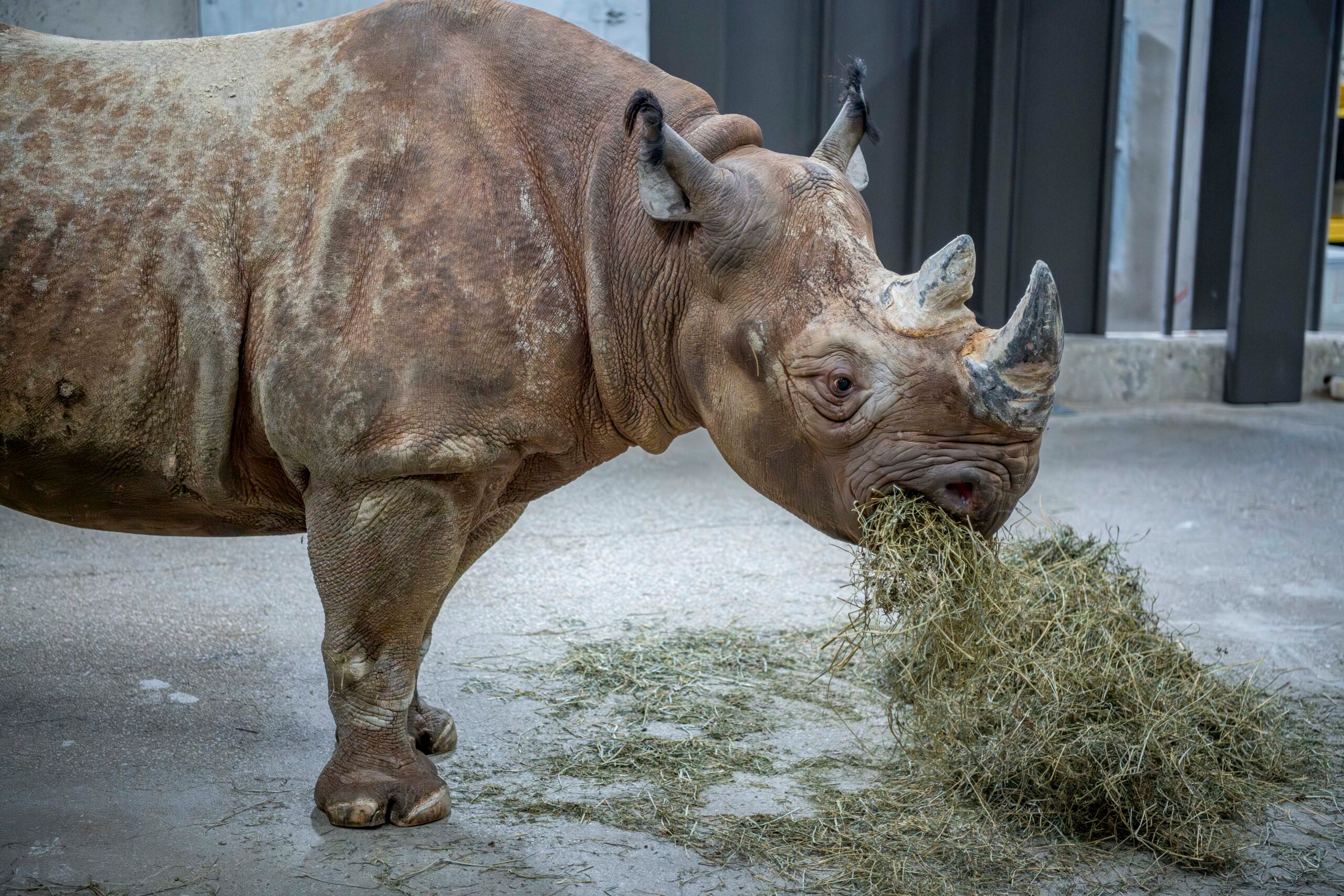
Zuri recently arrived at the Milwaukee County Zoo. Photo courtesy of Milwaukee County Zoo
Africa is home to the world’s population of black rhinos. They’re one of the most critically endangered species on earth due to illegal hunting and trafficking of their horns.
Thousands of miles away in Wisconsin, the Milwaukee County Zoo recently welcomed two Eastern black rhinos, named Zuri and Kianga. Zoo officials hope the animals will have offspring and give a boost to the fragile population, which suffered a 98 percent decline in the 20th century.This month, the zoo is expected to open the $22.6 million Ladish Company Foundation Rhinoceros Care Center to the public where visitors can see the rhinos.
Amos Morris, the Milwaukee County Zoo director, joined WPR’s “Wisconsin Today” to talk about the species and its survival plan.
Video courtesy of the Milwaukee County Zoo
This conversation has been edited for brevity and clarity.
Kate Archer Kent: Zuri came from the Cincinnati Zoo and Kianga from the Racine Zoo. What are their personalities like?
Amos Morris: Both of these rhinoceros are pretty tractable and accustomed to being around people. From the very moment they came off of the trailers, they engaged with their zookeepers and with strangers. They’re very what we would call tractable and pretty calm and relaxed.
KAK: How do you know that their personalities will not only complement each other but that they may prepare to mate?
AM: Well, so far, they’ve not seen each other. There’s a barrier between them. They can smell each other and they can hear each other. As we get closer to setting them up for breeding, we will gradually give them more visibility but be protected from each other in case one does not want to be together with the other one. And after we see that they have positive signs to be together, then we’ll seek to introduce them.
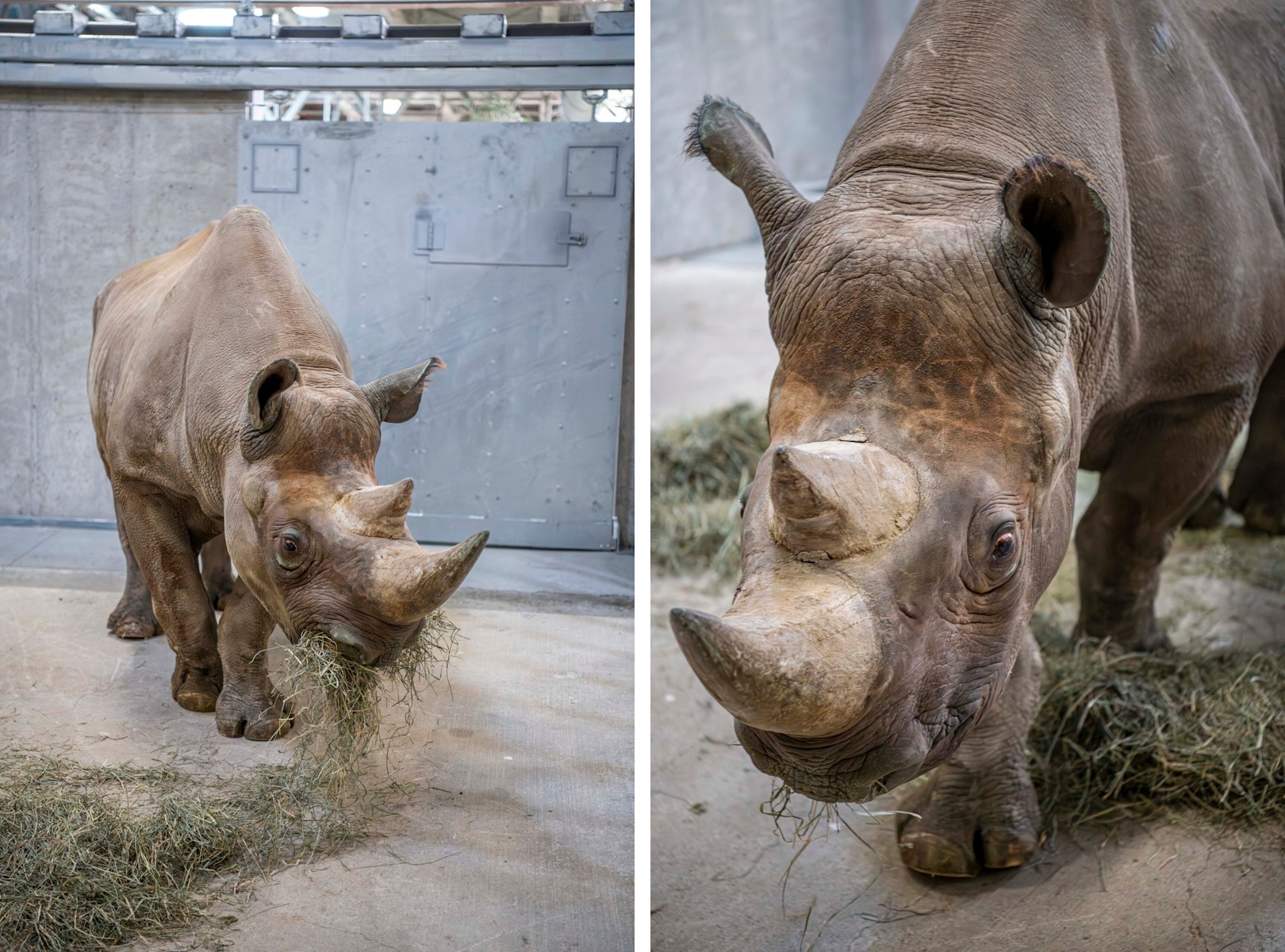
Kianga and Zuri. Photos courtesy of the Milwaukee County Zoo.
KAK: The Eastern black rhino is a critically endangered species. Can you talk about what is at stake here?
AM: The things that we’re concerned about is having animals so we can connect people with wildlife, so that they understand the needs of animals in the wild and their impacts on animals in the wild.
Exhibiting them here at the zoo gives people an opportunity to see a live rhinoceros, to smell them, hear them, learn about them and develop an appreciation for the animals that share our planet.
The other piece is zoos rarely take animals from the wild. Most of our animals come from within the zoo population. So we want to make sure that the population is healthy genetically. And the programs that help us with that are called our species survival plan.That’s a group of people that study the population, study their genetic diversity and then make recommendations based on that genetic diversity, behavior and the facility’s ability to care for their animals.
KAK: Years ago you got the nickname the “elephant guy.” What is it about these huge animals that inspires you?
AM: When I was a youngster elephants and horses scared me to death. I think the big size and their big eyes was unnerving. And I’m a big guy myself, I’m well over 280 pounds. But trying to let people know there are gentle giants out there that live lives that are gentle and passionate.
My mother was also very attracted to elephants as well. And we always had elephant statues and pictures around the house growing up. So I was just drawn to that species. And all the work that is involved with them. Helping people understand that they’re the largest land mammal on the planet, and they can be very aggressive, but they also can be very gentle.
Milwaukee zoo welcomes 2 Eastern black rhinos, a critically endangered species was originally published by Wisconsin Public Radio.
If you think stories like this are important, become a member of Urban Milwaukee and help support real, independent journalism. Plus you get some cool added benefits.





















Some fundamental questions and thoughts: (1) Given their nation/continent of origin and their color, how did they get through immigration and into this country? I thought we had stopped all that. (2) Pray that Trump, Steven Miller, Homan and Patel aren’t regular readers of Urban Milwaukee, and that Grothman and Tiffany, assuming they have passed their ESL class, don’t see this article. (3) Suggestion: capitalize the “H” in rHino so that our leaders don’t think they are RINOs (Republicans in Name Only) and go after them as losers or garbage.. It might be worthwhile to consider hanging MAGA and Packer caps on their horns just to make sure there is no confusion. (4) Make sure that everyone knows that Ladish is paying for this, and that none of our hard-earned, white tax dollars are going to provide free food, housing and health care for these non-working, foreign creatures. I think that covers the key points.
@ frank That’s right, an article in the Urban Milwaukee that is a nice informative read and you inject politics into it. Just what is your problem? You’re an embarrassment. You’re a fool who suffers from TDS.