

Warning Lights Flashing on Youth Justice?
Former county official warns that state's youth justice system is unsustainable, could lead to abuses.
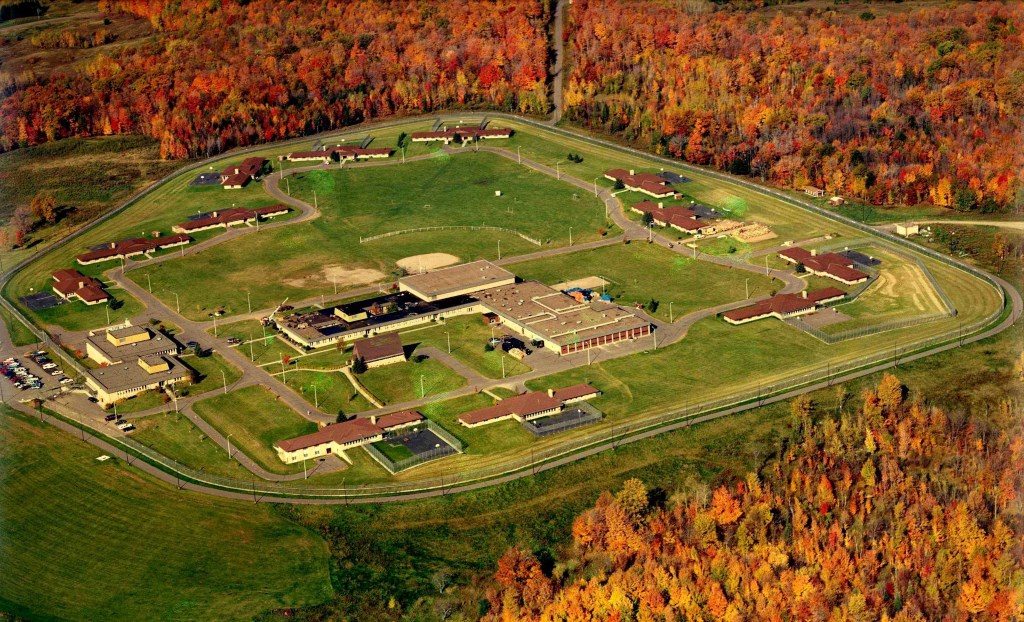
Lincoln Hills School and Copper Lake School. Photo from the Wisconsin Department of Corrections.
It’s been more than three years since the state Legislature passed a law that was supposed to lead to the closure of the state’s Lincoln Hills and Copper Lake juvenile justice facilities. But they have yet to be replaced by new facilities.
Recently, Mark Mertens, former administrator of the Division of Youth and Family Services, in his last week of employment with the county, told the county board’s Health, Equity, Human Needs and Strategic Planning Committee that he’s seeing “flashing red lights” warning of an unsustainable juvenile justice policy that could potentially lead to the sort of horrific conditions that triggered the reforms of 2017 Wisconsin Act 185.
The legislation was a response to a federal investigation into the conditions at the youth prisons following shocking allegations of mistreatment and abuse. It laid out an aggressive timeline to close the state’s two youth prisons and build new youth corrections facilities in counties around the state called Secured Residential Care Centers for Children and Youth (SRCCCY). A major policy idea behind the plan was that there would likely be better outcomes if children were incarcerated closer to their families and communities.
But the legislation only included $40 million for four counties. Later legislation raised the funding to more than $100 million. But during the state’s granting process, Milwaukee County saw its funding repeatedly cut, while other counties were granted more funds than they applied for.
After several revisions to their proposal, the county was granted just $15.2 million — some $26 million less than they originally applied for. In August 2020, County Executive David Crowley wrote to Kevin Carr, secretary of the state Department of Corrections (DOC), informing him that the county would defer acceptance of the funding, “in light of the continued uncertainty around the availability of resources to realize the full vision of Wisconsin Act 185.”
The county has been working hard, in cooperation with the courts, to send fewer children to the state facilities. Over the past five years commitments at the state facilities have steadily decreased from 125 to 18 today. Mertens said the number of youth has been holding steady at around 18 for months now. “And I’m not completely sure what that’s about,” he said. “Basically it’s just that we’ve reached some sort of equilibrium.”
Crowley deferred acceptance of the state funding because it was unclear whether sustainable long term funding to maintain a new facility would be available. Now, with no solution in sight from the state, and Vel R. Phillips at capacity, the new position of the county is that it will accept the grant money to renovate the Vel R. Phillips facility, according to Mertens. He added that the county executive and county officials are working to raise additional funds.
“In a perfect world, the program would not be in a detention setting,” Mertens said, adding he’d like to see youth in a trauma-informed setting. “The best we can do, I believe, is to make Vel Phillips as close to that as possible.”
The $15 million isn’t enough to build a robust, sustainable treatment program, Mertens said. Which is why the county originally deferred acceptance.
Mertens said that judges have also recently taken the position that they cannot legally send children to Lincoln Hills or Copper Lake.
Though, on Dec. 10, two days after Mertens made his statements to a county committee, Ron Hermes, state Division of Juvenile Corrections Administrator, sent a memo to other state officials saying the state Department of Corrections would not object to placements at state facilities like Lincoln Hills or Copper Lake because there are currently no operational SRCCCY facilities anywhere in the state.
The Hermes memo notes that Act 185, “has restructured the juvenile justice system.” But the deadlines for building out and adequately funding the infrastructure for such a system have long passed, and Milwaukee County’s facility is filling up.
“I want to take the opportunity to advocate and say that from my seat there are flashing red lights around this issue,” Mertens said. “That it’s not sustainable as it is.”
The county’s juvenile justice center needs investments in both the Phillips facility and its programming, or else it’s “at risk of devolving into a facility that is much like Lincoln Hills had been in the past where it’s not safe and where there’s not adequate programming.”
Mertens said Superintendent Kevin Gilboy and his staff have made the county facility a “remarkably responsive place for youth.” He said the use of force has been reduced by 80% in the facility, the young people are treated with respect and there is a “very robust education program.”
“If we impose conditions on our staff that, over time, make that difficult to sustain, I fear that we may be repeating history,” Mertens said.
The latest biennial state budget nearly doubled the daily rate charged to counties for youth incarcerated in state facilities. The new daily rate per child is $1,154. The county is now spending approximately $21,000 a day to incarcerate 18 youth in the state facilities.
Mertens said this increase is eating away at the savings from lowering state commitments that county officials planned to use on community-based alternatives to incarceration for juveniles, including the credible messengers program.
County officials, including the county executive and those directly involved with youth justice, have been saying the state has failed to create a sustainable framework for the implementation of Act 185, and now, despite the state-run facilities remaining open, the county’s own facility is at risk of becoming the kind of detention environment that spurred the original call for legislative reforms.
If you think stories like this are important, become a member of Urban Milwaukee and help support real, independent journalism. Plus you get some cool added benefits.
More about the Lincoln Hills and Copper Lake Facilities
- MKE County: See Inside New Juvenile Detention Facility - Graham Kilmer - Mar 5th, 2026
- State Juvenile Prisons Finally Complete Court-Ordered Reforms - Graham Kilmer - Jan 28th, 2026
- Lincoln Hills and Copper Lake Youth Facilities Found in Compliance, Triggering End to Court-Ordered Monitoring Set in Place by 2017 Lawsuit - American Civil Liberties Union of Wisconsin - Jan 28th, 2026
- Gov. Evers, Doc Celebrate Completion Of Successful Reforms at Lincoln Hills and Copper Lake Schools - Gov. Tony Evers - Jan 28th, 2026
- Gov. Evers Announces State Building Commission Approves Approximately $185 Million in Projects Across Wisconsin - Gov. Tony Evers - Dec 17th, 2025
- Building Commission OKs Planning Funds to Reorganize Wisconsin Prisons - Sarah Lehr - Oct 29th, 2025
- State Building Commission Releases Funding Gov. Evers Requested to Revamp Corrections Facilities - Gov. Tony Evers - Oct 28th, 2025
- Gov. Evers Announces Evers Administration to Move Forward with Comprehensive Plans to Revamp Corrections Facilities - Gov. Tony Evers - Oct 14th, 2025
- For The First Time, Wisconsin’s Youth Prisons Are Fully Compliant With Required Reforms - Rich Kremer - Oct 3rd, 2025
- Inmate Sentenced For Role in Youth Counselor’s Death at Troubled Prison - Isiah Holmes - Aug 11th, 2025
Read more about Lincoln Hills and Copper Lake Facilities here
Political Contributions Tracker
Displaying political contributions between people mentioned in this story. Learn more.


MKE County
-
Incumbents Sweep County Board Elections
 Apr 7th, 2026 by Graham Kilmer
-
Federal Judge Won’t Vacate Dugan Conviction
 Apr 6th, 2026 by Graham Kilmer
-
Sup. Vincent Faces Challenge in Heated Race for District 11
 Apr 6th, 2026 by Graham Kilmer



















Graham – in the second paragraph, you didn’t mention Mr Mertens’ full name and title as the departing official.