
With Democrats in Power, Kaul Seeks More Funding of Wisconsin Crime Labs
Attorney General talks about his many lawsuits, DNA testing, DEI laws and price transparency.

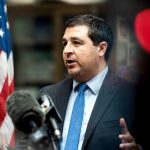
Attorney General Josh Kaul speaks Wednesday, March 1, 2023, at the Milwaukee Crime Lab in Milwaukee, Wis. Angela Major/WPR
Earlier this month, Democratic incumbent Josh Kaul was elected to serve a third term as attorney general and lead the state Department of Justice, which represents Wisconsin in court and runs the state crime labs, among other duties.
Kaul will enter his next term with a Democratic majority in the state Legislature and the governor’s mansion, which he hopes will mean more funding for state crime labs and greater investment in things like consumer advocacy.
Under Kaul’s leadership, the state Department of Justice has recently joined lawsuits against companies like Dollar General over pricing practices and Hims & Hers over customer data privacy. And last week, food banks around Wisconsin received a shipment of 400,000 eggs as part of a multi-state settlement with three major egg producers over allegations of colluding to raise prices.
Kaul joined WPR’s “Wisconsin Today” to talk about crime lab turnaround times, a proposed $63 million settlement with Family Dollar and how people can protect themselves against financial scams.
The following interview has been edited for brevity and clarity.
Rob Ferrett: For the first time since you’ve held this office, your party will control the state Legislature and the governor’s office. Does that mean anything for the Department of Justice funding and your ability to enforce laws and file settlements?
Josh Kaul: I think there’s going to be a big shift, and I think we’re going to see that in a few areas in particular. I have advocated for additional resources for our state crime labs for years, and I’m hopeful that we will be able to work with the new majority in the Legislature to get the kind of investment in the labs that we need. I expect we’re going to see this majority put public safety ahead of partisanship, which will be a real change, I think, from what we’ve seen there.
I also think it’s clear that Wisconsinites are concerned about costs and high prices. And at the Department of Justice, we have a big role to play in helping folks by holding scammers accountable, by standing up for consumer protection, by fighting antitrust violations. And so, I’m also hopeful that we’ll see investment that supports that kind of work, so that we can do as much as feasible to protect folks against corporate bad actors that are abusing their market power or engage in other consumer protection violations in a way that raises prices for folks.
RF: You mentioned the crime lab. A report from Wisconsin Watch found the median time for DNA testing in criminal cases increased from 61 days in 2022 to 112 days in 2024. When you came into office, you had criticized your predecessor over this issue. Your challenger criticized your office for response times here. What do you see as the problem? How do you improve those turnaround times?
JK: If you look at turnaround times for the crime labs overall, it varies by type of evidence — or type of testing that’s being done, rather. And so, what that to me says is, where we have issues, we need additional resources. There was an audit done by the Legislative Audit Bureau, and while it made some minor suggestions, there were no major suggestions for the way the crime labs operate, for how it can be changed. What we have not had, though, is the kind of investment that we’ve called for. So, two budgets ago, I asked for 16 additional positions for the labs. The Legislature provided just three, and none were for DNA analysis. In the last budget, I requested 19 positions for the labs; none were provided. So, we need to see investment.
This is an area that is evolving. When my predecessor was AG, there was a different type of DNA analysis conducted than there is now. Now we do what’s called probabilistic genotyping, which means we can get DNA identifications in more cases, and that’s great for solving crimes. But it also involves more data than prior testing did. So, seeing investment that keeps up with the needs that we have in the labs, I think, is going to be critical.
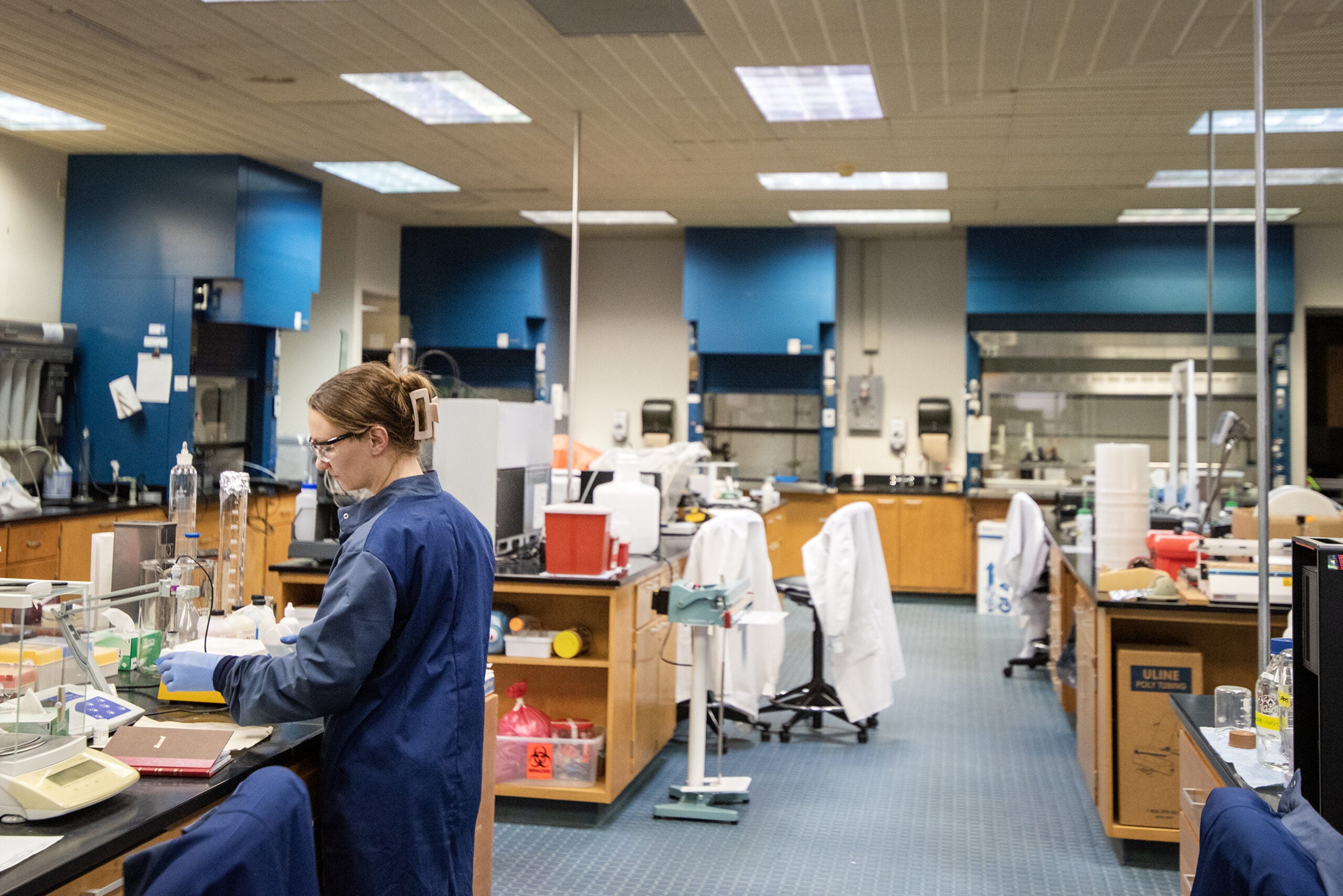
Work goes on Wednesday, March 1, 2023, at the Milwaukee Crime Lab in Milwaukee, Wis. Angela Major/WPR
RF: Another change coming out of Election Day: Wisconsin voters approved this amendment to the state’s constitution that prohibits government discrimination and preferential treatment based on race and sex. This is generally seen as something to target DEI programs. Earlier this week, the conservative group Wisconsin Institute for Law and Liberty warned a bunch of Wisconsin cities and counties that a lot of their programs and ordinances that are based on race and sex violate that constitutional amendment and threatened a lawsuit. Do you see this anti-DEI amendment changing the state government, state laws and your work as attorney general?
JK: I think it remains to be seen. Constitutional amendments tend to use pretty general language, and it’s going to be very important here to find out how the courts interpret this language. My expectation is that ultimately we are going to see this amendment interpreted in a way that’s pretty consistent with how the federal government or how the U.S. Supreme Court currently interprets the equal protection clause, and so I think we’re not going to see a big difference between what Wisconsin constitutional law looks like versus what federal constitutional law looks like currently. But none of this has gone to court yet. You just mentioned there are some potential actions that might follow, and I think we’ll learn a lot as these cases begin being litigated in court.
RF: There has been concern that a task force like the one for missing and murdered Indigenous women might be threatened because it targets people based on race and sex. Do you see that as a concern?
JK: I’m very confident that those kinds of efforts to address disparities are going to be treated differently than certain other types of programs. What the amendment prohibits is discrimination in particular ways, or preferential treatment given to particular groups. To me, that’s a very different thing from looking at the data and saying, “Certain groups are being disproportionately harmed, and that’s something we take seriously now.” We’ll see what position folks advocate for in court, but I’m hopeful that what we will see is an interpretation of this amendment that is largely consistent with what we’ve seen from federal constitutional interpretation, and that would allow these kinds of programs to continue without having this amendment interfere with it. And I certainly don’t think that’s what voters were thinking when they went to the polls and were casting their ballots in favor of this amendment.
RF: You’ve joined more than 70 lawsuits against various initiatives from the Trump administration. Do you feel like this state role is getting drawn too much into federal partisan politics?
JK: My preference would be to focus on state issues and less federal issues. But at the end of the day, our role at the Department of Justice, my priority is to protect Wisconsinites. And if the federal government is engaged in actions that are going to harm the people of Wisconsin, we are absolutely going to step up and stand up for the best interests of our state, regardless of how powerful the entity is on the other side, including whether it’s the federal government or even the president of the United States specifically who is acting. And what we’ve seen here are unlawful actions that would harm Wisconsinites. In a lot of these cases, what the federal government has done is refused to allocate money or put illegal conditions on significant grant funds that help Wisconsinites, and this is critical funding for things like education programs, including mental health programs in schools, the AmeriCorps program, funding for our transportation system, funding for public health and for medical research. Losing that funding would be really harmful to the people of Wisconsin, and in a lot of cases, more broadly than that. So, by fighting back, we have helped to preserve or get rid of illegal conditions on substantial amounts of funds that, by law, should be coming to the states.
RF: You mentioned affordability and consumer protection. Your office is involved in a price transparency lawsuit with the Family Dollar chain. There’s a proposed settlement there for millions of dollars. There’s another lawsuit against Dollar General. What will happen with settlement money there, and how do you make sure it helps consumers?
JK: Well, in each of these cases, we’ve alleged that … the prices that people are seeing on the shelves are different from what they’re being charged when they check out. That’s not what any consumer is expecting when they go to the checkout aisle. The prices that people see on the shelves should be the same ones that they’re being charged when they check out. Now, in the Family Dollar case, there is a proposed settlement, as you mentioned, and in that case, the proposed settlement — which involves Wisconsin, the Federal Trade Commission, and also 16 other states — would provide for a total payment of about $63 million, or at least a fund of $63 million. Out of that, there would be a $40 million consumer redress fund that would be established for eligible consumers, and then on top of that, there would be a $20 million discount program for Family Dollar customers. Our goal is to make sure that the customers who have been harmed by this are the ones who are benefiting to the extent possible from the settlement. And then also, Family Dollar would be required to establish a pricing accuracy program that’s aimed at making sure we don’t see these same kinds of alleged violations in the future.
RF: The Wisconsin Department of Justice has teamed up with law enforcement in Wausau to raise awareness of financial scams as part of an International Fraud Awareness Week happening right now. It seems like fraud efforts are kicking into high gear with AI tools. Even the stupidest scammers have a chance of success. What can Wisconsinites do to protect themselves from potentially losing thousands of dollars to these scammers?
JK: First and foremost, it’s important for people to be aware that these kinds of scams are happening. One of the tactics that scammers use — and they use it because it has been tested over and over again, and unfortunately, it often works — is to try to pressure people into making a quick decision. So you may have somebody pose as being from a government agency, or there are various other types of scams as well.
What we want people to know is if they’re feeling pressure to make a quick financial transaction, that’s a really clear warning sign that there might be fraud going on. And so, if somebody over the phone is telling you to make a decision quickly, to be untruthful with others about why you’re doing that, is rushing you to make a decision quickly, those are all signs that there may be a scam going on. What we encourage people to do is to pause, to take a step back, and to try to independently verify what’s going on. If there’s a government agency that is reaching out to you, you should be able to pick up the phone, call that agency, and get information about what’s happening. So we encourage people to be mindful of that. And if you do see something concerning, please report it to law enforcement so there can be a law enforcement response as quickly as possible.
With Democrats in power, Kaul says Wisconsin crime labs could see more funding was originally published by Wisconsin Public Radio.
If you think stories like this are important, become a member of Urban Milwaukee and help support real, independent journalism. Plus you get some cool added benefits.