Wisconsin Officials Push Vaccination As Measles Outbreak Grows
New cases in Vernon County add to 164 statewide, but demand for MMR shots is rising.
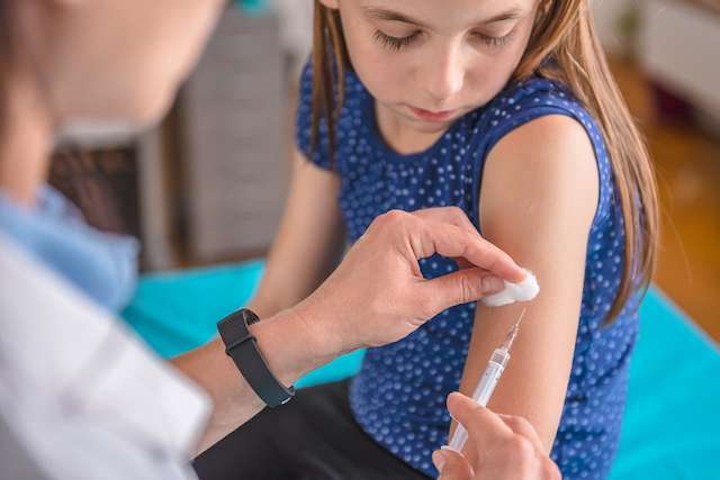
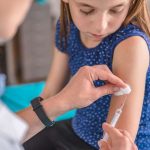
Vaccine. (Public Domain).
As the number of measles cases continues to grow, Wisconsin health officials say they’re seeing some success with efforts to encourage vaccination.
The outbreak in Iowa, Lafayette and Grant counties has grown to 161 confirmed and probable cases over the past two months.
On Wednesday, the Wisconsin Department of Health Services announced two new measles cases in Vernon County, including one in a person visiting the county from out of state. Health officials are investigating whether the new cases are related to the ongoing outbreak.
Vernon County has the lowest measles, mumps and rubella vaccination rate among children and adolescents in the entire state.
Only 42 percent of two-year-olds in the county had received at least one dose of the shot last year. That’s 38 percentage points below the statewide average.
Lafayette County tied for second-lowest MMR rate among two-year-olds last year at 60 percent. Grant County’s rate was at 64 percent and Iowa County’s rate was at 81 percent.
Dr. Ryan Westergaard, Chief Medical Officer for Communicable Diseases at DHS, said on a call with reporters that given low vaccination rates in Wisconsin, it’s not surprising that the highly-contagious virus has spread.
But he said individuals’ choices, like isolating and getting the MMR vaccine after an exposure, can make a difference.
“Those are the things that, at any level of vaccine coverage, we can still do to minimize the risk,” Westergaard said. “So we’re not treating it as inevitable that we’re going to have a much larger outbreak than we currently have.”
DHS Immunization Program Manager Stephanie Schauer told reporters that local health departments are reporting new interest in the vaccine from people who were previously unvaccinated.
“They are not only providing doses in the community, but some of them are working to provide them or have plans to provide them in schools,” Schauer said. “So that is a key strategy to bringing some of those pockets up in terms of their levels of protection.”
Schauer said local school nurses are also checking students’ immunization records and reaching out to families about getting their kids up-to-date.
The MMR vaccine is required for public school attendance in Wisconsin. But unvaccinated children can still attend school if their parents claim either a religious or personal conviction waiver.
Southwestern Wisconsin is also home to several large Amish and Mennonite communities, who tend to have lower use of preventative health care due to their religious beliefs.
Westergaard said public health departments in the affected counties are “proactively doing outreach” to Amish and Mennonite households, offering access to the vaccine and encouraging them to take steps to minimize their risk of exposure.
But the new cases in Vernon County this week have made it difficult for public health leaders to predict how much longer the disease will be circulating in the state, according to Westergaard.
He pointed out that county and state public health teams had federal help investigating measles exposures in August through the Centers for Disease Control and Prevention’s Epi-Aid program. But those added resources have ended.
“We are now in a position where we have a case in a new county, where we need to start the process over,” Westergaard said. “Hopefully, we can contain it to a single, travel-associated case. But we may learn that there’s been person-to-person spread and more exposures as we go.”
One case of measles related to out-of-state travel was reported in Marathon County on Tuesday.
In total, there have been 164 cases in Wisconsin this year, with all but one occurring in people who are unvaccinated. More than half of cases have been in children and adolescents, and a total of five people have been hospitalized due to the disease.
Wisconsin health officials hopeful encouraging measles vaccination can stop growing outbreak was originally published by Wisconsin Public Radio.
If you think stories like this are important, become a member of Urban Milwaukee and help support real, independent journalism. Plus you get some cool added benefits.