
Wisconsin Domestic Violence Deaths Down Slightly After Record Highs
Local domestic violence support groups working to bring the numbers down further.
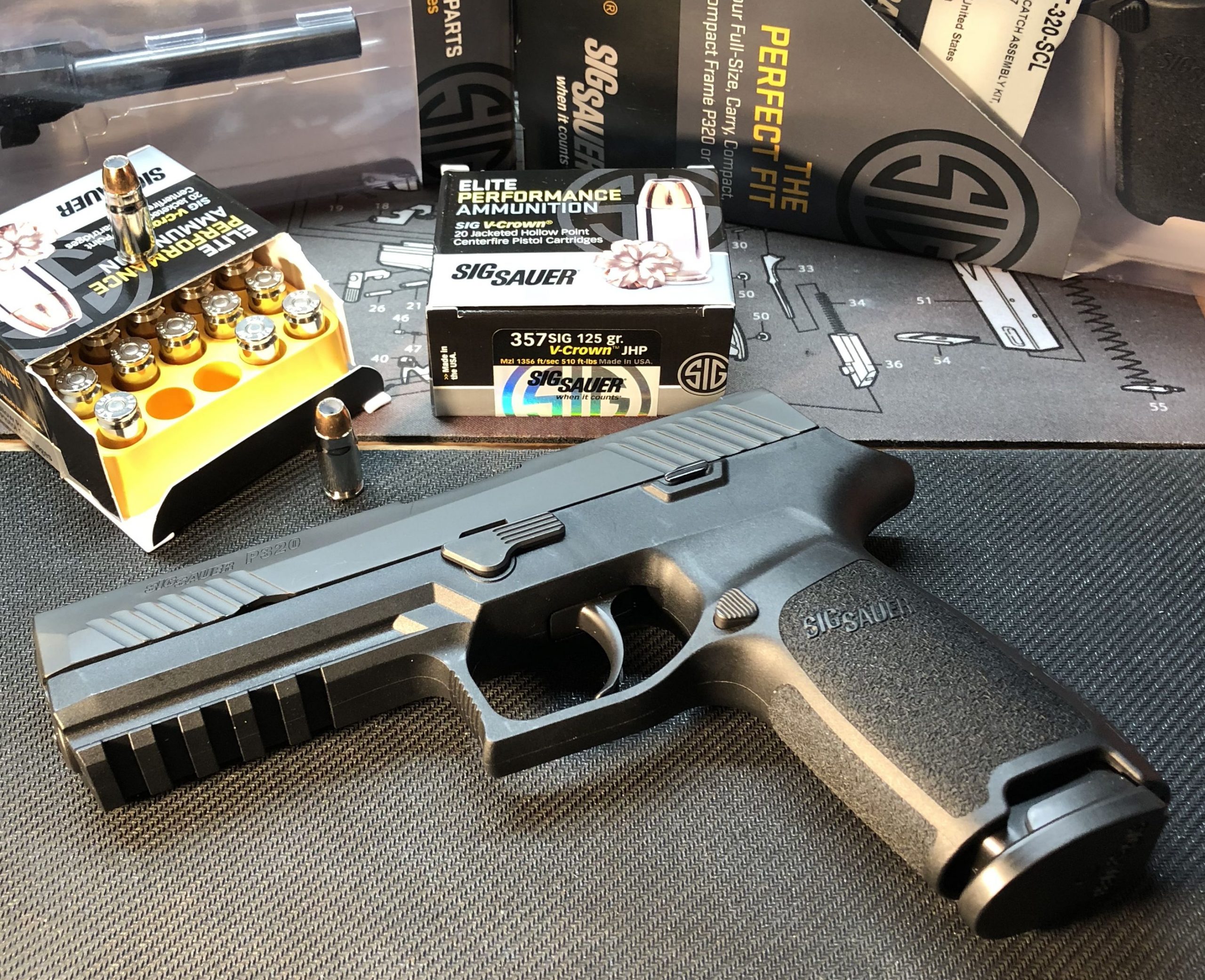
SIG Sauer P320 handgun. Digitallymade, CC BY-SA 4.0 <https://creativecommons.org/licenses/by-sa/4.0>, via Wikimedia Commons
The number of domestic violence-related deaths in Wisconsin is starting to decrease after reaching record highs in recent years.
End Domestic Abuse Wisconsin released its annual homicide report this month, which showed 101 people died from domestic violence incidents in 2025. That was down slightly from 110 people in 2024.
The data includes victims of both domestic violence and family violence homicides, plus the deaths of “harm-doers” (someone who has used harm in their relationships) involved in those incidents.
These numbers are personal for Brian Randall, who co-founded the northeast Wisconsin domestic violence advocacy organization Kalico Forest after his sister and nephew were killed by her husband.
“They’re very concerning trends and data points,” Randall said. “Of course, we’re happy that there’s nine less people on that list, but there’s still so much work to be done.”
His organization is hosting a first-of-its-kind Wisconsin Safe Care Summit to help train healthcare professionals to better respond to and support victims of domestic violence.
Randall joined WPR’s “Wisconsin Today” to discuss the services available to help victims and his efforts to reduce domestic violence deaths in the state.
The following interview was edited for clarity and brevity.
Kate Archer Kent: What stands out to you about the recent trends in domestic violence-related deaths in Wisconsin?
Brian Randall: Even with the decrease in DV-related deaths in 2025 versus 2024, we saw kind of the same percentages, which shows that we have a lot of work to do in the state of Wisconsin. Nationally, we don’t rank where we would want to be. We would like to not be on that list.
KAK: Can you tell us about your personal connection to domestic violence that led you to start Kalico Forest?
BR: Kalico Forest was built out of trauma. My sister Kali was eight months pregnant and was murdered by her husband, and he also murdered my nephew.
So Kalico Forest was actually her business. She was a very talented artist and silversmith, and so we have kept Kalico Forest and turned it into a nonprofit with the goal that people won’t have to go through what we went through.
KAK: Are there specific warning signs or risk factors you’d point to that could signal increased concern for a potential homicide?
BR: Everybody thinks it’s always the physical aspect of it. Don’t get me wrong, those are signs that we have to pay attention to, but there’s also coercion. It could be finances, it could be limiting somebody’s ability to have ownership of a vehicle or of a home. There’s just so much that you have to pay attention to. Isolation would be one. Monitoring or stalking falls into that. Diminishment or undermining confidence or decisions, eliminating independence.
KAK Where are the biggest gaps in services or in support for people experiencing domestic violence?
BR: The great part about Wisconsin is we have tons and tons of resources, and I think some of it is just knowing where they are and how to connect to them. Our goal is to teach people how to recognize, how to respond, and how to refer.
So, once we see these signs and we know how to approach it, where are the resources? We have a program called Red Signal that allows people experiencing domestic violence to discreetly signal in a clinic setting. The number one thing we heard from physicians and nurse practitioners was they don’t know what to do when the patient says “Yes” or how to have that conversation in a way that allows that victim to keep their autonomy, keep their sense of self, and not use words that might possibly be triggering.
KAK: How does the Red Signal program work?
BR: It allows somebody who’s experiencing intimate partner violence a private way to ask for help during a routine medical clinic. Basically, when they’re in the bathroom, we have signage up that explains the program. This started in OB-GYN, and a big focus on pregnant women who are at an extremely high risk of homicide during pregnancy.
So they simply put a red sticker on their urine specimen cup. The nursing staff then sees that signal when they’re collecting that sample. They bring them back to the room. We give the physicians or the provider all of the scripts to talk to the person, and hopefully create a live handoff to a domestic abuse shelter or program.
And if they get into the room, and they change their mind, that’s okay too. That’s the great part of it. We can give them resources if they want. Otherwise, we can have that conversation and say, “Hey, when you’re ready, you can come here. You don’t even need to be here for an appointment. You can come here, and we can get you connected.”
KAK: What are you hoping your Wisconsin Safe Care Summit can accomplish?
BR: Our goal is (to reach) people that are connected to healthcare, whether that’s a nurse, a social worker, EMTs, paramedics, firefighters, police, front desk people — a lot of the time they are the first ones to see what nobody else sees. So this conference is to give the Wisconsin health workforce practical skills for identifying and responding to domestic violence, and the local referral connections to back them up. Again, we’re promoting that recognize, respond, and refer approach.
The other piece of this really is self care for healthcare providers too, because these are difficult conversations, and when that “yes” comes out, that affects us as well. So we have a couple sessions on self care and a trauma-informed way to end this conference. Because after a long day of learning all of these really tough things, we want to send these people back out empowered and refreshed, not weighed down by the subjects of the day.
KAK: How do you make sure that the resources are organized so someone experiencing domestic violence can get connected to the right places when you recognize, respond and refer?
BR: When we go out and we do this training, we have people from all of these organizations coming, and all of them are built on the idea of “no wrong door.” It doesn’t matter if you call Golden House or Harbor House or Christine Ann Domestic Abuse Services. If you’re in a different part of the state, they do all of the work on the back end to get you connected to those local resources. Or if their resources are full, they pick up the phone and they call the other ones and say, “Hey, this is what I have. Do you have any room? Do you have an advocate in this area?” Nobody has to worry that they called the wrong number.
KAK: This work is heavy and personal. Where do you find hope?
BR: It can be difficult at times, but I’ve built off the process that my sister and her unborn daughter and my nephew can no longer speak for themselves — but I can. It’s a subject that can’t go unspoken and that’s just the driving force of this. With all of our programs, if we help one person, we’ve met our mission, and the more the better.
If you are experiencing domestic violence, help is available through the the National Domestic Violence Hotline at 800-799-7233. You can search for resources in your area through the “Get Help” map from End Domestic Abuse Wisconsin.
Wisconsin domestic violence deaths show slight decline after record highs was originally published by Wisconsin Public Radio.
If you think stories like this are important, become a member of Urban Milwaukee and help support real, independent journalism. Plus you get some cool added benefits.