City Seeking Input on Developing Key Century City Site
'Pickle liquor' to be replaced by pickleball?
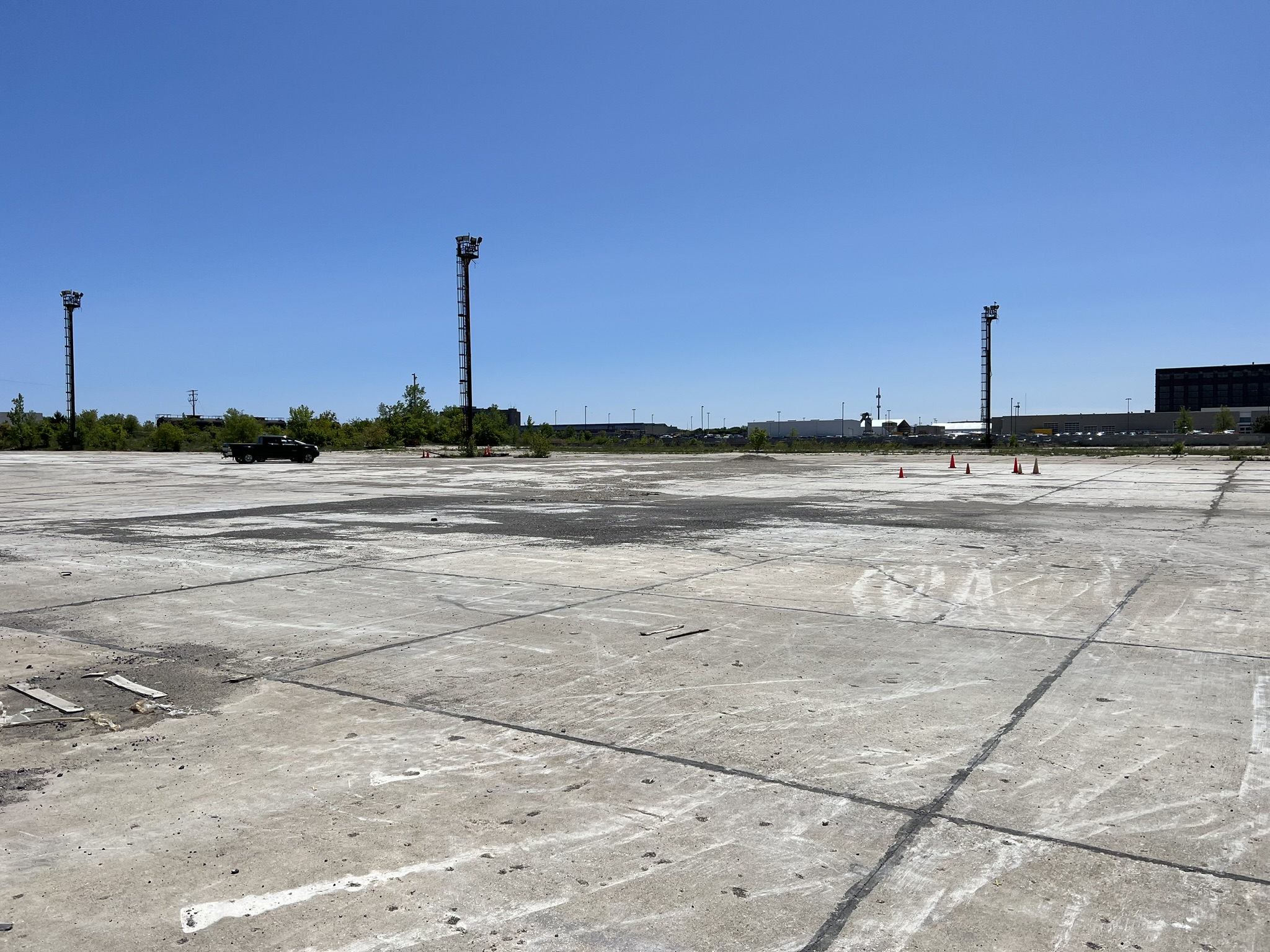
3940 N. 35th St. Photo by Jeramey Jannene.
The City of Milwaukee is asking residents to help determine the future of a prominent 13.8-acre redevelopment site at the northwest edge of the Century City business park.
A community meeting will be held Monday, Sept. 14, about the city-owned property at 3940 N. 35th St., a former A.O. Smith and Tower Automotive site at the southeast corner of N. 35th Street and W. Capitol Drive.
The city, with partners The Corridor, Sherman Park Community Association and Century City Triangle Neighborhood Association, is developing a vision for the property while also planning substantial environmental remediation.
The open house will run from 5 p.m. to 7 p.m. at the Department of Public Works field headquarters, 3850 N. 35th St., immediately south of the redevelopment site. A presentation is scheduled for 6 p.m.
Attendees will be able to learn about the property’s history and planned environmental cleanup, and weigh in on possible future uses.
The meeting comes after the city commissioned a market assessment to determine what types of development could realistically succeed on the property. The May report, prepared by ICF with support from the EPA, concluded there is not a single obvious answer.
But potential concepts proffered in the 19-page report include flexible industrial and office space geared toward light manufacturing, prototyping, food production or research; a medical or office development paired with small commercial spaces; an entertainment or service-oriented retail anchor; and a mixed-use development that includes affordable housing and neighborhood-serving retail.
The report found continued potential for industrial development because of the property’s manufacturing history, proximity to Century City and adjacent railroad line and yard. Smaller flex-industrial buildings could complement, rather than compete with, the larger industrial sites available within Century City, according to the assessment. The city has had limited success with a new building, Century City 1, on the east side of the railroad tracks.
Housing could also be part of the equation. Affordable housing could work with public subsidies, but would depend on an experienced developer, successful environmental cleanup and community support. Market-rate housing was not expected to be viable.
Earlier stakeholder meetings produced a strong preference for development that creates family-supporting jobs, as well as interest in neighborhood amenities including grocery stores and health care services. Participants also raised concerns about whether retail could succeed without a major anchor and whether housing is appropriate given the property’s environmental history. Several groups emphasized that whatever is built should treat the highly visible Capitol Drive corner as a neighborhood gateway, with walkability, landscaping and green space incorporated into the design.
From Auto Frames To Redevelopment Site
The property was originally wetlands and farmland before becoming part of A.O. Smith’s sprawling industrial campus in the early 20th century.
A.O. Smith used six lagoons on the property to dispose of “pickle liquor,” an industrial solution containing sulfuric acid used in the steel-cleaning process. Pickling operations ended in 1969, and the lagoons were subsequently filled and capped.
The property was later used for automobile-frame storage and rail loading. For decades, stacks of frames manufactured in the adjoining factory complex covered much of the site before being shipped by rail to automotive assembly plants.
The Redevelopment Authority of the City of Milwaukee (RACM) acquired the property in 2019 from a Tower Automotive entity for $250,000. Tower had previously attempted to sell the land for approximately $1.6 million. The city acquired much of the former Tower Automotive complex a decade prior and has worked to redevelop it as a modern industrial center.
City officials were already aware that the unusual industrial history would complicate redevelopment. In a 2019 briefing on the purchase, one portion of the property was referred to as the “pickle liquor lagoon.”
Subsequent environmental investigations found volatile organic compounds, as well as arsenic, cadmium, lead, mercury, selenium and other contaminants in portions of the site’s soil. Limited groundwater contamination was also identified. The Wisconsin Department of Natural Resources determined in 2023 that the principal site investigation was complete, with additional groundwater monitoring and investigation still required in one area.
That same year, Milwaukee received a $2 million EPA Brownfield Cleanup Grant specifically for the property as part of a larger $5.5 million federal brownfields award to the city.
Since 2024, RACM has continued groundwater sampling, further investigated an area of soil contamination and prepared the environmental documents needed to begin cleanup work.
One issue that could affect its future is the Watco-owned rail line along its eastern boundary. The market study noted competing ideas for the corridor, including preserving freight rail service to support industrial development, converting the corridor into a trail or potentially using it for future passenger rail. Each option could change what type of development makes the most sense on the property. Watco, which operates through subsidiary Wisconsin & Southern Railroad, has rebuffed early attempts by the city to purchase or use part of the corridor for a trail.
At least one council member, and a DPW conceptual report, previously suggested the site as a drop-off center for waste and recycling, but DCD has opposed the idea.
Those unable to attend Monday’s meeting can watch a recording of a Sept. 9 virtual meeting on the city’s project website.
Existing members must be signed in to see the interactive map. Sign in.
If you think stories like this are important, become a member of Urban Milwaukee and help support real, independent journalism. Plus you get some cool added benefits.