

Coal Is Not Beautiful, Clean or Cheap
Its increased use in Wisconsin could cause health problems.
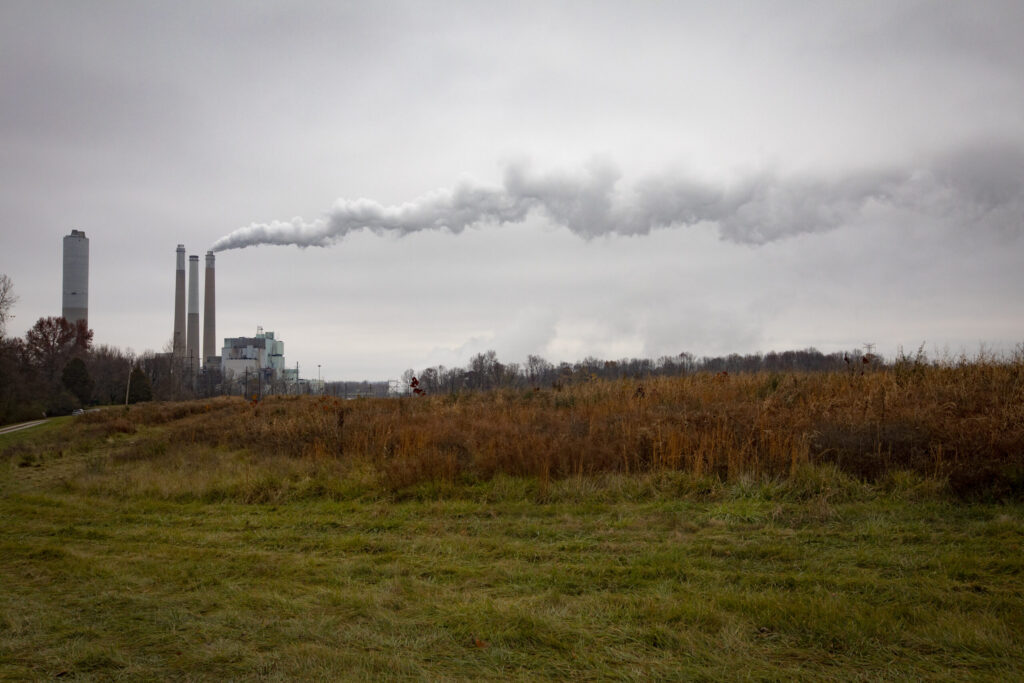
In addition to being a health hazard for anyone living downwind of the coal-burning plants, coal is more expensive and less reliable than other cleaner sources for power. (Photo of AES Indiana’s Petersburg Generation Station by Robert Zullo/States Newsroom)
Recent administrative efforts to endorse new coal-fired power plants and repair outdated plants are making my blood boil. For more than 30 years, I have worked tirelessly along with thousands of other public health and climate scientists to understand the very real public health threats posed by burning fossil fuels like coal. Coal-fired power plants are some of the worst offenders when it comes to causing harm to human health and the environment. In addition to being a health hazard for anyone living downwind of the coal-burning plants, it’s more expensive and less reliable than other cleaner sources for power.
Let’s look at some of the reasons why coal is bad for health.
- When coal is burned in power plants, it releases soot – tiny particles that get deep into people’s lungs and bloodstreams. Mercury in soot is also a severe health hazard because it releases a potent neurotoxin that contributes to many chronic illnesses. Exposure to soot is linked to cancer, respiratory disease, heart disease, neurological and developmental disorders. Children and senior citizens are particularly vulnerable to impacts from coal-fired soot.
- Coal ash, the hazardous residue left after coal is burned, is a concoction of toxic metals (like lead, mercury and arsenic), cancer-causing compounds, and other dangerous substances. Power plants produce about 70 million tons of it each year. In April 2026, the Trump EPA proposed weakening federal coal ash standards.
- In 2023, a study published in Science magazine reported that:
- Air pollution from coal power plants is associated with greater mortality than previously thought.
- Such deaths have decreased due to air pollution regulations and coal power plant retirements.
Coal is not cheap
Prior to this administration, many utilities had already started phasing out coal plants in favor of clean energy because coal plants often need expensive repairs and emit costly, dirty fuel. Coal power is so expensive that, according to a 2023 study, 99% of the time it would be cheaper to get electricity by building entirely new wind and solar farms than it would be to buy power from existing coal plants.
The Trump administration announced plans to provide up to $500 million in funding to coal-fired power plants in 10 states, along with an export terminal in California. The Columbia Energy Center, coal-fired plant co-owned by Alliant Energy, Madison Gas and Electric, and Wisconsin Public Service near Pardeeville, is expected to receive $19 million in federal funding for a modernization project. The plant was originally scheduled to retire by 2024. Alliant is exploring a gas conversion for one of the two primary generating units, so there is a potential for continued operations beyond the end of 2029 (the updated retirement date for the facility).
Note the Columbia plant has released more emissions of the health-harming pollutants nitrogen oxides and sulfur dioxide than any other Wisconsin coal-fired power plant from 2019 to 2023, the most recent five years for which data are available.
Additional costs for coal-fired energy also come from federal taxpayers subsidizing the industry for nearly 100 years. In 2026, the subsidies will be around $5.5 billion. Plus think about all the additional costs that taxpayers must absorb from the impacts of air pollutants on their health – at a time when healthcare subsidies have lapsed for millions of Americans.
There is no such thing as clean or cheap coal. As we approach America’s 250th anniversary, it’s more than time for a real Energy Independence Day from throwback policies that harm Americans and a focus on cleaner energy sources that protect human health and the environment.
Coal is not beautiful, clean or cheap! was originally published by Wisconsin Examiner.
Dr. Jonathan Patz, MD, MPH, is a Vilas Distinguished Professor and John P. Holton Chair of Health and the Environment at the Nelson Institute & Department of Population Health Sciences for the UW-Madison. He is an elected member of the National Academy of Medicine and former Health Co-chair for the first U.S. National Climate Assessment. He also served as a Lead Author for the United Nations Intergovernmental Panel on Climate Change (IPCC) which shared the 2007 Nobel Peace Prize.


Op-Ed
-
Does Wisconsin Really Need New Gas Plants?
 Oct 16th, 2026 by John Imes
-
The Real Cost of Weakening Head Start Standards
 Sep 29th, 2026 by Ruth Schmidt and Jennie Mauer
-
No Need To Pretend; Trump Is On The Ballot
 Sep 20th, 2026 by Bill Christofferson