
Half of Deer Ticks Tested in Wisconsin Had Lyme-Causing Bacteria
Research by Marshfield Clinic comes after Wisconsin had record number of cases in 2024.
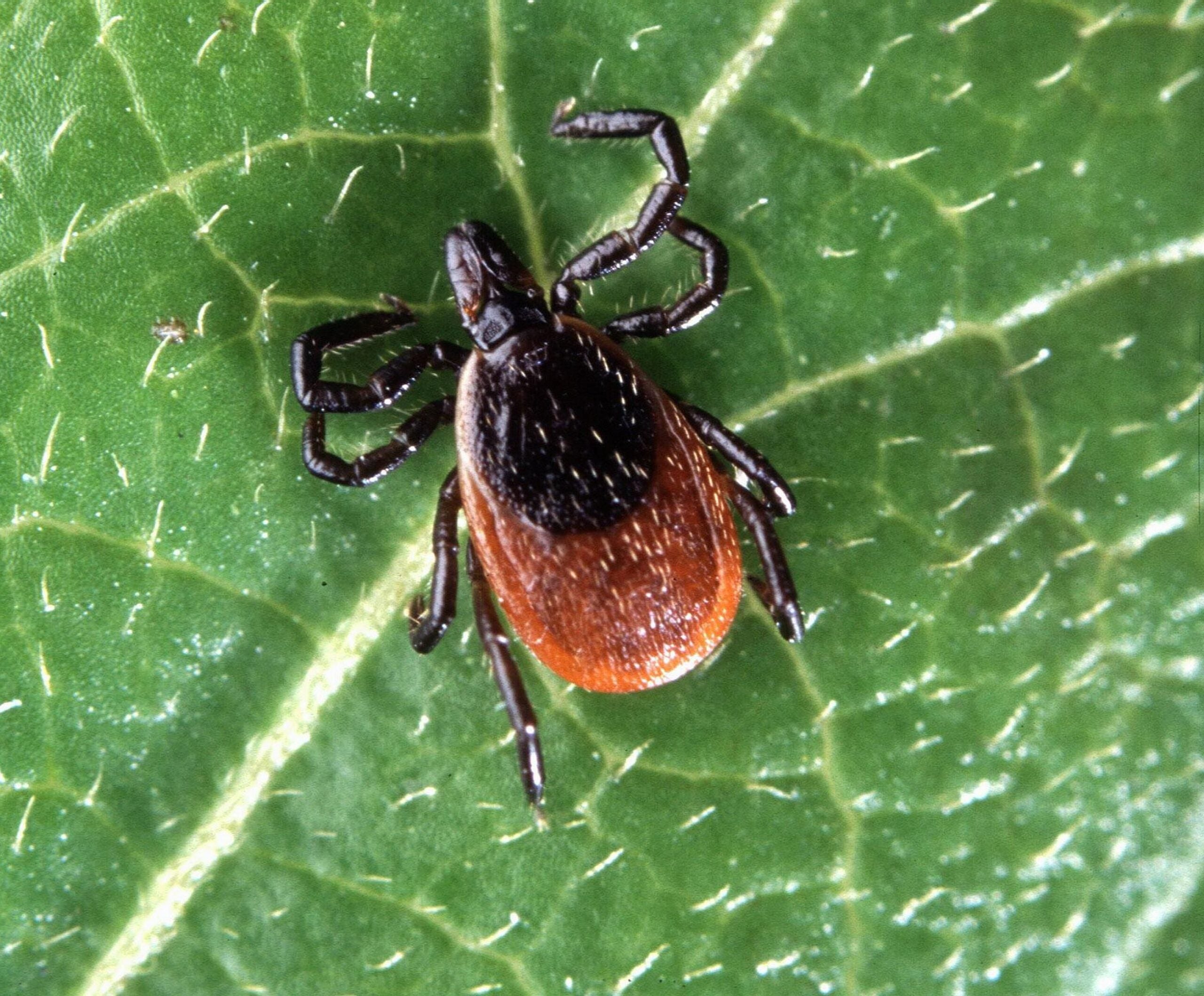
Ixodes scapularis, also known as a deer tick or black-legged tick. Scott Bauer/U.S. Department of Agriculture
A project studying ticks collected from across the state found that just over half of the tested deer ticks had the bacteria causing Lyme disease.
Over the last two years, people have mailed in nearly 12,500 ticks from Wisconsin and the surrounding region to Marshfield Clinic Research Institute’s Tick Inventory via Citizen Science project.
A new paper, which is awaiting peer-review, shows that just over a quarter of submissions in 2024 were deer ticks, the species known for transmitting Lyme and other diseases to humans.
Of the 707 adult females tested, 51 percent carried the bacteria that causes Lyme disease.
Alexandra Linz, staff scientist and primary author of the report, said she was surprised by the prevalence of the bacteria.
“It’s not the highest that’s ever been reported in Wisconsin, but it is up there, and it’s higher than we were expecting to see,” she said.
Wisconsin had a record 6,469 cases of Lyme disease in 2024, according to the state Department of Health Services. The agency’s website says the number of cases has quadrupled over the past 20 years, with an average of about 4,600 cases reported each year between 2019 and 2023.
The Marshfield Clinic study found a higher prevalence of the Lyme-causing bacteria in samples from the fall and from southwestern Wisconsin. Linz said the numbers could be influenced by a lower number of samples from the Driftless Area, but she said the region was the first to see the deer tick and has an ideal habitat for the insects.
She cautioned that the study’s finding does not mean people have a 50-50 chance of getting Lyme disease from a deer tick bite. The insect needs to be attached for 24 to 36 hours to pass on the bacteria, and Linz said an individual’s immune system response plays a role.
“CDC’s estimates on what that risk value is are more like 3 percent,” Linz said. “Now, that depends on the prevalence in the environment, and we did find higher than expected. So it’s hard to say what the actual risk from a tick bite is, but it is much lower than 51 percent.”
Other tick borne diseases like anaplasmosis and babesiosis were found in the deer tick samples at much lower rates among the samples.
The majority of ticks submitted to Marshfield Clinic’s project were wood ticks, also known as dog ticks, which do not transmit disease to humans. This species is larger than deer ticks, which Linz said is likely why they received so many.
“We definitely got larger ticks in our study than you would get if you were out sampling in the environment,” she said. “That suggests that people are maybe missing finding the really small life stages of the deer tick, which are a major vector of Lyme disease and other tick-borne diseases.”
The project did receive 22 lone star ticks, a species that is considered at risk of moving into the state and may trigger the allergic reaction to red meat, called alpha-gal syndrome. But Linz said the samples were all adult ticks, indicating that the species is not reproducing in Wisconsin and was likely moved by wildlife from neighboring Illinois.
Linz said the institute plans to continue the survey project, which is currently funded by private philanthropic dollars. On top of continuing to receive ticks, she said researchers are working to compare the microbiomes of ticks with and without the Lyme-causing bacteria in the hope of better understanding why certain insects carry the disease.
Half of deer ticks tested by Wisconsin researchers had Lyme-causing bacteria was originally published by Wisconsin Public Radio.
If you think stories like this are important, become a member of Urban Milwaukee and help support real, independent journalism. Plus you get some cool added benefits.