
With Sharp Criticism, Regulators Approve Electric Rates For Facebook-Meta Data Center
Public Service Commission members blasted lack of transparency around the Beaver Dam data center.
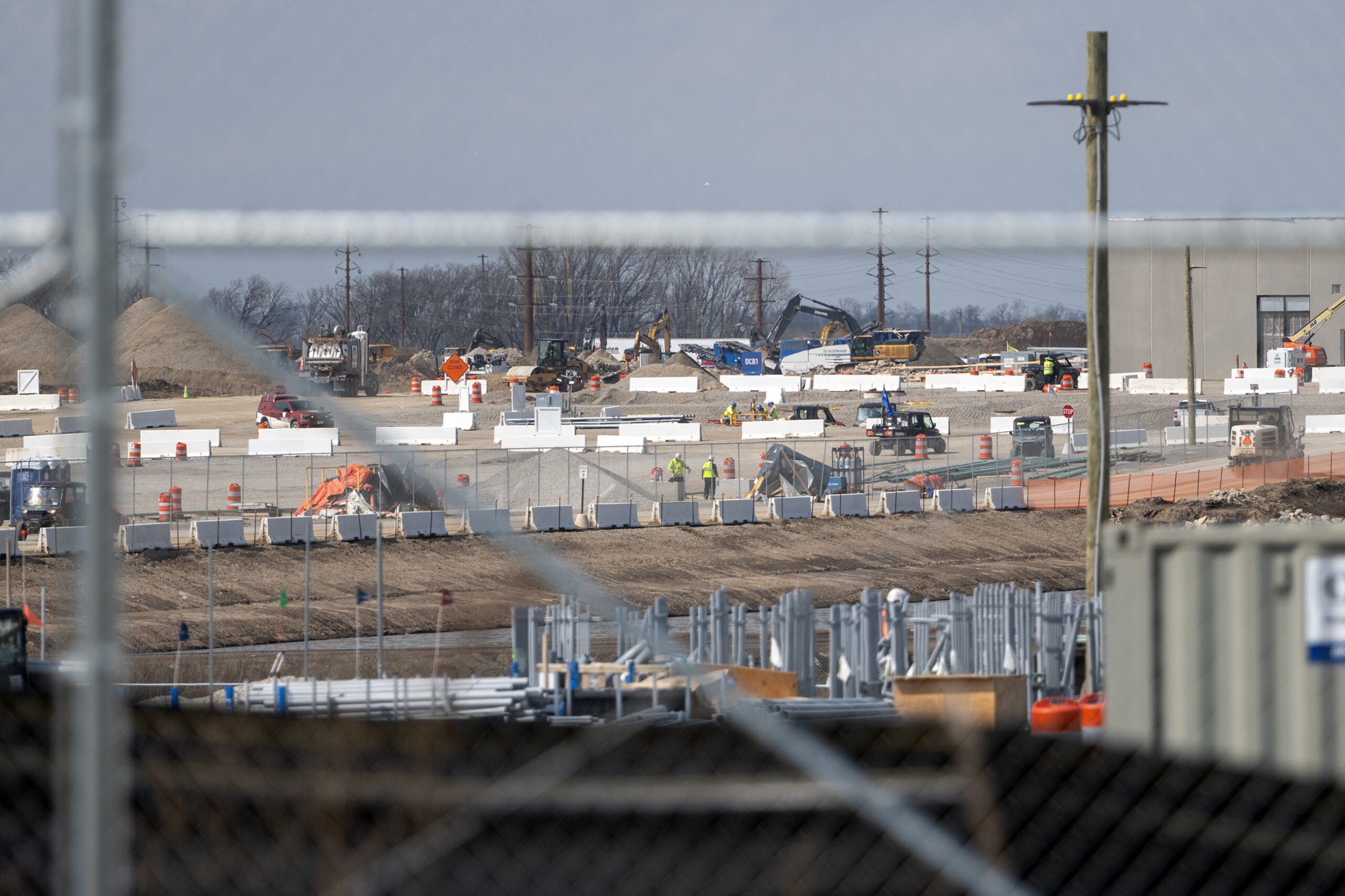
Construction is underway at the site of Meta’s future data center Tuesday, April 14, 2026, in Beaver Dam, Wis. Angela Major/WPR
Wisconsin utility regulators signed off on Alliant Energy’s proposed rates for Meta’s $1 billion data center campus in Beaver Dam, but they ordered the utility to set a standard rate for future data center customers.
The Public Service Commission required Alliant to apply for standard rates for large loads of 100 megawatts or more from future data centers. Regulators also called for more reporting, cost-of-service studies and an incremental cost analysis to show what Alliant’s system would look like with and without energy demand from Meta.
Last year, Alliant Energy filed an application for an individual contract rate agreement with Meta affiliate Degas LLC. The initial application drew scrutiny for blacking out the amount of power needed by the project and length of the agreement, prompting regulators to ask for a new one with fewer redactions. An amended agreement shows Alliant would supply the data center campus with 220 megawatts of power, or the equivalent of two large power plants, over a 10-year term.
PSC Chair Summer Strand said the utility’s proposal fell short on safeguarding customers from harm and creating an open process, calling transparency “non-negotiable.”
“As we saw here, there is still this black-box approach that includes nondisclosure agreements, heavily redacted filings, corporate pseudonyms and negotiations shrouded in secrecy,” Strand said. “It seems obvious, but I guess I have to say it: This lack of transparency is hurting not helping.”
The decision included similar changes the commission recently made to We Energies’ proposed rates. We Energies had proposed a standard rate for all large customers in response to data center development, whereas Alliant’s rate agreement solely served Meta.
In a statement, Alliant spokesperson Melissa McCarville said its agreement ensures the tech company will pay the full cost of investments needed to serve the data center and avoid harm to other customers.
“Protecting our customers while allowing communities to grow is central to our commitment at Alliant Energy, and that’s exactly what this contract is designed to do,” McCarville wrote. “It maintains reliability, supports meaningful local economic benefits, and delivers benefits that help keep rates stable for all customers.”
Under the agreement, Meta will pay for its minimum energy demand even if it no longer needs the power, and it will make payments if it terminates service early. Regulators strengthened those termination charges by extending the amount of time they will remain in place through the entire 10-year term.
“I don’t think it’s a lot to ask for the large customer to stick to the term they’re agreeing to,” said PSC Commissioner Kristy Nieto.
However, regulators opted to keep the current contract term rather than extend it to 15 years as they did with special rates proposed by We Energies.
Customer advocates and environmental groups had pressed for more protections to ensure Meta pays all costs to serve the data center, including stronger termination charges. They said the proposed agreement failed to adequately protect against risks that Meta may need less power than projected.
Tom Content, executive director of the Citizens Utility Board, highlighted concerns that the artificial intelligence boom may burst. He said this and other recent actions by the PSC send “a clear message that tech companies are going to have to pay their way when they come to Wisconsin.”
Groups had urged regulators to require a contract term of up to 20 years to ensure ratepayers wouldn’t bear the costs of investments. Brett Korte, staff attorney for Clean Wisconsin, said the environmental group wanted regulators to deny the utility’s contract altogether in favor of standard rates for data centers.
“Regulators in Wisconsin are looking for utilities that have tariffs to deal with the data centers, and I would hope that we don’t see any more individual contracts from from any utility,” Korte said.
In November, Meta announced it was behind the proposed data center development in Beaver Dam. The 700,000-square-foot data center campus would bring more than 1,000 jobs during construction and more than 100 permanent jobs once it goes online in 2027.
The tech giant said it would underwrite nearly $200 million in infrastructure investments that include transmission lines and utility substations to cover costs with building the data center. American Transmission Co. is planning around $2 billion in transmission projects that would serve data centers in Mount Pleasant, Port Washington and Beaver Dam.
Regulators directed Alliant to work with ATC on a fix to ensure other Wisconsin customers don’t receive bills for transmission costs tied to Meta’s data centers and others. Ultimately, federal energy regulators control transmission rates.
The commission also required a condition that specifies Meta would cover any costs if its subsidiary Degas, LLC ran into financial troubles. Regulators also created a mechanism to assess the actual costs of serving the data center and make changes in future rate cases, if necessary, to ensure existing customers aren’t paying for that.
Groups have been critical of Alliant’s lack of transparency. In December, Midwest Environmental Advocates sued the Public Service Commission to force the release of Meta’s projected energy demand, and that case remains ongoing.
Wisconsin regulators approve rates for Meta’s Beaver Dam data center, with sharp criticism was originally published by Wisconsin Public Radio.
If you think stories like this are important, become a member of Urban Milwaukee and help support real, independent journalism. Plus you get some cool added benefits.