Wisconsinites Support Fee Hikes to Sustain DNR Programs
Majority at public hearings in nearly every county supported higher fees.
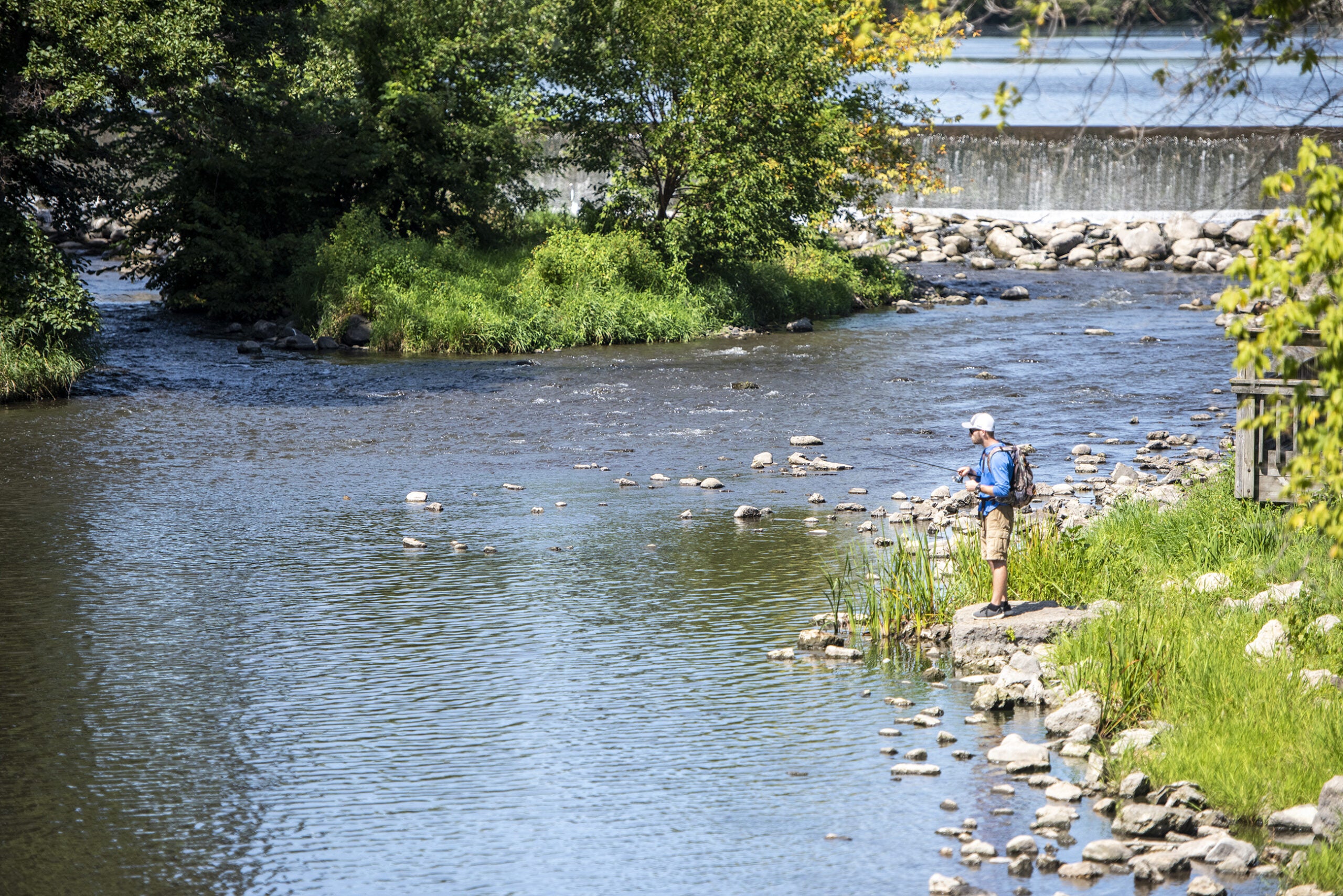
A fisherman casts a line near the Echo Lake Dam on Thursday, Sept. 1, 2022, in Burlington, Wis. Angela Major/WPR
This year’s Wisconsin Conservation Congress spring hearings found a majority of respondents in nearly every county supported increasing hunting, fishing and trapping license fees by at least 25 percent.
Twelve hundred people attended in-person hearings hosted by the organization, an elected body that advises the Natural Resources Board and the Department of Natural Resources on policy on behalf of citizens. Others voted online. In all, almost 7,000 people weighed in on more than forty conservation-related questions.
Every spring, Wisconsinites have the opportunity to make their voices heard on issues related to our state’s natural resources. This year, respondents made it clear that they are willing to pay more in fees to sustain DNR programs.
Voters also supported fee increases for trout and turkey stamps, which haven’t changed in more than 20 years. They didn’t support proposals to charge an access fee for public lands and state natural areas and registration fees for canoes, kayaks and paddleboards.
Later this month the Wisconsin Conservation Congress will hold their annual convention to examine the results of the vote and decide which they’ll move forward for consideration by the DNR and its board.
Outdoors reporter Patrick Durkin has been following the spring hearings for decades. He joined WPR’s “Wisconsin Today” to break down some takeaways from this year’s vote.
The following interview has been edited for length and clarity.
RF: Why are these fees such a big issue right now?
PD: This has been an issue going back 20 years — since the last time Wisconsin raised the fees. The increases used to be fairly common, every few years. Now it’s gone two decades without a fee increase, and previous attempts have brought up basically the same issues that we’re seeing: steady declines in our funding for our natural resources. It’s on the spring hearings once again, but this requires acts from the legislature, and so far they have not wanted to boost the fees.
RF: What factors are driving outdoorspeople to approve of higher fees?
PD: The first thing hunters and anglers typically complain about are the fees that we pay for these annual licenses. But when push comes to shove, when they see programs starting to get cut, and they see access not being kept up, they notice that.
The first year of a fee increase, you hear a lot of complaining, and then eventually the complaining dies off. They get used to the idea that the fees are at a certain price now, and they started doing their own calculations and realizing that, of all the things you can take into the field or take into the boat or on the streams, the license fee is always the cheapest.
RF: This questionnaire had the lowest participation since about 2019. Why is that?
PD: I track the attendance of this — I keep a chart going back to 1972 and you always see these fluctuations. The thing I’ll always point out to the people is that even though this year’s attendance was low, if you ever go to the Capitol to attend hearings, most bills that get hearings don’t draw those kinds of numbers overall. So to me, this is still an accessible way that people have to communicate their thoughts and their wishes to the people who represent them.
RF: After the hearings and voting, what needs to happen for these proposals to get past the finish line?
PD: Ultimately, it’s always going to come down to people contacting their lawmakers, letting them know they support these things. And if they don’t hear much from their constituents on this, they just take it as something that’s not that important to them. I always point out to my readers that these programs don’t happen by accident. They require a staff, they require equipment — things that cost money. You won’t get them without funding.
The legislature has not wanted to increase the fees because they always seem to think that any kind of fee increase will be seen as a tax increase. And I don’t think the average hunter and fisherman goes that far with that. It’s always been a pay-as-you-go system, and we kind of accept that.
Wisconsinites support fee increases to sustain DNR programs at spring conservation hearings was originally published by Wisconsin Public Radio.
If you think stories like this are important, become a member of Urban Milwaukee and help support real, independent journalism. Plus you get some cool added benefits.