Wisconsin DOJ Using Trained Dogs to Detect Internet Crimes Against Children
The canines sniff out electronic storage devices with child exploitation materials.
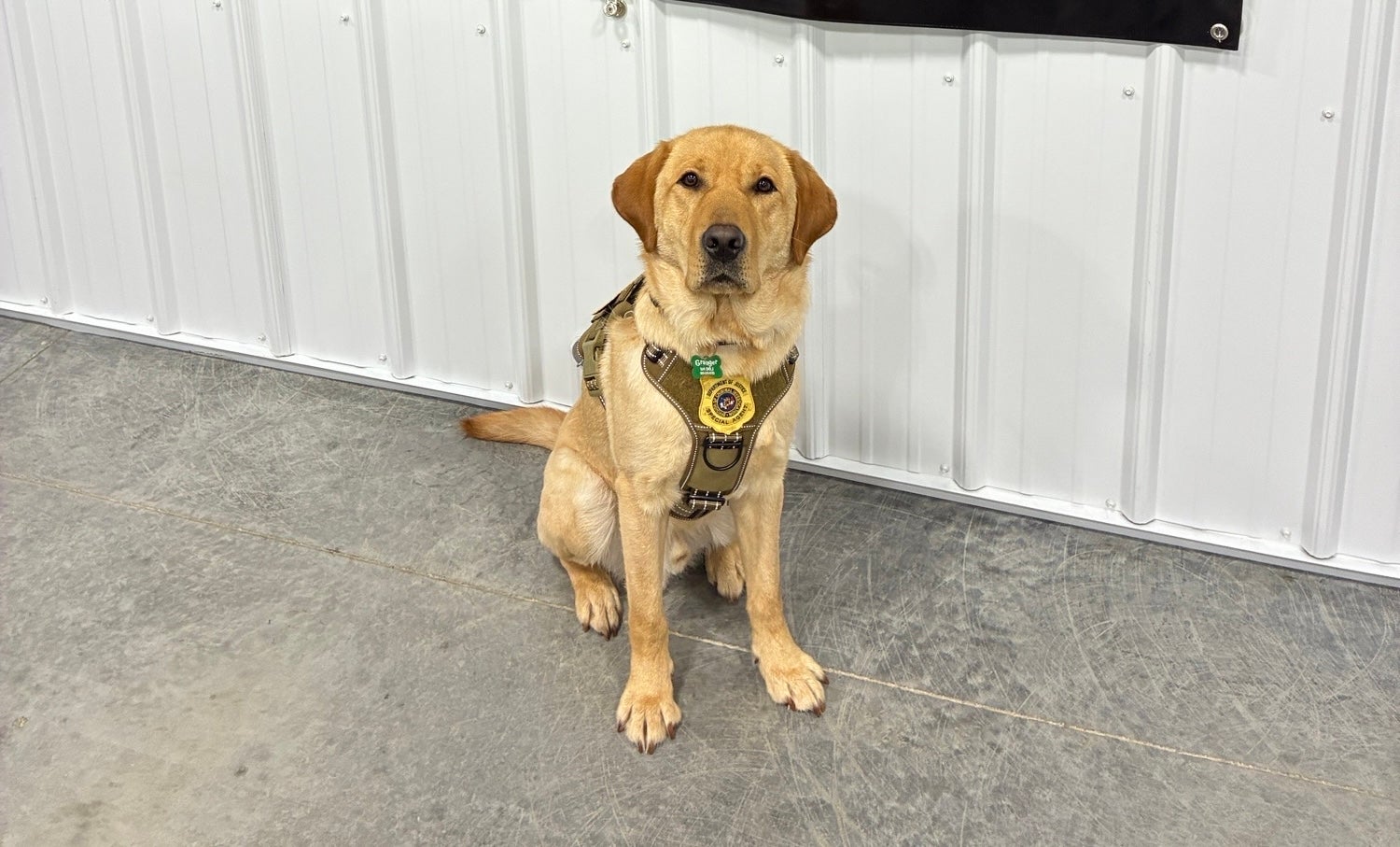
Canine Granger is the newest electronic storage device-sniffing canine for the Internet Crimes Against Children Task Force Photo courtesy Wisconsin Department of Justice
The Wisconsin Department of Justice’s Internet Crimes Against Children Task Force has a new tool to investigate cases of child exploitation.
It has four legs, yellow fur and a super sniffer.
Earlier this month, the DOJ’s Division of Criminal Investigation announced a donation from the anti-human trafficking nonprofit group Light Their Way that paid for a two-and-a-half-year-old labrador retriever named Grainger.
Grainger is trained as an electronic storage device-sniffing (ESD) canine, adept at detecting flash drives, SD cards and other technology used to record or store illicit digital materials.
Special agent in charge Tami Lepianka supervises the canine unit, and she told WPR’s “Wisconsin Today” that the dogs find devices that human searches can miss.
“The dogs can also be utilized to search for hidden cameras,” Lepianka said. “So if you have a report of say, a school has a hidden camera somewhere, and they want to verify that they located all of those devices to make the families in their community feel secure again about that facility, we can run these dogs through to verify that all of those hidden cameras have been located.”
Grainger joins canine Moose as the only two ESD dogs in the state DOJ. Lepianka said Wisconsin has only eight other canines trained for these devices in other law enforcement agencies.
Moose’s handler, special agent Alex Bol, told “Wisconsin Today” that they get called to cases all over the state, with plenty of demand for their services.
“Basically what these dogs smell is a substance called TPPO, and that is a substance that’s sprayed onto any device that can store any type of files,” Bol said. “When I started with the DOJ, I got introduced to this stuff as well. This is still kind of a new program that’s (picking up) more and more speed throughout the country.”
The substance is used to keep electronic devices from overheating. So even if the device is damaged, powered off or buried, Grainger and Moose can smell it.
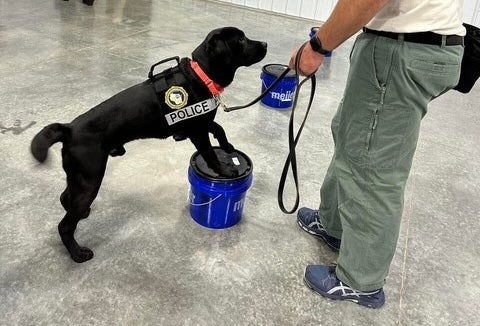
Wisconsin Department of Justice canine Moose (left) trains with special agent Alex Bol. Photo courtesy Wisconsin Department of Justice
That skill is valuable in more than just child exploitation cases. The state has deployed these ESD canines to find missing persons who might have an electronic device with them.
The dogs are also used to comfort children who are present during investigations. Moose picks up on when a child is upset and will sit next to them or put his head on their lap.
“I was a little worried when we were told that I was going to get a year-and-a-half-old lab,” Bol said. “I mean, we’ve all seen the labs that are bouncing off the walls, and Moose is just not that. He’s an exceptionally kind dog.”
Bol admitted that Moose is still refining his child-comforting skills, but he gets daily training on scent detection.
The canines are food-reward dogs, meaning they only eat after they put their nose to work. So on days where Moose doesn’t have a search warrant to execute, Bol has to set up multiple training sessions to feed him his meals.
“I sometimes joke that Moose is way smarter than I am when it comes to this kind of stuff,” Bol said. “Just being able to stand back and let him do his work allows him to really excel in that area. It’s captivating to watch.”
Wisconsin DOJ using specialized canines to help investigate internet crimes against children was originally published by Wisconsin Public Radio.
If you think stories like this are important, become a member of Urban Milwaukee and help support real, independent journalism. Plus you get some cool added benefits.