UW-Madison Saw 17% Cut to Federal Research Funds Under Trump
Outgoing Chancellor Jennifer Mnookin said federal research cut by $27 million in 2025.
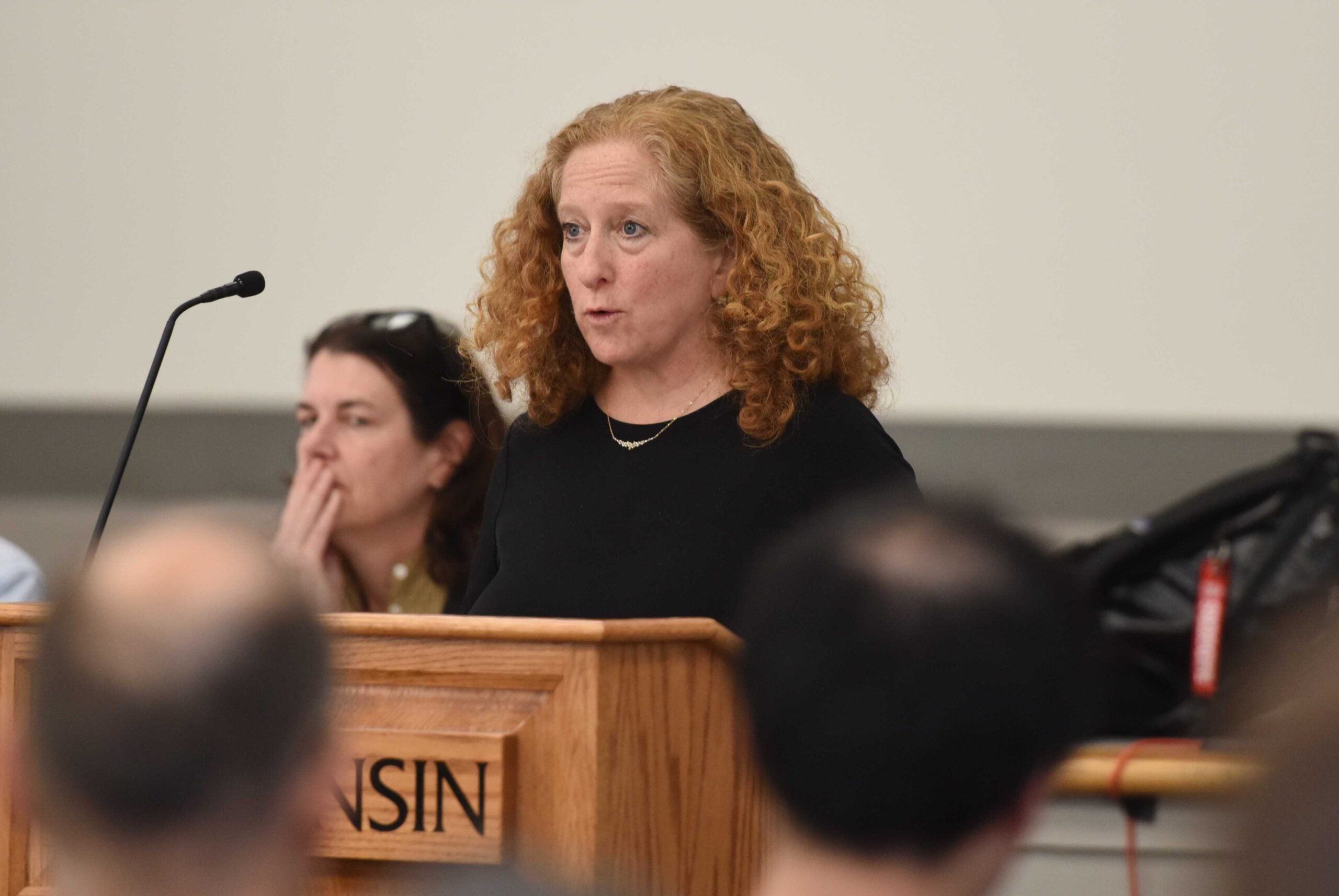
UW-Madison Chancellor Jennifer Mnookin speaks at a Faculty Senate meeting on May 6, 2024. Angela Major/WPR
The University of Wisconsin-Madison saw a 17 percent decrease in federal research funding since the start of President Donald Trump’s second term, according to outgoing Chancellor Jennifer Mnookin.
In a presentation to the Board of Regents last week, Mnookin shared the clearest quantification yet of cuts to Wisconsin’s flagship university by the Trump administration, which also included a decrease in grants awarded.
“Many of our peer universities have experienced similar decreases as federal funding has been uncertain, reconfigured and stalled,” said Mnookin. “This decline also has a double whammy aspect: fewer newly funded grants, plus a number of existing grants that were terminated midstream.”
A total of 375 fewer grants were awarded in 2025 compared to 2024, Mnookin said, and about 145 grants were ended or paused, totaling about $27 million in lost grant funding.
That $27 million figure does not account for additional funds that were expected to be doled out over the course of coming years, a UW spokesperson told WPR.
In her presentation, Mnookin said that the scale of lost federal funding was not as severe as initially feared when Trump retook office and began exerting unprecedented influence on universities, in part because of lawsuits challenging some cuts.
“As a result of some of the lawsuits challenging federal actions — and our legal team has been working tirelessly on that and many other issues — 43 of these grants have been reinstated,” Mnookin said.
But the “volatility” around federal funding is significant, she added, when considering that federal funding is “our largest single source of external revenue.”
Throughout 2025, some active grant-funded projects were cut after the federal government determined that they supported projects that violated new policy, such as researching gender identity or coronavirus strains. The administration also targeted spending on overhead costs that scientists and researchers said are critical to keeping labs functioning.
Some of these cuts faced legal pushback from Wisconsin Attorney General Josh Kaul, who has joined several lawsuits against actions by the Trump administration, including against research cuts. UW-Madison has also been party to lawsuits against Trump directives.
Amid that uncertainty, UW-Madison cut budgets campus-wide, and some prospective grad students saw their acceptances adjusted to accommodate slashed departmental budgets.
At the start of the Trump administration’s second term, as early cuts targeted the National Institutes of Health, or NIH, UW leaders defended the university system’s medical research work.
Mnookin, who is departing UW-Madison to take over as president of Columbia University later this spring, said that some programs, executed in partnership with federal agencies like the Department of Energy and the National Oceanic and Atmospheric Administration, were expected to lose funding, but did not.
Jay Rothman, the system president, credited conversations with Wisconsin’s congressional delegation for helping to save that funding in government spending bills passed through Congress.
“Now that the majority of the federal government is funded through the duration of the fiscal year without — and this is important — without many of the dramatic cuts we had been most immediately concerned about earlier, our attention will remain on the importance of funding for higher education generally, and particularly as it relates to student financial aid and research,” Rothman said.
But Mnookin said cuts to those agencies themselves still pose a challenge for applying for and administering research grants.
“Many of the experienced federal agency employees that we depend on to help navigate … funding processes and to move them forward are no longer doing that work,” she said, citing reduced workforces in key partners like the NIH.
The presence of international students and staff has also been up in the air, Mnookin said. Enrollment of students from overseas has declined by about 500, she said, and the university is navigating uncertainty about the H-1B visa program.
That program, which allows skilled foreign workers to come to the United States to work in industries like research and technology, has been targeted by Trump and his allies, with Trump proposing a $100,000 fee for new visa petitions.
“I want to be clear: our international students, faculty and staff, are essential to our university,” Mnookin said. “They enrich our campus, culturally and academically. They bring perspectives that advance our research and enliven the exchange of ideas. Many of them have also gone on to create businesses and opportunities right here in the state of Wisconsin, including entrepreneurship opportunities all throughout the state.”
UW-Madison saw 17 percent cut to federal research funds in Trump’s first year was originally published by Wisconsin Public Radio.
If you think stories like this are important, become a member of Urban Milwaukee and help support real, independent journalism. Plus you get some cool added benefits.