Milwaukee Schools Have Low Level of Dual Enrollment Participation
College level courses less likely at schools with high rates of poverty.
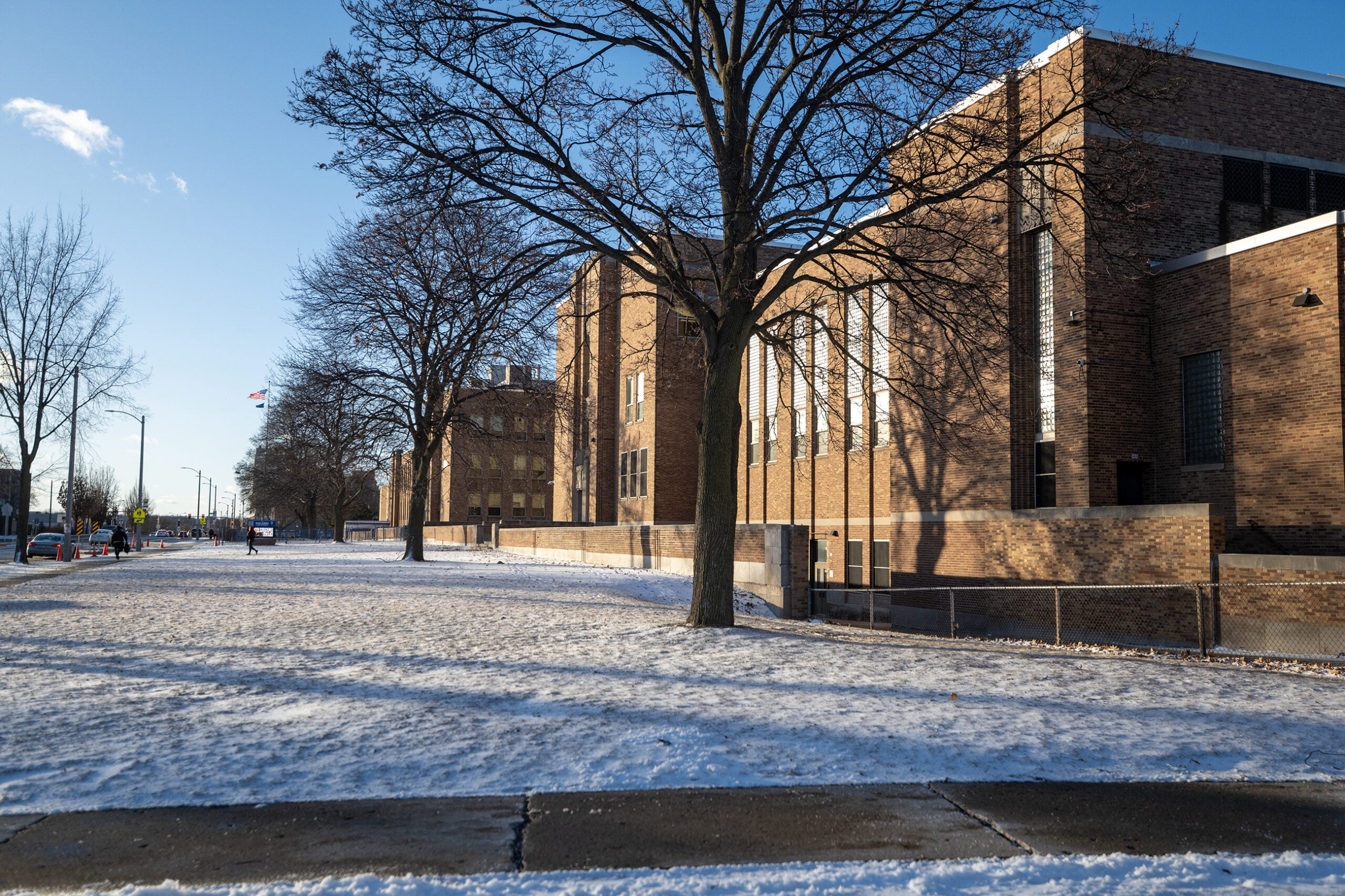
Casimir Pulaski High School on Wednesday, Jan. 14, 2026, in Milwaukee, Wis. Angela Major/WPR
Kenya Brown’s career at Froedtert Health began when she was a junior in high school.
A teacher at Carmen High School of Science and Technology suggested that Brown join a career-readiness program.
“I was like, sure, I ain’t got much to lose, right?” said Brown, who graduated from Carmen in 2019.Brown took a series of college-level health care classes at Carmen, earning both high school and college credits through a dual enrollment program.
When she graduated, Brown was offered a full-time position at Froedtert. She’s now in a management training program at the hospital.
“Dual enrollment taught me to want more for myself,” Brown said. “I feel it’s like the reason that I’m in the position that I’m in now, which is a leadership role.”
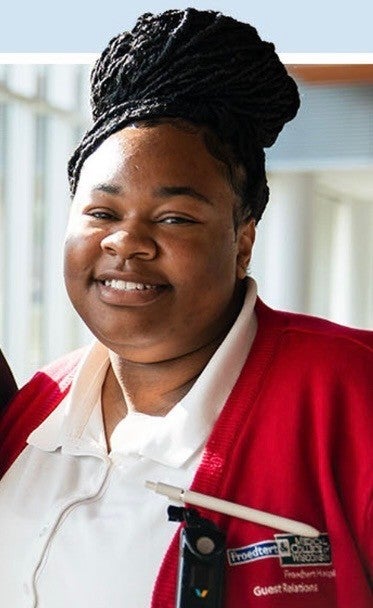
Photo courtesy of Kenya Brown
Dual enrollment refers to any program in which a high school student is taking a class to earn college and high school credit at the same time. The students typically take college level courses through partnerships between their high school and local universities or technical colleges.
It is different than Advanced Placement classes, which offer high school students a chance to take university-level courses and earn college credit if they pass an assessment test.
With dual enrollment, students have a chance to save money on college credits and the time it would take them to complete a degree. But studies show opportunities are not consistent across Wisconsin or demographics.
A July 2025 report from the Wisconsin Policy Forum found participation in dual enrollment has grown from 38,435 students in 2015 to 78,703 students in 2024.
But schools that were small, urban or had high rates of poverty were least likely to offer dual enrollment courses.
Marquette University has been following this through its Black and Latino/a Ecosystem and Support Transition, or BLEST, Hub.
A new report that surveyed Milwaukee Public Schools found that despite growth in dual enrollment, participation rates in Milwaukee are low, and many schools reported no participation.
Of the 29 schools surveyed, 3.8 percent participate in dual enrollment, said Gabriel Velez, who leads the BLEST Hub and heads the dual enrollment program at Marquette.
The project also looked at 2022-23 state report cards for dual enrollment data and found Milwaukee is well below the state average of just over 25 percent for participation.
Velez said there is good evidence dual enrollment can change a students’ trajectory, especially if they are less likely to go to college.
“There are two ways this can happen. One, it can shift their thinking. And the other is it can make college cheaper and quicker,” Valez said.
But one of the reasons participation is low is the cost to families and schools, Valez said.
Wisconsin is one of three states that does not provide any state funding for dual enrollment, according to a report by Columbia University.
In the fall, Republican legislators proposed a Dual Enrollment Reform bill that did not include changing the funding model.
But Velez is still hopeful.The bill creates an oversight council with members appointed by several entities, including the Department of Public Instruction, the Wisconsin Technical College System, the Universities of Wisconsin and the Wisconsin Association of School Boards.
This group would make recommendations to ensure all students and their families have affordable and attainable pathways to college credit during high school.
“So that part, I think, to me, is the sort of the bigger step,” Velez said. “The funding question, though, eventually, if Wisconsin really wants to move forward on this issue, that has to be addressed.”
Dual enrollment participation remains low in Milwaukee was originally published by Wisconsin Public Radio.
If you think stories like this are important, become a member of Urban Milwaukee and help support real, independent journalism. Plus you get some cool added benefits.