Cleanup of PFAS Could Cost Wisconsin Billions
But DNR and GOP legislators need to compromise to create clear standards.
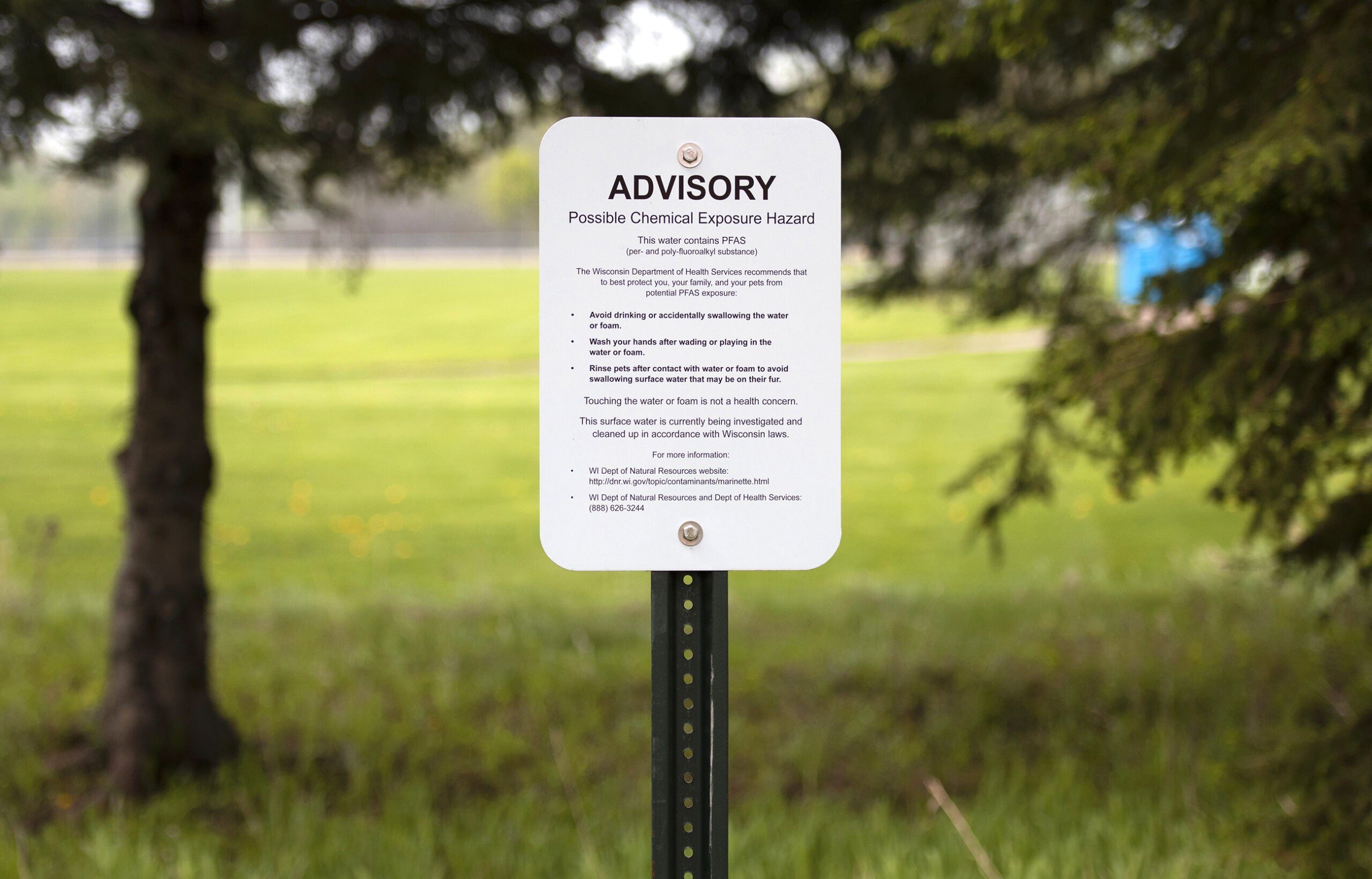
A sign at Marinette High School warns of PFAS contamination in water that runs through the school’s campus Thursday, May 20, 2021. Angela Major/WPR
Wisconsin environmental regulators and Republican lawmakers don’t agree on much when it comes to addressing PFAS contamination, but both acknowledge it will likely cost the state billions of dollars.
The Wisconsin Department of Natural Resources produced a fiscal estimate this fall on one of two PFAS bills introduced by Republicans. The agency’s estimate focused on potential costs of legislation that would exempt individuals and other parties from paying to clean up contamination they didn’t cause under the state’s spills law.
The bill would exempt people who spread or received PFAS-contaminated sewage sludge under a state license or permit. WPR reported industrial and sewage sludge, along with septage, are spread across roughly 500,000 acres in Wisconsin each year.The bill includes exemptions for fire departments, public airports or municipalities that used firefighting foam containing the chemicals for emergencies or training, as well as solid waste disposal facilities. That means the DNR would likely be on the hook for cleanup costs.
The DNR warned the increased cost to taxpayers would be “on the order of billions of dollars” to upgrade public and private water supplies to protect public health. State Sen. Eric Wimberger, R-Oconto, said without his bill those costs would be borne by innocent landowners.
“I fully anticipate that monitoring and upgrading systems will be several billion dollars over the course of multiple budget cycles,” Wimberger said.
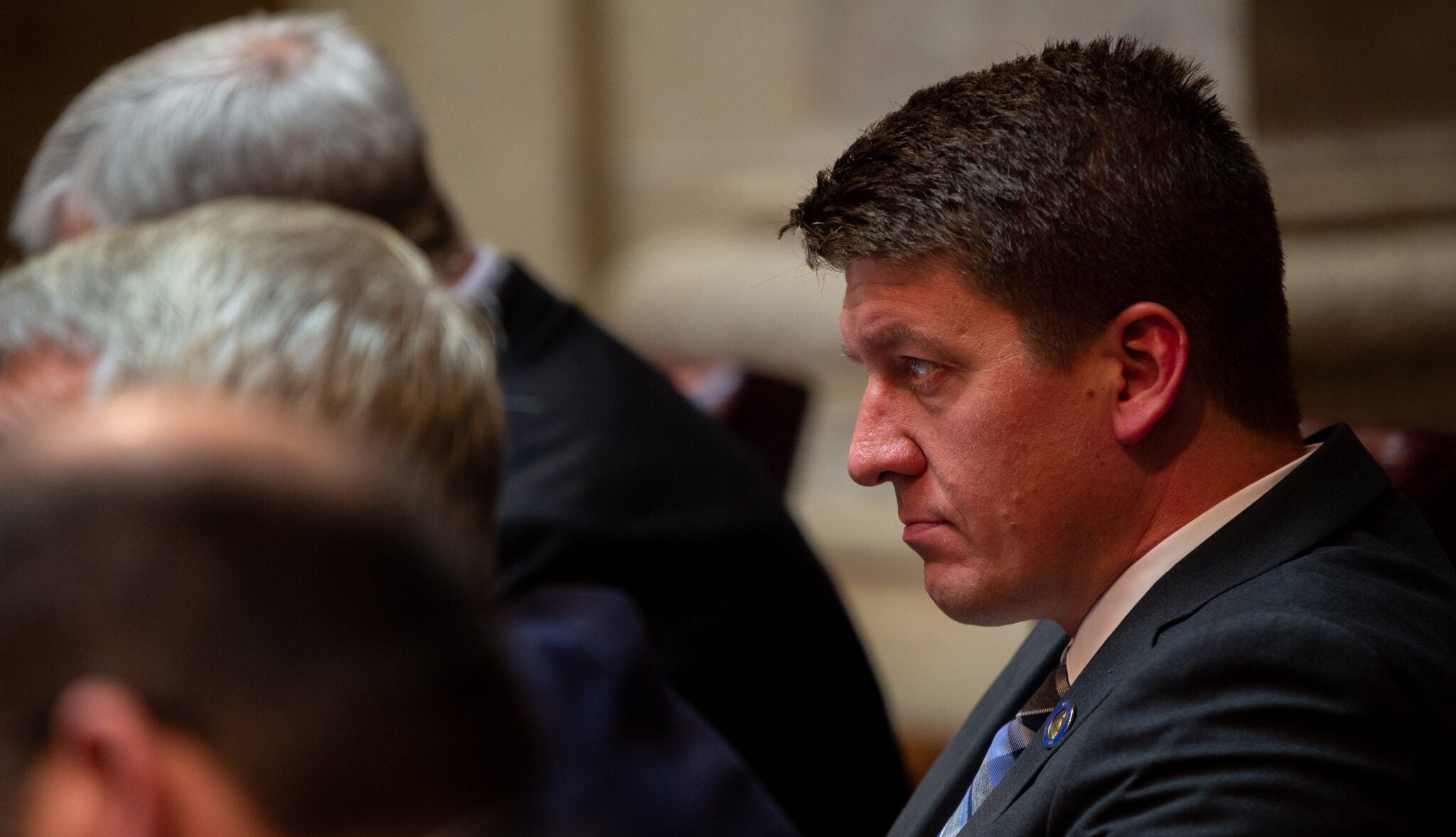
Wisconsin state Sen. Eric Wimberger, R-Green Bay, is photographed during a state Senate session on June 28, 2023, in the Wisconsin State Capitol building in Madison, Wis. Drake White-Bergey/Wisconsin Watch
PFAS is an expensive problem
In its fiscal estimate, the DNR focused on known costs to cleaning up PFAS, a class of thousands of synthetic chemicals that don’t break down easily in the environment and have been linked to serious health problems.
The agency noted public water systems may face $12.6 million annually, or $252 million over two decades, to reduce PFAS levels to meet federal drinking water standards. The agency also estimated it would cost around $400 million to sample the state’s roughly 800,000 private wells. Around 5,000 private wells are likely to face contamination, and it could cost up to $125 million to replace them all. Millions more may be needed to install and maintain in-home treatment systems.The figures don’t include other costs tied to wastewater sampling and site investigations and cleanups.
The estimate represents a worst-case scenario if the state had to test or replace every well, said David Strifling, director of the Water Law and Policy Initiative at Marquette University Law School. He said it’s difficult to assess potential costs when it’s unknown whether a harmful release of PFAS resulted from a polluter or one of the parties that would be exempt under the bill.
“There’s just so much we don’t know here (and) it’s really difficult to come up with an exact number,” Strifling said.
Meleesa Johnson, executive director of Wisconsin’s Green Fire, said without clear PFAS standards, it’s difficult to estimate the bill’s costs. She likened it to seeking an estimate for building a home without knowing its size or dimensions.
“At a minimum, we need groundwater standards, and we need cleanup standards,” Johnson said.
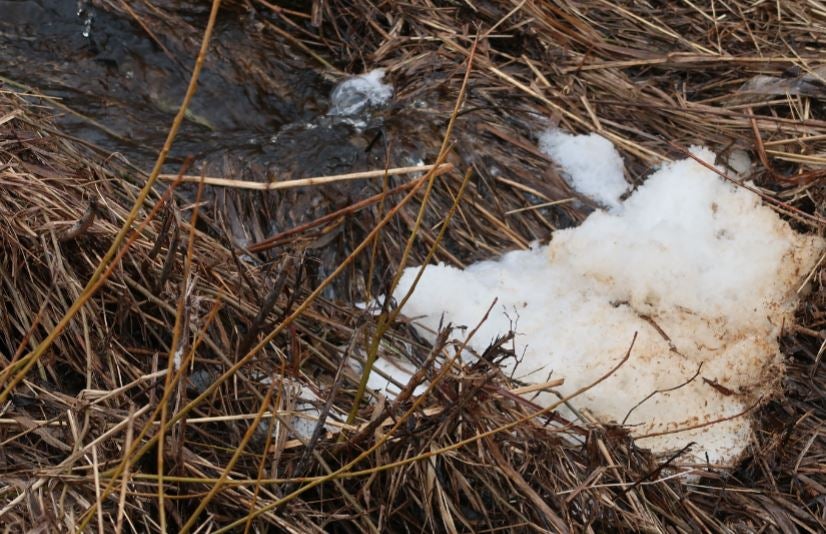
Firefighting foam can be seen in a ditch nearby the Husky oil refinery in Superior the morning after a series of fires and explosion on April 26, 2018. Concerns have grown over the use of firefighting foam that can contain so-called “forever chemicals” known as PFAS. Danielle Kaeding/WPR
Wimberger said quick state action is needed to address PFAS contamination. The state’s rulemaking process can take years. The GOP lawmaker added the Legislature would likely provide additional funds to address PFAS over time.
For now, he said the state may front costs that could be tracked and later be recovered by the state through litigation.Wimberger said he’s encouraged by discussions with DNR Secretary Karen Hyun that the state is heading in the right direction on PFAS legislation to make sure that the law “doesn’t wrap up all these people … that you wouldn’t want to hold accountable.”
A DNR spokesperson said the agency and bill authors have had productive conversations “regarding narrow exemptions to the spills law to protect innocent landowners and provide much-needed funding to communities impacted by PFAS contamination.”
Cleanup of PFAS could cost Wisconsin billions, regulators and lawmakers say was originally published by Wisconsin Public Radio.
If you think stories like this are important, become a member of Urban Milwaukee and help support real, independent journalism. Plus you get some cool added benefits.
More about the PFAS Problem
- Gov. Evers, DNR Celebrate PFAS Awareness Week, Highlight Evers Administration’s Efforts to Ensure Safe, Clean Water Statewide - Gov. Tony Evers - Sep 21st, 2026
- $10 Million Released To Tackle PFAS In Marinette, Peshtigo Wells - Danielle Kaeding - Sep 3rd, 2026
- Gov. Evers, DNR Celebrate Release of $10 Million Pfas Settlement Payment to Help Provide Safe Drinking Water to Affected Communities - Gov. Tony Evers - Sep 1st, 2026
- Gov. Evers, Wisconsin DNR Urge Release of $10 Million to Address PFAS - Danielle Kaeding - Aug 20th, 2026
- Baldwin, Colleagues Demand EPA Drop Its Effort to Weaken PFAS Drinking Water Protections for Millions of Americans - U.S. Sen. Tammy Baldwin - Aug 10th, 2026
- DNR Hosting Listening Session to Gather Feedback About Pfas Law Program Development - Wisconsin Department of Natural Resources - Jun 5th, 2026
- Wisconsin DOJ Reaches Settlement With Tyco Fire Products for Alleged PFAS Violations - Wisconsin Department of Justice - Jun 4th, 2026
- EPA PFAS Rollback Puts Wisconsin Drinking Water Limits In Legal Crosshairs - Danielle Kaeding - May 21st, 2026
- Gov. Evers Delivers Radio Address, Celebrates Release of Over $125 Million to Fight Pfas Statewide - Gov. Tony Evers - Apr 10th, 2026
- Wisconsin Conservation Voters Celebrates Double Win - Wisconsin Conservation Voters - Apr 8th, 2026
Read more about PFAS Problem here