EnglishEspañolDeutschБългарски
Follow Urban Milwaukee on Twitter Like Urban Milwaukee on Facebook Subscribe to Urban Milwaukee via email Subscribe to Urban Milwaukee via RSS

Friday Photos Friday, 30. July 2010

Jul 30th, 2010 | By | Category: Friday Photos

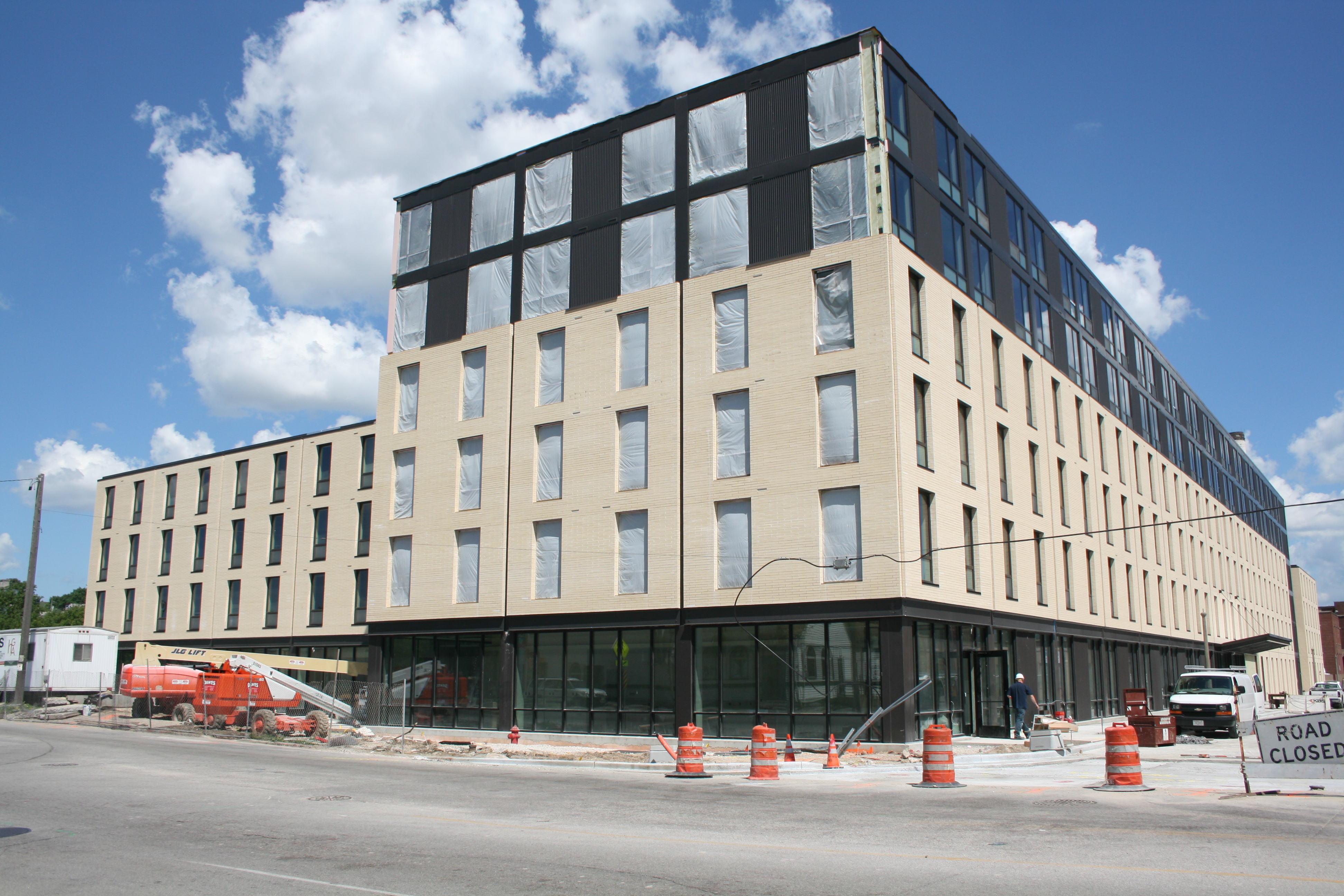
Jackson Square Apartments

Jackson Square Apartments

Jackson Square Apartments

Jackson Square Apartments

Jackson Square Apartments

Jackson Square Apartments

Jackson Square Apartments

Jackson Square Apartments

Jackson Square Apartments

Jackson Square Apartments


Coming to the East Side – More Residents and Customers

Jul 30th, 2010 | By | Category: Cambridge Commons, Feature, Park Lafayette, St. Johns on the Lake

One of the many things that makes urban neighborhoods special is their dynamic nature. Unlike a suburban cul-de-sac, an urban neighborhood is never finished. A healthy urban neighborhood sees a steady influx of infill development or building rehabilitation as the success of the neighborhood builds upon itself. Milwaukee’s East Side residents and business owners are likely to see the results of such infill development over the course of the next year as a number of new buildings open. The projects run a fairly wide spectrum of different development types, including a dorm, hospital, independent-living facility, and high-end apartments.

Cambridge Commons

The view from across North Avenue of the soon-to-be complete residence hall.

The view from across North Avenue of the soon-to-be complete residence hall.

New UWM Residence Hall
Location: Intersection of North Avenue and Cambridge Avenue along the river
Size: 700 beds
Opening: late August/early September 2010

The building will bring 700 students to the neighborhood, as well as introducing another coffee shop (The Grind) to the area. The UWM Real Estate Foundation will move their offices to the building. We’ve profiled Cambridge Commons extensively here before.

Columbia St. Mary’s Hospital

Rendering of the new Columbia St. Mary's hospital

Rendering of the new Columbia St. Mary's hospital

Combing the operations of Columbia Hospital (Maryland and Kenwood) and St. Mary’s Hospital (existing site) in a new $417 million facility.
Location: Eastern end of North Avenue
Opening: October 2010

Columbia St. Mary’s is combining their two namesake East Side operations into one modern facility with the goal of saving $19 million annually. The new hospital will introduce a number of new potential customers to North Avenue area businesses.

Latitude Apartments

Latitude Apartments under construction on Kenilworth and Farwell.

Latitude Apartments under construction on Kenilworth and Farwell.

Originally proposed by New Land Enterprises, the approved project was ultimately sold to Dermond Property Investments before construction. Construction is nearing completion on the apartment building.
Location: Southwest corner of the intersection of Kenilworth Place and Farwell Avenue
Opening: August 2010
Size: 90 units (71 one-bedroom, 19 studios)

The apartment will include 90 residential units and 7,500 square-feet of retail space.  It includes 90 parking spaces for residents, as well an additional 14 spaces for the retail tenant.

Park Lafayette

Park Lafayette before completion.

Park Lafayette before completion.

Condos turned apartments
Location: Northeast corner of the intersection of Lafayette Place and Prospect Avenue)
Opening: Now
Size: 281 Units

After a significant amount of turmoil around it’s near-empty opening as condos last summer, this project appears headed for better days. Over 70 units are now occupied, primarily as rentals, and a steady stream of moving trucks can be spotted entering the building. Additionally, there is now a fair amount of foot and car traffic going in-and-out of the towers. Well Warren Barr and Amalgamated Bank are likely going to lose a lot of money on the project, but Mallory Properties appears poised to buy the property and run the buildings mainly as apartments.

St. John’s on the Lake – The Expansion

The Expansion under construction at St. John's on the Lake.

The Expansion under construction at St. John's on the Lake.

Massive expansion of  the St. John’s on the Lake housing facility.
Location: 1840 N. Prospect Avenue (block south of Kane Place)
Opening: Early 2011
Size: 88 units starting at 1,140 square-feet

The Expansion at St. John’s on the Lake will include a number of different service offerings including independent living, assisted living, and skilled nursing care.  The Expansion was almost entirely pre-sold before construction started. The property tax loophole for developments like this has been closed.


It’s 11 p.m., Clear The Street

Jul 26th, 2010 | By | Category: East Side, East Town, Feature
Security clears the Brady Street Festival at 11 p.m., and for what purpose?

Security works to clear Brady Street at 11 p.m. on Saturday night, and for what purpose?

Milwaukee’s street festivals are fantastic. More so than even the city’s ethnic festivals held at the Henry Maier Festival Grounds, Milwaukee’s street festivals bring together a neighborhood and support the neighborhood’s businesses.  Having festival grounds on the lakefront dedicated to public events surely makes Milwaukee a great place to be on summer weekends. But it’s the street festivals that offer something truly unique. The public can party at the Henry Maier Festival Grounds nearly every weekend during the summer, but it’s rare that one can stand in the center of the road on Brady Street enjoying a cold beer from Trocadero or gelato from Peter Scorinto’s Bakery. The use of streets as festival grounds affords attendees a unique perspective of the neighborhood. Unobstructed by the roar of engines, thousands of attendees are free to take leisurely strolls exploring the booths of local artists and sampling the wares of local eateries. Unfortunately though, the party is cut off abruptly at 11 p.m. so the street can be opened for traffic.

There seems to be no rational reason to clear the street of people at 11 p.m.. It’s not as if cars and trucks have been backing up for hours, just waiting for the opportunity to gun it down the open road. There is no late-night rush of passengers that would force MCTS to ask for the streets to be cleared so bus detours can be canceled. Nor is it that the fun is suddenly stopping elsewhere, as bars are at least three hours away from close and an increasing number of restaurants are open late in Milwaukee.

Are there misguided reasons for opening the streets at what appears to be a fairly arbitrary number? Possibly. Be it noise, crowd control, or fears of drunk driving, there are a number of reasons it’s possible that the streets are  cleared starting at 11 p.m., but for each there is a solution.

If the idea is to clear the streets at 11 p.m. to quiet the neighborhood (which seems like an arbitrary time that is probably too late to please neighbors and too early to please festival attendees), it’s just as easy to achieve that by cutting off live bands at 11 p.m. Reducing the area of festival by opening a portion of the street in more residential areas that may help (think the west end of Brady Street), although that simply might replace the noise of chatter with the noise of rumbling motorcycles and accelerating cars.

The idea of clearing the streets at 11 p.m. as a way to ensure public safety by controlling crowds seems misguided. It’s pretty clear that streets filled with people are equally as safe (or dangerous) at 10:59 as they are at 11:01. If overcrowding is a serious concern, it might be best to expand the area of closed streets as opposed to clearing out people who don’t want to leave. The current strategy of using police and festival staff to order people to move only increases the chance that a dangerous incident might occur, as area taverns quickly become overcrowded. As I’ve witnessed on multiple occasions at Bastille Days, clearing the streets at 11 p.m. (which unlike bar time is a time people aren’t predisposed to respect) has led to completely avoidable conflicts with event attendees, MPD officers, and event security.

The notion that streets are cleared at 11 p.m. to reduce drunk driving is perhaps the most misguided of any of the reasons given for street opening. If one really wanted to prevent drunk driving (and couldn’t simply get rid of the cars) they would remove the alcohol and keep the people until they sobered up. Removing the booze and keeping the people is the exact thing Miller Park and the Bradley Center attempt to do by cutting off drink sales before the ends of the game. Street festivals could implement a similar policy by removing street liquor sales, but still allowing bars to sell drinks (and people to bring them back out onto the street). The bars would simply be so crowded (as they are anyway after 11 p.m. during a festival even with all the people that leave) that the flow of liquor would be greatly reduced.

The best way to reduce conflict, bring revenue in to festival promoters and area businesses, and encourage people to have a good time is to begin the process of re-opening the streets at 2:30 a.m. Bar time, as 2:30′s affectionately known on Friday and Saturday nights, is a time most people are predisposed to clear out. Live music can certainly cut out well before that to quiet the extended neighborhood, but there isn’t a reason people need to be pushed to the sidewalk or inside a tavern before that. Limiting outdoor alcohol sales might be necessary to ease public safety concerns and expedite crowd dispersal as bar close draws near, but it’s misguided to push the people out. Working to open streets for a couple of cars to use them at an arbitrary time late in the night simply cuts off the unique experience that street festivals provide.


Weekly Bookmarks – Monday, 26. July 2010

Jul 26th, 2010 | By | Category: Bookmarks


Upcoming Events for the Week of July 26th, 2010

Jul 25th, 2010 | By | Category: Weekly Events

Urban Milwaukee’s Upcoming Events & Meetings Calendar should help you keep up to date on important events effecting our neighborhoods, the City of Milwaukee, and our region.

July 27, 2010 9:00 am
City Hall
200 East Wells St.
Common Council Chambers
Milwaukee, WI 53202 [...]
July 27, 2010 12:00 pm
Inspired by the success of Green Drinks Milwaukee. The idea is to get folks together to talk about sustainability, to network and build momentum for the sea change in sustainable consciousness that is on its way!Buy your own lunch and/or beverages, and get in there and meet people! No RSVP necessary and feel free to [...]
July 29, 2010 8:30 am
Some matters coming before the County Board have a significant policy impact or a unique set of circumstances which overlap specific committee jurisdiction. One example is the closing of a major county facility. On such occasions, the Committee of the Whole will meet at the call of the County Board Chairman. All 19 supervisors are [...]
July 30, 2010 to July 31, 2010
Riverwest 24 is a community event that has as its goal to build our neighborhood. By encouraging bikers and spectators to come out for a full day we hope to show off Milwaukee’s Riverwest neighborhood and encourage biking in an urban environment.Through this exercise in stamina, team work and merriment we hope to build an [...]


Milwaukee County: Committee of the Whole

Jul 25th, 2010 | By | Category: Events

Some matters coming before the County Board have a significant policy impact or a unique set of circumstances which overlap specific committee jurisdiction.  One example is the closing of a major county facility.  On such occasions, the Committee of the Whole will meet at the call of the County Board Chairman.  All 19 supervisors are members of the Committee of the Whole.

Agenda


Common Council Meeting

Jul 25th, 2010 | By | Category: Events

City Hall
200 East Wells St.
Common Council Chambers
Milwaukee, WI 53202

Agenda


Blue Sky Sustainability Lunch

Jul 25th, 2010 | By | Category: Events

Inspired by the success of Green Drinks Milwaukee. The idea is to get folks together to talk about sustainability, to network and build momentum for the sea change in sustainable consciousness that is on its way!

Buy your own lunch and/or beverages, and get in there and meet people! No RSVP necessary and feel free to pass this around.

Every fourth Tuesday at NOON held at the Milwaukee Public Market, 400 N. Water Street. Meet in the 2nd floor common area. For more information, contact Mike Mangan at ebikemike@yahoo.com


Friday Photos Friday, 23. July 2010

Jul 23rd, 2010 | By | Category: Friday Photos

Sinkhole Repair at North and Oakland

Sinkhole Repair at North and Oakland

Midwest High Speed Rail Meeting

Midwest High Speed Rail Meeting

Urban Ecology Center Parking Lot

Urban Ecology Center Parking Lot

Latitude

Latitude

Latitude

Latitude


City Comforts – How to Build an Urban Village – Book Review

Jul 22nd, 2010 | By | Category: Book Reviews, Feature

City Comforts by David Sucher

City Comforts by David Sucher

“City Comforts – How to Build an Urban Village” by David Sucher is almost a CliffsNotes on the topic of urban planning.  While much of planning is about the big things or big projects, “this book shows examples of small things –city comforts– that make urban life pleasant: places where people can meet; methods to tame cars and to make buildings good neighbors; art that infuses personality into locations and makes them into places.”  To emphasis these ‘city comforts’ the book extensively uses photography to illustrate a design element, such as a photo of a curb as an example of the importance that curbs ramps play in allowing a parent to easily push a stroller on to the sidewalk.  It’s about how these little things make a great city.

On top of the small things that make cities comfortable, David Sucher also lays out his “Three Rules of Urban Design.”

  1. Build to the Sidewalk
  2. Make the Building Front “Permeable”
  3. Prohibit Parking Lots in Front of the Building

These rules are well understood by all urbanists, as they are key to building a walkable urban environment.  Buildings that are built to the sidewalk create the ‘streetwall’ that defines an urban environment, it creates place.  Making building fronts ‘permeable,’ is simply about connecting the interior to the exterior which makes walking more comfortable and appealing to pedestrians.  Finally, prohibiting parking lots in front of building insures pedestrians of a more enjoyable experience, as parking lots create gaps, encourages litter and crime, and causes a feeling of uneasiness for the pedestrian.

This is a great, easy read, that gives great examples on how to build a better urban built environment.

Buy the Book