
Wall Street Journal loves The Norman Conquests
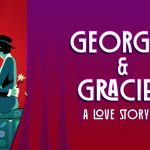
Deserved and markedly positive attention was paid to Milwaukee this weekend in a major coup for the city and its arts scene with a glowing review in The Wall Street Journal of The Norman Conquests at the Milwaukee Repertory Theatre. “Revivals of so complex a theatrical undertaking must of necessity be rare, and I very much doubt you’ll see a better one than this,” writes the Journal’s drama critic Terry Teachout, amidst praise for Artistic Director Joseph Hanreddy, the Rep’s resident acting ensemble and the costume and set design. Read it for yourself online — then head over to The Rep’s website and get your tickets now. This show is a huge deal, and it closes in two weeks, so this is your last chance to see it for a long time. As Terry Teachout points out, this ambitious production is rarely, if ever, revived in America.
Jan 7th, 2008 by Vital Archives
National webzine announces Latina writing contest
We received this press release today from Austin, Texas: Following a reverse trend in publishing, Latinitas Magazine, the first digital magazine made for and by Latina youth, is augmenting its successful online publications with the launch of a print magazine for “‘tweens” in 2008. To gather “voces authenticas” (authentic voices) from all over the United States, the magazine is launching the Latinitas Magazine National Writing Contest, seeking feedback from Latina youth ages 14 to 21 on what it is to be Latina. Winning writers will see their articles published in the print and online issues of Latinitas Magazine. Media tends to either neglect or misrepresent Latina identity, crystallizing her in over-sexualized images or excessive portrayals of servitude. Aside from ABC’s Ugly Betty, much of mainstream media depicts Latinas as uneducated gangster “cholas” or maids. According to media watchdog Children Now, negative media portrayals of youth have been associated with damaging body image and self-esteem among children and teens, particularly among girls who often find themselves marginalized by media. Contest Criteria: Contestants should be between the ages of 14 and 21. Submissions should be 800-1000 words in first person or Associated Press style on one of the following subjects: What is it like to be a Hispanic/Latina female in your hometown? What does it mean to be a Hispanic/Latina female to you? As a Hispanic/Latina female, are you doing something in your community to make a difference? If so, what? Describe the biggest challenge facing the young Hispanic/Latinas today. Applicants should submit articles to latinitasawards@yahoo.com by midnight February 10, 2008 or mail a copy: Latinitas P.O. Box 4284 Austin, TX 78765 “Latinas come from the barrios and the ‘burbs. We are hoping to hear from Hispanic young women who represent the large diaspora of Latinas,” explains Alicia Rascon, Latinitas co-founder. “I was born in Mexico, but you have other Latinas in the United States who may have never seen their family’s country of origin – yet they practice the culture and traditions of that place. Those are the stories we are excited to read.” The U.S. Census reports that by 2025, one in every five teens will be Latino. Clearly, what goes on among Latina teens not only affects the Latino community, but also has an extraordinary impact on the nation as a whole. VITAL Source hopes you’ll spread the word and wishes you luck!
Jan 7th, 2008 by Vital Archives
Weekly Milwaukee Development Bookmarks
Articles from the week of 12/31/07 to 1/6/08 covering development in Milwaukee. JS Online: Holiday Inn plan converts downtown offices Astronautics to expand in Milwaukee – Small Business Times Developers plan to transform downtown building into Holiday Inn – Small Business Times JS Online: Senior housing units sought for King Drive Modern condo development planned for street of historic homes – Small Business Times Pabst brewery site lands another tenant – Small Business Times
Jan 7th, 2008 by Dave Reid
Kinnickinnic River Trail
Kinnickinnic River Spillway Originally uploaded by Retinal Fetish Julie Lawrence at OnMilwaukee.com drew my attention to this excellent community development taking place along the Kinnickinnic River on the south side of urban Milwaukee, the Kinnickinnic River Trail. The trail is in the early stages of development and will have a southern terminus at the river and 6th Street (near its intersection with Cleveland St) and at Water St and 1st Street on the northern end. The trail, while still in its infancy, will hopefully include a restoration of the river to a more natural state with the removal of the concrete channeling. Like many other developments occurring in Milwaukee (the Riverwalk, Menomonee Valley restoration, and the Beerline neighborhood come to mind), the KK River Trail is just one of many ways in which Milwaukee is learning to embrace its natural assets. The developments are all the more special because they’re actual functional ways to move around the city without a car, which is due in large part to the dense development surrounding the rivers. Groundwork Milwaukee has provided a PDF with all you could ever want to know about what was discussed in planning for the trail. I’ll try to learn more over the next few days as to what the actual status of the trail is (it’s a little bit hard to figure out with the information online). I took the map out of the PDF and put it online as a JPG image in case you wanted to see the proposed route.
Jan 6th, 2008 by Jeramey Jannene
New directors, new directions
The day I found out that the Milwaukee Symphony Orchestra would be announcing the music director to replace Andreas Delfs after the 2008-2009 season, I went to bed wondering when the Milwaukee Art Museum would get their ducks in a row and pick someone to replace Director and CEO David Gordon, who will be leaving in March. I didn’t have to wonder long — I got an email the next day from the MAM press team announcing that a “successful museum director,” Daniel T. Keegan, would be taking the job. After months of what I imagine to have been sweaty deliberation, secret rehearsals, googling for dirt, maybe even confessional audition tapes, two of the city’s brawniest art organizations rang in the new on the same day. Their choices make sure statements about how they see themselves and where they hope to head in the next few years. The Symphony’s choice, Edo de Waart, is absolutely magnetic. At 23 he served as Leonard Bernstein’s assistant conductor at the New York Philharmonic; over the course of a storied, cosmopolitan career, de Waart has conducted the Royal Concertgebouw Orchestra in Holland, the Rotterdam Philharmonic, the Sydney Symphony Orchestra and most recently the Hong Kong Philharmonic. Edo de Waart also brings an extensive catalog of recordings with a number of orchestras on major music labels. In person he is full of European charisma — funny but focused, comfortable and sincere. He just moved to Middleton with his wife and family, but everyone, including Edo, went to lengths yesterday to stress that this is not a late-career move made out of ease or laziness. De Waart called the MSO “a great sleeper orchestra,” unfettered by the weighty reputations that sometime “exceed reality.” In the past he has spoken with impressive conviction about what a wonderful symphony orchestra can do for a smaller city, or a city in transition (take a look at this interview about his work with the orchestra in Hong Kong). His experience in opera conducting — including but not limited to the Met in New York and L’Opera National in Paris — as well as a track record of taking chances on contemporary composers and lesser-known repertoire should prove revitalizing to the MSO. And I think Milwaukee is going to love him. Daniel T. Keegan, a different choice for a different beast, comes to the Milwaukee Art Museum from the San Jose Museum of Art, rather persistently described in the press so far as a “Silicon Valley museum.” The phrase gives a lot away about what MAM was looking for in its new leader; San Jose’s most notable distinction, besides its expansive collection of West Coast and Pacific Rim art, is its use of technology and multimedia in exhibitions and galleries. Their podcasts are award-winning, and you can dial their audio guides from your cell phone. The Milwaukee Art Museum has been reaching for a savvier demographic — a multi-tasking, wireless, gadget-infatuated and quick-on-its-feet group of people — for some time, with […]
Jan 4th, 2008 by Amy Elliott
Public Works Committee Approves Parking Study
Johnny Vassallo‘s efforts to convert the Posner Building at 152 W. Wisconsin Ave. into a boutique hotel have come to an end. The new plans for the building involve the Milwaukee Hotel Associates LLC purchasing the property from Johnny Vassallo and developing it into a 160 unit Holiday Inn. Resolution 071222 passed by committee will, if adopted by the full council, allow Milwaukee Hotel Associates LLC to lease 50 parking spots in the city garage located at 724 N. 2nd St to support the Holiday Inn. Resolution 070976 passed by committee will, if adopted by the full council, direct the Department of City Development to conduct a parking study in conjunction with the upcoming downtown plan. This resolution impacts development because the perceived lack of parking and the demand by developers for large amounts of “free” parking has often driven TIF requests, such as Manpower’s $25 million garage. What this resolution intends to accomplish will be to have a planned strategic approach to parking integrated into future planning efforts to facilitate future development.
Jan 3rd, 2008 by Dave Reid
The road goes on forever
As work on the Marquette interchange reconstruction project nears completion, I find myself impressed by the enormity of the project as well as with the relative lack of inconvenience it’s caused. Sure, there were occasional delays, as well as closed exits and lanes that added minutes to commutes, but overall, the level of congestion and other problems never seemed to exceed tolerable levels. After all, if you choose to live in an urban area, a certain degree of crowding and waiting is part of life. In a way, it’s too bad. Anyone who feels that we are overreliant on the automobile knows that the only time most people will consider alternative options to driving is when there are significant costs associated with cars. In other words: no pain, no gain. Of course, Americans are notoriously attached to their cars. Even skyrocketing gas prices don’t seem to make a dent in our dependence on the automobile. Here in Milwaukee, we are fortunate to have it pretty easy when it comes to getting around. Driving from one side of town to the other rarely seems to take more than twenty minutes. The rush hour traffic reports usually sound like we live in some kind of Pleasantville with clear roads and minimal delays. People who grumble about traffic or the cost of parking clearly haven’t traveled much. Drivers in Chicago, New York and Boston face extreme traffic congestion, as well as expensive parking costs that encourage alternatives. Not surprisingly, all three cities have extensive subway systems. The one place where there is gridlock here in Southeastern Wisconsin is on the road to funding new or expanded mass transit options. The proposed extension of Chicago’s Metra system from its terminus in Kenosha to Racine and Milwaukee, known as the KRM line, gets a lot of support – that is, until the subject of dedicated local funding comes up. Under pressure The proposed increase in the tax on rental cars to support the KRM didn’t survive the state budget, leaving advocates for the line hoping they can build support for a referendum on a regional sales tax increase. Good luck with that. In addition, Milwaukee Mayor Tom Barrett and County Executive Scott Walker are at odds over proposals to improve the local transit system, continuing an impasse that goes back more than ten years and leaves about $100 million in federal funding on the table. Sigh. It’s yet another example of a pressing public issue crying out for leadership and regional cooperation. Which brings us back to the Marquette interchange project and the efficient, though costly, road construction program. Why is it that road construction barrels on while so many other needs struggle for funds? To adapt a popular bumper sticker, perhaps one day schools will have dedicated funding and road planners will hold bake sales. But that won’t happen anytime soon. With the Marquette project wrapping up, the state has ambitious plans to expand Interstate 94 down to the Illinois border at a cost […]
Jan 1st, 2008 by Ted Bobrow
Bullet For My Valentine
In the 1980s, it was demanded that metalheads swear allegiance to one subgenre and stick with it. Thrashers risked ridicule for owning a Poison album, and hairmetal kids couldn’t fathom the appeal of music so heavy that Aqua Net girls didn’t like it. So it’s amusing to listen to metal in the 21st century and hear Maiden-esque power metal, Sebastian Bach-caliber vocals and death metal growls in one band. Perhaps the emergence of grunge and indie in the ’90s convinced the metalheads that they’d better stick together. If that’s the case, then Bullet For My Valentine is tailor-made to appeal to every last one of them, be they clad in denim, leather or spandex. Scream Aim Fire, the band’s second album, is a nonstop barrage of British riffage, music school-bred twin guitar leads, and all-attack-no-decay double-kick percussion, held together with sugary power-pop vocals that could have been lifted from Skid Row’s debut (note: this is not a bad thing, indie rockers, and no, this isn’t irony talking), were it not for the occasional, and unfortunate, dive into cliché Cookie Monster metalcore. It feels like a calculated choice that will definitely sell records, but hearing Matthew Tuck’s voice soar into Rob Halford terrain would have been much more satisfying. Still, while they may be hurting in the originality department, Bullet For My Valentine is a breath of fresh harmony and — what’s this? Songwriting? — in a musical climate where headbangers seem content with mindless guitar wankery and tuneless vocals. Take the standout “Hearts Burst Into Fire,” a not-quite power ballad about (get this) life on the road, of all things. The riffage may be all Iron Maiden, but the lyrics are vintage Jovi Crüe. VS
Jan 1st, 2008 by DJ Hostettler
Resolution
Let’s pretend this column is being written during the first yawning hours of 2008, and not during the first snow-spewing, snot-freezing, soul-sucking weeks of December. Let’s also pretend that contrary to all hard-won common sense and cynical sensibility, the simple arrival of a new year can truly bring forgiveness, absolution and a newfound sense of purpose. Finally, let’s pretend that the rather dubious phenomenon known as “The New Year’s Resolution” isn’t just another hollow, self-defeating ritual designed to give lazy monthly columnists something cheap and easy to write about. Instead, let’s pretend that resolutions really do mean something, and that if we sincerely follow through on them, they can make us better people, and maybe even get us laid. For an extra kick, let’s pretend the following resolutions are your own, and not the aforementioned lazy columnist’s, whose only goal for 2008 is to finally relinquish his post as Vice President of the Mr. Belvedere Fun Club. Here, then, are four things you should do – nay, must do! – in 2008. (Note: I’m keeping these solely Milwaukee-related, and trying to avoid the typical “Quit smoking and drinking so goddamned much” resolutions we’ve all grown so tired of.) 1. Quit smoking and drinking so goddamned much Jesus, you’ve been hitting the sauce a little hard lately, haven’t you? Remember that one night you passed out in the back of your bass player’s pickup truck, got covered in nearly an inch-and-a-half of snow, and almost lost two of the fingers on your left hand to frostbite? How about that night after Thanksgiving when you went out to a bar with a video camera and kept sticking the thing in everyone’s face? Christ, you were annoying that night. And what’s up with the copious cigarette consumption? It used to be you only bummed from your friends when you were bored or wasted, but now you’re blowing precious hip-replacement money on a few packs a week. Seriously, if you need any more reason to cut down on both of these vices, just remember what happened to you last month: completely loaded, you quickly swung your hand to your mouth, thinking you were holding a cigarette. Unfortunately, you were holding a beer bottle, and your front tooth was smashed to dozens of jagged pieces as a result. 2. Finally see the Brewcity Bruisers OK, so the whole roller derby thing initially bugged the living shit out of you. Fake names? Cheerleaders? Endless cover stories? Christ! But hey, like the latter-day Monkees said: that was then, this is now. Your irrational anger has subsided, and you’re finally ready to jump aboard the bandwagon before the whole thing falls apart and everyone starts putting together burlesque acts again. Sure, you’re still a little leery of the weird pro-wrestling vibe the whole thing gives off, and the downright baffling rules always remind you of that roller derby episode of King of the Hill. (LUCKY: See, your blockers stop the other team’s jammers. The pivots can block, jam, […]
Jan 1st, 2008 by Matt Wild
Have a heart
Maxie’s Southern Comfort 6732 W. Fairview Avenue 414-292-3969 maxies.com Save yourself a trip to N’awlins: Take I94 to 68th. Head north one block north and pull into Maxie’s Southern Comfort. With snow piled high as corn in July, Maxie’s is a hot spot that has already been discovered after eight months in business. Executive Chef Joe Muench puts the South in yo’ mouth with every bite of Southern specialty from barbecued shrimp and ribs to fried green tomatoes and succotash to blackened catfish. Is it any different from what you’d have south of the Mason-Dixon? Yes: it’s a whole lot better here. Muench opened Maxie’s for owners Dan Sidner and Chick Evens as a sister bistro to Evens’ Maxie’s Supper Club in Ithaca, New York. Their broad take on Southern cookery is reflected in the French, Spanish, German and African accents to the cuisine. The atmosphere is warmed with cayenne-colored walls, sparkling little chandeliers and red drapes roped together with massive gold tassels. The chef’s diverse culinary education and experience is evident on every plate. A notable special: the large grilled scallops served over sweet potato hash with frisee lettuce and a poached egg that bursts open to enrich the light butter sauce is mighty fine for anybody hankering to “grab a root” (have dinner). The suggested wine pairing is a rich, smoky pinot noir that tangles nicely on the taste buds with the hickory bacon in the hash. Just as enticing are the seared tenderloin filets drenched in a bourbon glaze, with barely steamed fresh spinach and crunchy corn succotash. Though the chef personally eschews fried food, the creamy potato croquettes and the lacey onion rings are evidence that he’s mastered the art. Using them as accents rather than focal points keeps the diner out of the heart attack zone. Slow your pulse even more with a Scarlet O’Hara, a tot of Southern Comfort, cranberry juice and bitters that, like its namesake, is sweet, sassy and surprisingly potent. Chef Muench learned his trade right here in Milwaukee, starting at his grandmother’s table. “How many kids come home to boiled heart for dinner?” he wants to know. “My grandmother lived with us for six years and it was like Thanksgiving every day. She made bread, applesauce and rhubarb and we ate a lot of unconventional foods like oxtail soup, beef tongue and liver and onions. Coming through the hardships of war, she used everything. That exposure piqued my interest in cooking: helping her, watching her and just eating.” Though Muench has never lived or worked outside the state, family visits to Louisiana gave him a bank of food memories to tap in his current employment. “Southern cooking was always on my radar. Southern has the largest cumulative style – barbecue to game to fish.” Muench tried college but was impatient with the pace. MATC’s culinary arts program gave him the opportunity to work in his field while he was getting his degree. “I could see the rewards of working sooner. […]
Jan 1st, 2008 by Cate Miller
Pat Graham
Music and media pop and move. We are digital and online. Genres slide into each other, constantly bounding forward. That’s why Pat Graham’s new photography book, Silent Pictures, is so important: it’s an anchor to link us to the past. Silent Pictures is his first book, showcasing underground rock at its finest through the past two decades. The collection features bands as diverse as Modest Mouse, Outkast, Elliot Smith, Fugazi, Thievery Corporation, Built To Spill and The Shins, on the road and backstage, in a mode that is raw, dirty, lonely, triumphant, gritty and real. Graham, a Milwaukee native, spoke to VITAL from his London gallery, 96 Gillespie, to discuss Silent Pictures, being on the road with Modest Mouse and future projects. For more information, visit 96gillespie.com or modestmouse.com/photoblog. Define Silent Pictures – what’s its attitude? It’s a photography book, plain and simple. It’s about the images, and hopefully it’ll help expose the road life of bands. We put a lot of thought into the editing, assembling the book like a record to balance quiet and explosive moments. We want to grab attention and get people to stop flipping, to really engage them and get them to inspect interesting photos. With digital photos, we flip to quick. With this book, we want you to stop in your tracks. Describe your evolution as a photographer in the rock world. I was born in Milwaukee and kicked around a bit. I started shooting photos at Café Voltaire in Milwaukee around age 17 and studied photography at UWM. Soon after school, I moved to Washington DC. I had a friend that was in bands out there. That’s what kickstarted my photography at shows. I really got into the scene. Shot a lot of Fugazi in ‘91-‘92. It was around that time I started touring with Modest Mouse. It was me with the three guys and a van. It was bare bones, man. I’d do merch, drive a lot, move gear in and out of shows; shooting the whole time. I still tour with them regularly and post photos on their tour blog. I’ve also had the good fortune to have work printed in major European and U.S. music publications like Rolling Stone. What is your greatest accomplishment as an artist? Doing exhibitions with my wife Melanie Standage – it’s the process of setting them up and seeing things on the wall. Our shows “Past Perfect” or “Wildebeest” were fun to do. The book is a great thing to do and have done but there’s something about showcasing the real prints that always exciting. Also, the Experience Music Project in Seattle purchased a number of my prints for their collection which is a great feeling, too. What’s up in the UK? I founded 96 Gillespie with my wife. It’s a London gallery that features a lot of American artists. It’s a place to start a dialogue between UK and US artists. Describe your evolution as a photographer in the rock music world. Where do […]
Jan 1st, 2008 by Howie Goldklang
Human Bell
Nathan Bell (Lungfish,Television Hill) and Dave Heumann (Arbouretum,Bonnie “Prince” Billy) could be the musical equivalent of Civil War re-enactors. Their conspired effort, Human Bell, creates an atmosphere akin to that of an organic battlefield – a dirge-y sweep of chaos, simultaneously cold as metal and mellow as a field of grass droning with insects. Recorded by Paul Oldham and mixed by John McEntire, the guitar strings sound as though they reverberate into a tin cup while the crash cymbals and brushes fight to be the main percussive attraction. Add lots of meandering fuzz to the steady progression of songs, and they grow and change just by standing still. Bell and Heumann give us a Tortoise-like bite to chew on – a veritable novel for an audience accustomed to short stories. Through wave after wave of this seemingly cathartic sonic expedition, songs alternate between the quiet, such as “Ephaphatha (Be Opened),” swaying in a brassy swaddling of horns, and the forceful, calculated twitchiness of “The Singing Trees.” Human Bell’s self-titled release is a test in endurance, but should be savored for its meditative qualities. The duo lives up to their name (an uncanny combination of the musician’s surnames), their music widely resonating even during their live shows, when two skeleton guitars must manipulate the body of their recorded music. (On their album, Bell and Heumann host guests such as Matt Riley, Michael Turner, Pete Townshend and Ryan Rapsys.) Human Bell encapsulates a quiet beauty that is at once reflective, progressive and sparklingly macabre.
Jan 1st, 2008 by Erin Wolf