

Embrace Brew City’s Beauty
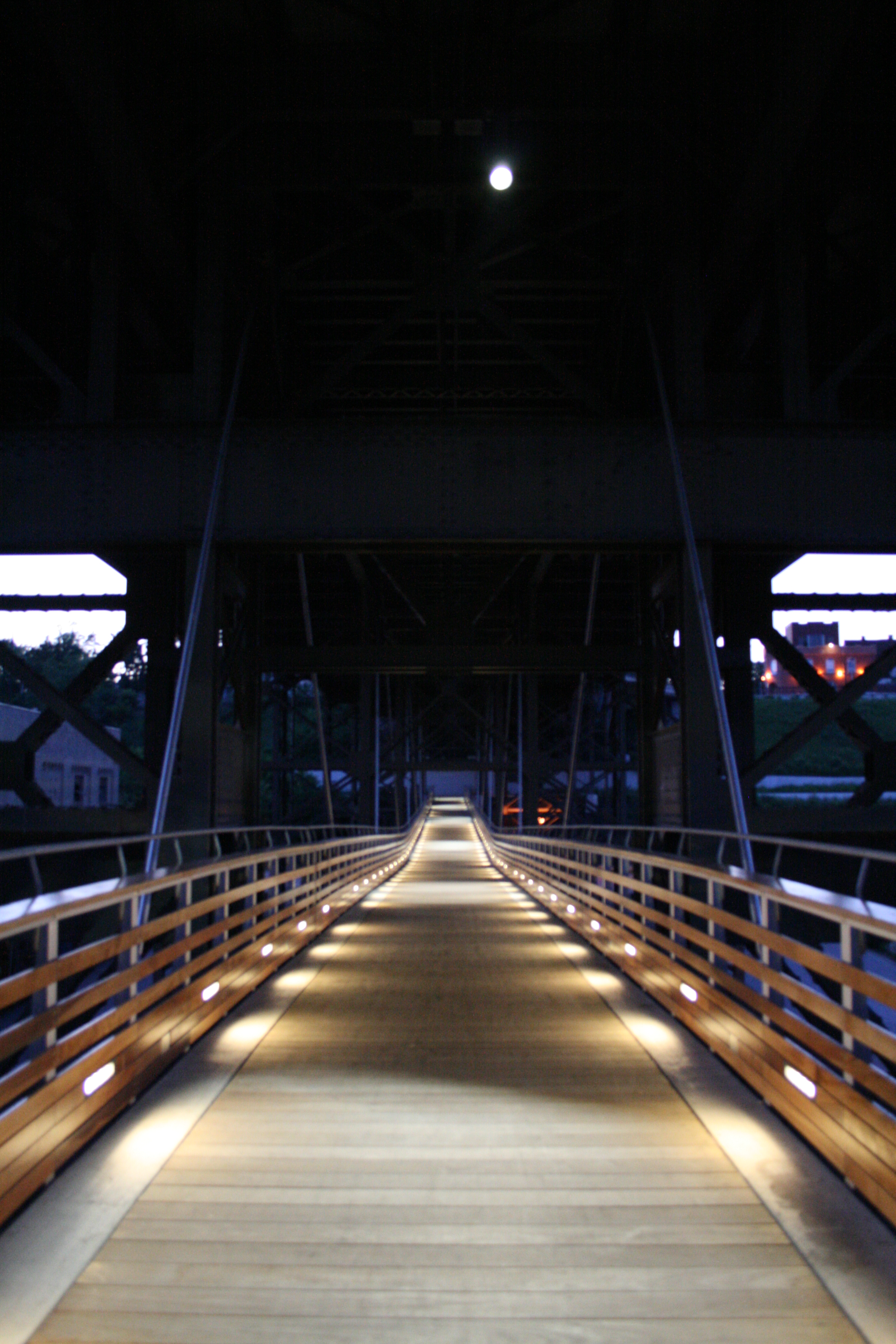
Marsupial Bridge
Jim Gaffigan, renowned comedian and native Milwaukeean by marriage, does a routine about how much easier life is for beautiful people. “Think about it,” he says, “If a stranger smiles at you and they’re attractive, you think, ‘Oh, they’re nice,’ but if a stranger’s ugly, you’re like, ‘What do they want? Get away from me, weirdo!’”
Yes, one man’s beauty is another man’s ugly, but it’s a funny joke mostly because it’s so true. All of us have crossed the street to avoid humanity’s ugliness, and – truth be told – the majority of people do the same thing when it comes to bypassing ugly cities, towns and neighborhoods.
Grace La, who designed the wonderful marsupial bridge near Lakefront Brewery, made that very point at last week’s “Remarkable Milwaukee 2012” event, which was sponsored by Historic Milwaukee and held at The Pabst Theater.
“I think beauty is a concept that we don’t talk about enough, partly because it is so abstract,” said La, a principal at La Dallman architects. “And yet at the same time, healthy cities are measured by this very concept.”
The only difference between Gaffigan’s act and La’s insight is that she wasn’t being funny. At least, I don’t think she was; I didn’t have the chance to attend Remarkable Milwaukee, but her quote jumped out at me in Journal Sentinel art and architecture critic Mary Louise Schumacher’s follow-up coverage of the discussion, which included other local luminaries, such as former mayor John Norquist, artist Reginald Baylor, historian John Gurda and roofer Jim Godsil. (OK, Godsil does a little something with aquaponics, too.)
We talk about stimulating our economy, improving our business climate and increasing job opportunities – laudable goals, of course, that hopefully translate into food on the table for more Milwaukee families – but what if we’re going about it all backwards? Rather than forcing people to invest in our city through mandated public policy, maybe we should be casting a vision for potential investors via our architecture, art and overall atmosphere.
What if the thing we need most of all is something as seemingly superfluous as splendor? What if the best thing Milwaukee has going for it is the beauty of its built environment?
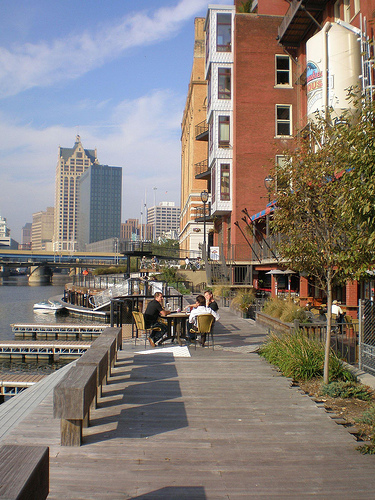
Riverwalk in the Historic Third Ward
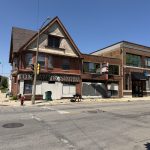
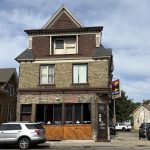
I mean, why does anyone choose a city over a suburb or an exurb in the first place? Part of the reason just might be that turn-of-the-century bungalows constructed with true craftsmanship are more attractive than prefabricated subdivisions that make the American dream look like a Chinese assembly line. You don’t have to be a sociologist to know that most people would rather spend an evening strolling through the old-world charm of the Historic Third Ward than scurrying over the endless asphalt of Brookfield Square.
Design. Craftsmanship. Architecture. Aesthetics. Beauty.
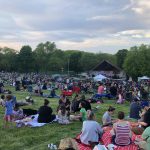
Washington Park’s brilliant bandshell, surrounded by rolling hills. The Basilica of St. Josaphat. A law school’s curving wall of a thousand windows. An art museum’s outstretched wings over Lake Michigan. The old water tower on the east side. KK’s colorful commercial corridor. More than 230 acres of pristine natural beauty throughout Havenwoods State Forest – smack in the center of the city.
These things that draw people into the city are the very things that often keep people in the city. On a summer night in Sherman Park, neighbors walk outside under the green canopy of mature trees, with friendly conversation hanging in the air as heavy as the smell of barbeque. Milwaukee’s mosaic of varied backgrounds and ethnicities is a kind of beauty by itself. What’s more appealing – a bakery stocked with brown baguettes, golden challah, savory sourdough and wholesome multigrain? Or one that can only offer row upon row of white Wonder Bread?
La (and Gaffigan) are onto something. Beauty is more powerful and more transformative than we suspect. When we recognize and cultivate the intrinsic beauty of Milwaukee, what we are really saying is that our city is valuable. It’s worth something. Relying on the sympathy (or worse, pity) of outside communities is not a sustainable solution – and I don’t think that’s what we want to build our foundation on, anyway. Milwaukee is already a beautiful city. The problem is that many of us don’t think of it that way.
In Mark Helprin’s novel A Soldier of the Great War, the main character is a man named Alessandro Giuliani, a professor of aesthetics – a scholar who has spent his entire life studying beauty. In describing Rome, Alessandro says, “The city itself is like a family…I can’t tell you exactly why, but it unfolds before you with the grace of water streaming from a fountain.”Think Milwaukee and Rome aren’t comparable? Does the idea of Brew City as an unfolding fountain of grace seem absurd? Maybe that’s our biggest problem. We can choose to be Milwaukee the overlooked, the average, the insignificant. Or we can see our city for what it really is: Milwaukee the beautiful.
Guest post by Alex Runner
Alex Runner is a resident of the historic Sherman Park neighborhood. He formerly worked in city hall. You can follow him on twitter at @creamcity

















Great post Alex, thanks!
As someone born & raised in Milwaukee, I have always considered myself a “city girl”. Now live on the east side of Tosa & can so relate to your comment about preferring to live in a bungalow with old world craftsmanship. There is a special energy in cities & and as a Realtor, I am so glad to see people moving back to our cities. There is “urban beauty” all around us, one must just look with open eyes. Thanks Alex for a most eloquent blog on urban beauty & our cities.
Amen!
Fabulous post! Well done
There is real wisdom here. As a kid from a small farm town who has spent my entire adult life in the city, the beauties of the city have grown on me slowly. But they are tangible and real. Thanks for your poetic vision, Alex. I hope it catches fire.
I have been telling people for years that Milwaukee is a truly great city. Orchestra, universities, ethnicity % as much as NYC or Chicago, beautiful churches, lovely lake and neighborhoods.
Milwaukee is a city with a long history of a very thoughtful municipal forestry dept. as well as one of the most extensive and old park systems in the US. A tree is cut on curb: within months, a new one is planted. Take a drive thru Milw: trees everywhere. Even poorer neighborhoods are beautiful because of their greenery. (It really ought to be declared a “tree city ” thru Nat’l. Arbor Day Foundation. ) Many homes in Milw have old world charm, as the author says. The downtown has been 100% revitalized. The Calatrava, next to the old War Memorial. is Beauty and the Beast. Now then.. the Lake? Foreign visitors come here and it takes their breath away.
Milwaukee is a VERY clean city. Go to Chicago if you don’t think so….and speaking of Chicago….Talk about a boxy, filthy, ugly gray city without trees and greenspace. Chicago is a depressing, over – crowded city, a veritable concrete jungle. Milwaukee is not so.
As for the suburbs: you can keep them and I’ll keep my beautiful Bay View bungalow built in 1925 with its gorgeous woodwork and stained glass. My backyard is full of large old trees that protect against noise pollution and concrete ugliness. A friend of mine insists that Madison is a beautiful city. No way! Look at the condition of the homes! They are low- built, ramshackle – even close to the UWM and the State capitol.The city does not keep up with home repair as does Milwaukee. MANY of the homes in Madison are in disrepair. Madison cannot begin to compete with Milwaukee in terms of diversity, ethnicity, beautiful churches and greenery and municipal departments which demand people cut their grass and keep their homes in good repair. Think its unfair that the Milw. Building Inspector comes around and writes up your home? Think again. Look at a city like Madison where people don’t bother to cut their grass, where the grass on municipal curbs is 8 inches high, where the homes are falling apart and then ask yourself if you would like to have neighbors who live this way. The only thing keeping Madison from abject poverty are the students who need a place to live.
Go to a place like Albuquerque if you want a lack of municipal upkeep. The homes are an embarrassment. Garbage everywhere. High grass. Homes falling apart…Then return to Milwaukee.
Hawthorne Glen, Humboldt Park Mitchell Park, Washington Park…gorgeous. Bay View, Washington Park, Garden District, Lakefront: You can park your car and walk to it. Can’t do so in Chicago.
The only thing that Milw needs to do with much more gusto is enforce its noise ordinance: way too much ghetto – blaster noise in some areas. I don’t stand for it I’m my neighborhood. If Milwaukee could get this under control, there would be less crime in the areas where there is crime as the neighborhoods with this problems would be immediately more livable.
AS a retired MPS teacher, I believe that the Common Council should stand up and fight to have the residency requirement reinstated. The residency requirement did a GRAET DEAL to keep Milwaukee at a higher economic level. Teachers, firefighters, police and other city workers still get good benefits and should give back to the city that literally supports them. I can’t stand these teachers who service city children but want to live in the burbs themselves – its a matter of “Do as I say, not as I do”. This city is perfectly livable for raising a family should they should live in the city – just like their students.