EnglishEspañolDeutschБългарски
Follow Urban Milwaukee on Twitter Like Urban Milwaukee on Facebook Subscribe to Urban Milwaukee via email Subscribe to Urban Milwaukee via RSS

Weekly Bookmarks – Monday, 1st. June 2009

May 31st, 2009 | By | Category: Bookmarks


Traditional Neighborhood Development Partners Solar Village Renderings

May 30th, 2009 | By | Category: Bay View, Eco Bay

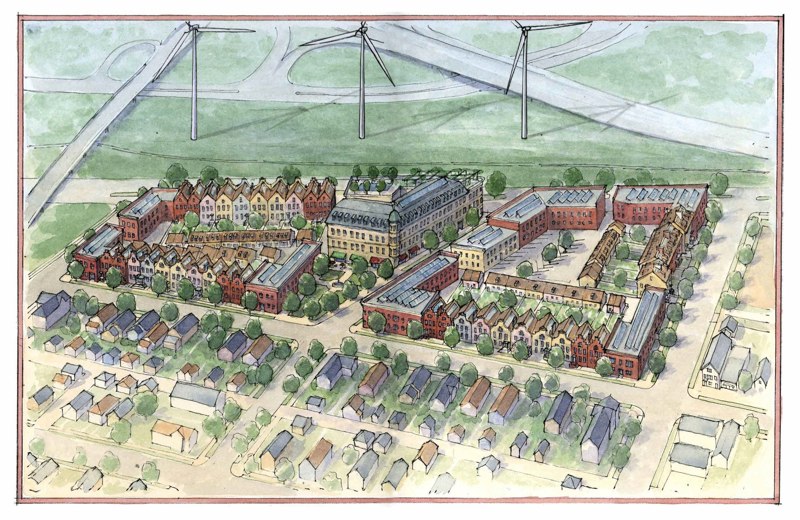
Traditional Neighborhood Development Partners was one of the seven firms that submitted a proposal for Bay View’s Solar Village project.  Although they were not selected by the City of Milwaukee to develop the site the renderings by Grenfell Architecture, PLLC are shown below.  The plan included a mix of single family housing, multifamily housing, as well as green features such as solar panels, public green space, and three wind turbines.  Details regarding the financing, the land sale price, potential uses, expected home prices, and household density are unknown at press time.

Bay View Birdseye

Bay View Street Perspective


Friday Photos Thursday, 28. May 2009

May 29th, 2009 | By | Category: Friday Photos

1824 E. Park Place

1824 E. Park Place

Hometown Site

Hometown Site

Corcoran Lofts

Corcoran Lofts

Signature Suites at 2040 Lofts

Signature Suites at 2040 Lofts

Milwaukee Art Museum

Milwaukee Art Museum


Apparently, My Mom Isn’t Welcome in Bay View

May 28th, 2009 | By | Category: Bay View, Eco Bay

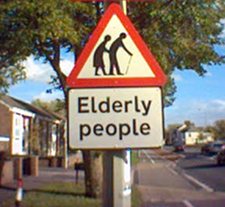
Yield Elderly PeopleRecently I moved my mother from a single family home into a low-income subsidized senior housing development.  It wasn’t fun, or easy, but it was necessary.  It’s vitally important that all of our communities have facilities like these, as imperfect as they might be, to allow our aging population safe and clean housing to live in.  Unfortunately, there is a severe shortage of affordable units, not just in Milwaukee or the Bay View neighborhood, but nationally.  For example, my mom’s building which is located in a suburb of Chicago, just like many of the other facilities she looked at both in Milwaukee and Chicago, has a waiting list of over a year to get in it.  It would great for her to be able to live in a neighborhood like Bay View where she might walk to the store, the lakefront, or to a park instead of having to drive.  It would be even better if she could, on her fixed-income, live in a development with almost no energy bills.  Unfortunately, after sitting through Tuesday May 26th’s neighborhood meeting on the proposed Eco Bay development I learned something bothersome about Bay View.

I say bothersome because of the arguments made against the proposal had little to do with design or the green components.  Throughout the meeting what many residents used as an argument against the proposal was that it didn’t “maximize tax base,” so it shouldn’t have been the winning proposal.  One of the many Bay View residents that opposed the project because of the senior housing component, stated that “if you’re building low-income senior housing you’re not maximizing tax base.”  For one, it needs to be pointed out that if “maximizing tax base” is truly the goal then high-rise buildings with lake views should have been allowed as a possible proposal during the RFP process.  Though comments by other residents indicating that they “don’t want lots of people in a congested space,” that the project should be “scaled down,” and the fact that Bay View recently passed an overlay district restricting heights, indicate that wasn’t a widely supported alternative.  So, this discussion of maximizing tax base was fascinating, misleading, and to me offensive.

Fascinating because the opposition was strong, vocal, and seemed organized, but beyond opposing low-income seniors being able to live in a new facility in Bay View, there wasn’t a lot of comment on the actual design.  Misleading and offensive because this discussion of “tax base” was an expression of fears over “low-income” people living in the neighborhood and hurting property values.

Yeah, pretty harsh words from me today, but what I learned at that meeting wasn’t that Bay View is committed to green living, sadly it was that my mom isn’t welcome in Bay View.  I truly hope somebody will prove me wrong.


photo provided by bensons


Miller Park vs Busch Stadium – Milwaukee vs St. Louis

May 28th, 2009 | By | Category: Downtown, Light Rail, MCTS, Miller Park, St. Louis

After a recent weekend trip to take in three Milwaukee Brewers games in St. Louis versus the rival St. Louis Cardinals, I spent a significant time reflecting on the differences (and similarities) between the stadiums each team calls home.  Miller Park is located 3.2 miles from Milwaukee City Hall, while Busch Stadium is located 1/5th (0.2) of a mile from the iconic Arch.  Miller Park has the roof, Busch Stadium has the view.  Busch Stadium has the proposed Ballpark Village, Miller Park has its own sales tax.  Miller Park has gameday bus service, Busch Stadium is located on a light rail line.  And least important for the sake of this analysis, they each have their namesake beer.  With all of that considered, which stadium does more for the city?

Market Size

The comparison is worthwhile to make as the size of the St. Louis and Milwaukee markets are quite similar.   Greater St. Louis has a 2007 estimated population of 2,871,421.  Greater Milwaukee has a 2007 estimated population of 1,739,497.  Missouri has an estimated population of approximately 5,900,000, and is home to the Kansas City Royals as well. The population of Wisconsin is estimated near 5,600,000.  The markets are extremely similar in size when taking the state population into consideration.  Furthermore, both stadiums are located in Midwest, making them subject to colder starts and finishes to the season than say the Houston Astros.

Stadium Location

Busch Stadium is located in downtown St. Louis.  Almost every seat in the stadium has a view of a part of the skyline and the Gateway Arch.  The stadium is currently bordered by a few surface parking lots, garages, and hotels.  A few of those surface parking lots will become buildings as the mixed-use Ballpark Village is developed.  There are numerous hotels within walking distance of the stadium, many closer than the surface lots of Miller Park.  The St. Louis light rail system, Metrolink, runs right by the stadium with a stop conveniently labeled “Station” within a stones throw.  I-64 is immediately adjacent to the stadium.

Easily visible from almost every seat in the stadium.

Easily visible from almost every seat in the stadium.

Miller Park is located three miles west of downtown Milwaukee along I-94.  The stadium is surrounding on literally every side by surface parking lots, some stretching as far as a half mile from the stadium.  If the roof is open, and you’re in the top level of the stadium, there is a chance you could catch a glimpse of the US Bank Center, the tallest building in Wisconsin.  The nearest attraction is the Potawatami Casino, and there isn’t a hotel within walking distance.  The 90 bus line runs from Downtown starting two hours before the game, but must contend with traffic waiting to park once it leaves Wisconsin Avenue.

The amount of parking Miller Park requires because of the use of surface lots is really quite amazing.

The amount of parking Miller Park requires because of the use of surface lots is really quite amazing.

Both stadiums are not the first iteration at their given location.  County Stadium preceded Miller Park, and Busch Memorial Stadium preceded Busch Stadium.

Cost and Ownership

Busch Stadium had a final cost of $365 million when it opened in 2006.  Of that cost, $45 million (12%) came from a long-term loan from St. Louis County.  Private financing came in the tune of $90.1 million in cash from the Cardinals, $200.5 in bonds paid by the team, and $9.2 million in interest earned on the construction fund the Cardinals held. The stadium has a seating capacity of 46,861 and is owned by the St. Louis Cardinals.  The stadium does not have a roof, or its own named expressway.  I was unable to determine who paid for the cost overruns of $20.2 million.

Miller Park had a final cost of $400 million when it opened in 2001.  The Brewers owners (led by the Seligs at the time) paid for 22.5 percent ($90 million).  The taxpayers of Milwaukee, Racine, Waukesha, Washington, and Ozaukee Counties are still paying (with a 2014 estimated ending date) a 0.1% sales tax to cover 77.5% of the costs ($310 million).  The stadium has a seating capacity of 43,000 and is owned in a partnership between the Southeastern Wisconsin Professional Baseball District (64 percent) and the Milwaukee Brewers (36 percent).  The stadium features a fan-shaped retractable roof.  The location of the stadium necessitates the construction and maintenance of Miller Park Way and the interchange with I-94, an expense I’m not sure is fully internalized in the cost of the stadium.

The most obvious difference between the two ballparks is the percentage of public financing.  Busch Stadium was 12% taxpayer funded, Miller Park was 77.5%.  Why was this?  The biggest aspect appears to be the team’s ability to pay.  The Cardinals had been banking money for years for a new stadium, while the Brewers, led by Bud Selig, did not have nearly the ability to pay what the Cardinals did.  Ironically, the Brewers were able to obtain the retractable roof, despite having less money to start with than the Cardinals.  The second most important factor in the funding for Milwaukee’s stadium appears to be the elected leaders, who were willing to go along with the Brewers plan (ultimately leading to a recall election and defeat for Senator George Petak of Racine).

A downtown stadium without a roof could have shaved at least $80 million from the sales tax burden, as the city could have offered TIF financing at least near $30 million and the retractable roof’s cost of $50 million would have been eliminated.

Busch Stadium has an open atmosphere that should work well with the neighborhood that develops around it.

Busch Stadium has an open atmosphere that should work well with the neighborhood that develops around it.

Accessibility via Transit

As mentioned, Busch Stadium is next door to the Stadium Metrolink light-rail station, with connections to the airport, Illinois, and western St. Louis.  The station platform is packed after games, but I was unable to find ridership figures or estimates for gameday traffic.  The system itself handles about 60,000 riders a day.  The station is located along a standard route, encouraging familiarity and predictability with taking public transit to the stadium.  Unfortunately, a bus wasn’t anywhere to be found during my stay in St. Louis as a referendum was voted down in November and as a result bus service was reduced by nearly a third.

A sign announcing the cancellation of service to a downtown St. Louis bus stop.  A frequent sight unfortunately.

A sign announcing the cancellation of service to a downtown St. Louis bus stop. A frequent sight unfortunately.

In Milwaukee, the MCTS’s 90 bus route serves the bus starting two hours before the game.  Having ridden both after a game, there are significantly more people waiting to take the Metro.  The 90 bus only serves riders from downtown Milwaukee and along Wisconsin Avenue, unlike the St. Louis Metrolink line.  The gameday-only nature of the 90 bus also is rather confusing to many riders who aren’t familiar with the route.  The ride into the stadium is also far from smooth, as the bus must compete with stop and go traffic, from automobiles waiting to get into Miller Park parking lots, once the bus leaves Wisconsin Avenue.  There are many times where getting out of the bus and walking from the edge of the parking lots would be much faster than waiting to get dropped off at the front doors.

Edge to St. Louis and Busch Stadium for frequency of service, quality of service, areas for rides to originate, off-bus ticketing (a problem on buses for visitors), and predictability/reliability of service.

Accessibility via Car

Both stadiums are readily accessible by car.  Milwaukee is clearly more accessible by motor vehicle by virtue of the fact that there is nothing around it, making it ease for riders to find the one interstate exit to the stadium (conveniently labeled Miller Park Way).  Busch Stadium is served by multiple exits, but the large number of one-way streets in downtown St. Louis seem to induce rush hour congestion where none needs to be.  Overall, the traffic flow near Busch Stadium, despite the massive amount of pedestrian traffic, seems to flow just fine.

Ballpark Village will be built at the top of this image.  Despite the presence of the interstate immediately next to the stadium, Busch Stadium seems less car-orientated than Miller Park.

Ballpark Village will be built at the top of this image, just north of the stadium. Despite the presence of the interstate immediately next to the stadium, Busch Stadium seems less car-orientated than Miller Park.

Spillover Effect

What does each do for businesses, both nearby and far away?

Busch Stadium provides obviously a large boost for the hotels in the surrounding area, perhaps more measurable than Miller Park because of the immediate proximity.  There are also numerous vendors selling goods outside the stadium, something you don’t see at Miller Park.  On the flip side, grocery stores across the state of Wisconsin benefit marginally from the food sales generated by tailgating.

Numerous Brewer fans end up on Water Street and Bluemound Road after games, but not in the numbers that Cardinals fans show up in Laclede’s Landing to drink their In-Bev beers.

Perhaps the most disappointing aspect of Busch Stadium was the lack of restaurants near the stadium.  There were a couple, but not in the number I would expect an urban stadium to bring.  Nothing like what is visible at Wrigley and Fenway.  Ballpark Village will hopefully ignite a process that brings a large amount of street level retail to the area.

Parking is the biggest difference between the two.  At Miller Park almost every parking stall by the stadium is controlled by the Brewers and your money goes directly into their coffers.  In St. Louis, a wide diversity of ownership is present near the stadium.  The result?  A diversity of pricing options, and light competition that works to keep prices down somewhat.  Similar to how things are with the Bradley Center in Milwaukee.

The real upside to Busch Stadium’s parking setup is that the stalls can be used for more than one purpose.  At Miller Park the surface parking lots are exclusively for stadium activities.  At Busch Stadium, the parking can be used for many purposes.

Ballpark Village will be a nice addition to the area around the stadium.

Ballpark Village will be a nice addition to the area around the stadium.

Tailgateability

Coining a new term specifically for this article, “tailgateability” is the measure of the ease of eating out of the back of your car an area provides.  Miller Park wins, but really not by a lot.  At Miller Park, you can fire up your grill at any parking stall, in St. Louis this is possible for a lot of the spots, but far from all of them.

This brings up an important point though, is tailgating possible at urban stadiums?  Certainly it is.  There is no reason why the roofs of parking garages and select surface lots couldn’t be sold at a small premium to tailgaters.  In Milwaukee shuttles could run between numerous areas like the lakefront parking lots and Summerfest lots to accommodate even more tailgaters.  Also, grills could be installed and public plazas could be constructed (or actually used) that would accommodate tailgaters.

Fans take to the streets after games as the street grid distributes them across the city.  Cars are more confined to a lot of one way streets.

Fans take to the streets after games in St. Louis as the street grid distributes them across the city. Cars are more confined to a lot of one way streets.

Conclusion

Each stadium has features that make it an enjoyable place to watch baseball.  The roof at Miller Park is nice, but was the $50+ million price tag worth it?  You could argue each way.

The location of Busch Stadium is much more enviable than that of Miller Park and leads to a number of efficiencies.  It’s underdeveloped at this point though, Ballpark Village’s development is a must.  St. Louis has a great asset in the stadium, and a fair number of buildings nearby that work well with it.  Adding more mixed-use buildings nearby will greatly improve the downtown and build a true 24-hour neighborhood.

The fact that so little of Busch Stadium was paid for with taxpayer dollars is a plus.  Having a winning culture that sold tickets and a slightly bigger fan base helped put the team in that position though.  Consequently though, it did appear that every piece of food at the stadium cost a dollar more.  Pick your poison, although I’m sure most would choose the private funding.

Building Miller Park in downtown Milwaukee was studied (drawings included below), but there was likely a hidden cost to that.  Would Milwaukee have been to eliminate the Park East Freeway if the stadium was to be near the end of the freeway stub?  Probably not.  Suburban opposition to such a proposal would have been a lot stronger.

At the end of the day, not building the new stadium in downtown Milwaukee was certainly a missed opportunity.  The only beneficiary of its current location is the Brewers themselves.  But was it something that downtown Milwaukee needed desperately?  No, it’s pretty clear it wasn’t.  Milwaukee did miss out on a chance to accelerate all the good things going on in or near downtown though.

Miller Park Downtown

From Thursday Architects

This project was commissioned by the City of Milwaukee as a background study in hopes of persuading the owner of the Milwaukee Brewers to locate his new publicly funded ballpark downtown rather than on the suburban fringe of the city. Promoted without success by a New Urbanist Mayor, the City proposed the demolition of a freeway spur on the north side of downtown, and the location of a new ballpark along the edge of the Milwaukee River as part of new neighborhood development at the northern edge of downtown. Parking was to be accommodated by new and existing lots and garages dispersed throughout the downtown area and immediate environs. The Brewers’ owner wasn’t buying it; and the $500M “Miller Field” will open this season in a 20,000-car parking lot west of Milwaukee.

Rendering includes Grace Lutheran Church and Blatz Condos.

Rendering includes Grace Lutheran Church and Blatz Condos.

Looking south down Water Street.

Looking south down Water Street.


Downtown Dining Week Starts Today in Milwaukee

May 28th, 2009 | By | Category: Downtown, East Town, Westown

Perhaps the greatest week of eating in Milwaukee, Downtown Dining Week, kicks off today and runs through June 4th.  You can eat a $10 three course lunch or  $20 three course dinner at some of Milwaukee’s best restaurants.  If you’re looking to get a taste of great restaurants that you haven’t been to before, this is your week to branch out.

Thank you to Bid #21, Milwaukee Downtown, for putting on such an excellent event every year.  Let’s eat (remember to tip generously)!


A Postcard Location for UWM’s School of Freshwater Sciences

May 26th, 2009 | By | Category: Downtown, Lake Michigan, UWM

LakefrontIt’s certainly good that we value our parks, public places, and the lakefront, so a public debate over the appropriateness of placing UWM’s School of Freshwater Sciences on Lake Michigan is worth having, but the downtown lakefront is the right location.

Yes, other sites have been suggested, such as the vacant land near the Milwaukee Water Works purification plant on Lincoln Memorial Drive, the port-owned property near the Lake Express terminal, the parking lots just west of the Henry W. Meier Festival Park, sites near the existing Great Lakes Water Institute, and even the Port of Milwaukee Headquarters, but building the facility on any of these sites won’t give the new school the prominence of place the way the Pieces of Eight location will. Unfortunately, it would just be another example of when Milwaukee does something half right.

The Great Lakes Water Institute has been operating in one form or another since the 70′s, at 600 East Greenfield Avenue, and certainly has been involved in important research, but during that time Milwaukee’s hasn’t become the focal point for water research. Of course there are a lot of factors that have held back the institute from rising to greater prominence including the lack of proper funding, and the need for a graduate level school, but also hiding it away where it isn’t visible, where it isn’t prominent, and where it isn’t integral to Milwaukee and Lake Michigan detracts from its ability to be the symbol of Milwaukee’s commitment to water research.  Locating the School of Freshwater Sciences near the Milwaukee Art Museum and Discovery World right on Lake Michigan will only add to its prominence, and help to insure its place as part of Milwaukee’s new image.

If Milwaukee is to become the water capital of the world, then its leading institution needs prominence and visibility. You might say it needs a postcard location.

To learn more about this proposal and possibly lend your support, the Harbor Commission will be holding a public hearing Thursday May 28th, at 6:00 pm at City Hall Room 301-B, 200 E. Wells St. on this proposal.


Weekly Bookmarks – Monday, 25. May 2009

May 25th, 2009 | By | Category: Bookmarks


Upcoming Events for the Week of May 25th, 2009

May 24th, 2009 | By | Category: Weekly Events
May 26, 2009 1:30 pm
The Community and Economic Development Committee hears matters relating to community development, block grants, job development, business improvement districts, city public relations, industrial land banks and revenue bonds, emerging business enterprises, recreation, cultural arts and the library system.This Community and Economic Development Committee meeting starts at 1:30 p.m. and is held in Room 301-B, City [...]
May 26, 2009 6:00 pm to 8:00 pm
The workshop is a public input session and will involve a short update from the planning team and a table top exercise where participants map out their vision for the area. It’s actually fun and quite helpful as we work with the community to chart a land use and development guide for the [...]
May 26, 2009 6:00 pm
Alderman Tony Zielinski will host a neighborhood informational meeting to brief residents on a recommended ‘Net Zero Energy’ development, known as Eco Bay, proposal for the former Army Reserve site at 2372 S. Logan Ave.[...]
May 27, 2009 9:00 am
City Hall
200 East Wells St.
Common Council Chambers
Milwaukee, WI 53202
May 28, 2009 6:00 pm
1. Presentation on behalf of the University of Wisconsin-Milwaukeeand/or the UWM Foundation, Water Council or Greater Milwaukee Committee regarding UWM’s proposed use and request for a lease of the lands under the Harbor Commission’s jurisdiction located at 550 North Harbor Drive, currently leased to Specialty Restaurants, Inc. [...]


Eco Bay Development Informational Meeting

May 24th, 2009 | By | Category: Events

Alderman Tony Zielinski will host a neighborhood informational meeting to brief residents on a recommended ‘Net Zero Energy’ development, known as Eco Bay, proposal for the former Army Reserve site at 2372 S. Logan Ave.

Bay View High School
2751 S. Lenox Street.

More Information